
1. Grigori Rasputin
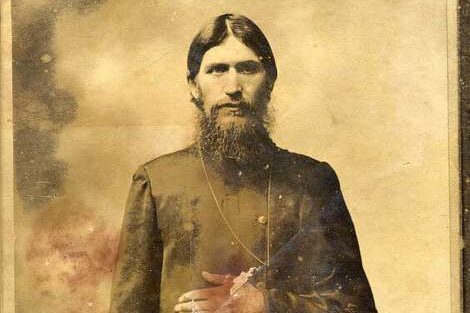
Rasputin’s rise from a Siberian peasant to a powerful figure in the Russian imperial court still reads like something out of a novel. He gained the trust of Tsarina Alexandra by seemingly helping her son, who suffered from hemophilia, which gave him enormous influence behind the scenes. His reputation as a mystic healer spread quickly, but so did rumors about his behavior and political meddling. Many nobles saw him as a dangerous outsider who had too much control over the royal family. His presence became one of the many factors fueling public distrust of the monarchy before the Russian Revolution.
His death is where the story becomes almost unbelievable, though parts of it have clearly been exaggerated over time. A group of aristocrats murdered him in 1916, and later accounts claimed he survived poisoning and multiple gunshots before finally dying. Historians agree he was shot and killed, but the more dramatic details likely grew with retellings. Even without embellishment, his influence over the Romanovs remains extraordinary. It is rare for someone with no formal power to shape events at that level. That combination of mysticism, politics, and myth keeps his story firmly in that strange space between fact and legend.
2. Timothy Dexter
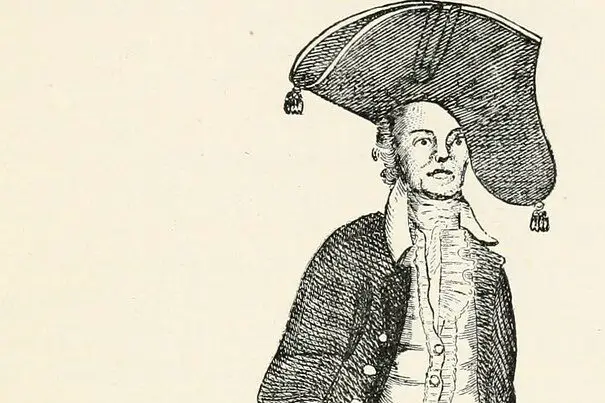
Timothy Dexter is often described as one of the luckiest and strangest businessmen in early American history. Living in the late 18th century, he made a fortune through investments that, on paper, made no sense at all. He shipped coal to Newcastle, a place already known for coal, and somehow turned a profit because miners were on strike at the time. He also sent warming pans to the Caribbean, which sounds absurd until buyers repurposed them as ladles for molasses. Over and over, what looked like disastrous decisions ended up making him rich.
Dexter leaned into his eccentric reputation later in life. He wrote a book titled A Pickle for the Knowing Ones, which ignored standard spelling and punctuation entirely. Instead of correcting it, he later added a page of random punctuation marks and told readers to insert them where they saw fit. He even staged his own funeral while still alive to see how people would react. By most conventional measures, his behavior was chaotic, yet he remained wealthy. It is one of those cases where reality refuses to follow logic, which is exactly why his story still stands out.
3. John Chapman
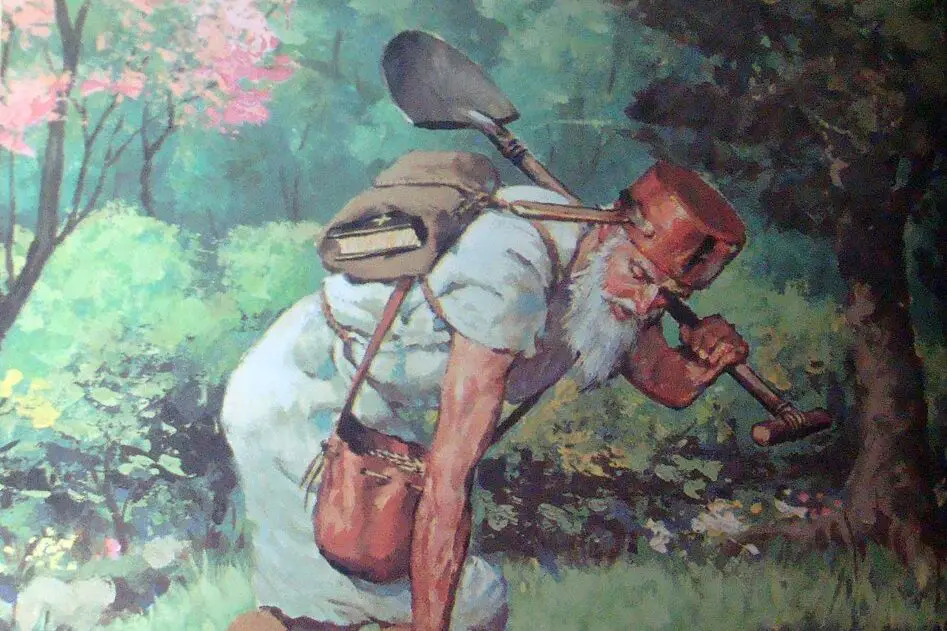
Johnny Appleseed is often remembered as a gentle folk hero who wandered the frontier planting apple trees, but the real John Chapman was far more complex. He did travel extensively across parts of the American Midwest in the early 1800s, planting nurseries rather than randomly scattering seeds. These orchards were often practical investments, as settlers needed apple trees to claim land under certain laws. Chapman was also a deeply religious man who followed the teachings of Emanuel Swedenborg. He often lived simply, sometimes going barefoot even in cold weather.
What makes his story feel fictional is how it blends folklore with documented reality. Over time, stories exaggerated his kindness toward animals and his almost mythical connection to nature. Yet there is truth behind the image, he was known for his generosity and unusual lifestyle. He also had a reputation for being an effective businessman, despite his humble appearance. The idea of a wandering planter shaping the agricultural landscape of a region already feels cinematic. Add in the folklore, and it becomes even harder to separate fact from the legend that followed him.
4. Violet Jessop

Violet Jessop’s life is so improbable that it almost sounds invented. She worked as a stewardess and nurse on several major ocean liners in the early 20th century, including the RMS Titanic. When the Titanic struck an iceberg in 1912, Jessop survived and was evacuated in a lifeboat. That alone would be a remarkable story, but it was only part of it. Earlier, she had also been on the RMS Olympic when it collided with another ship. She survived that incident as well.
Her streak of survival continued during World War I when she served as a nurse aboard the HMHS Britannic. The ship hit a mine and sank, yet Jessop escaped once again. Few people can claim to have survived multiple major maritime disasters, let alone three involving sister ships. She later wrote about her experiences, offering a firsthand account of events that already seemed hard to believe. Her life reads like a series of narrowly avoided tragedies. Statistically, it is extraordinarily unlikely, which is why it often feels more like fiction than fact.
5. Joshua Norton
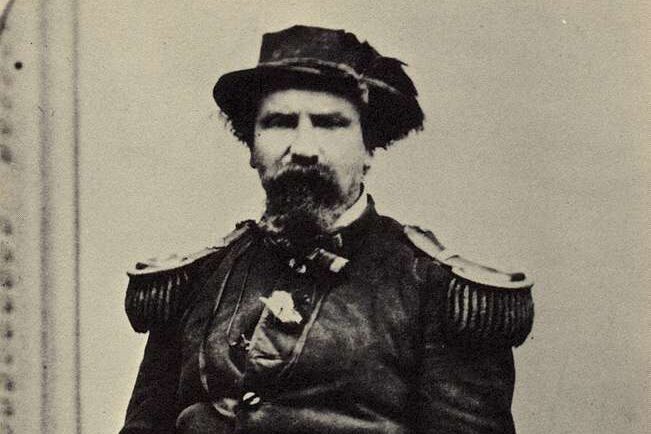
Joshua Norton declared himself “Emperor of the United States” in 1859, and what is remarkable is that many people in San Francisco went along with it. Rather than being dismissed outright, he became a well-known and even respected local figure. Businesses accepted currency he issued, and newspapers printed his proclamations. He would walk the streets in a uniform, inspecting infrastructure and issuing orders as if he truly held power. Despite having no official authority, he managed to carve out a symbolic role in the city.
His story reflects a unique moment in local culture where eccentricity was embraced rather than rejected. Norton had previously been a businessman who lost his fortune, which likely contributed to his unusual turn. Even so, the community largely treated him with kindness and respect. When he died in 1880, thousands attended his funeral. The idea of a self-declared emperor being accepted in a major American city sounds implausible. Yet in Norton’s case, it is well documented and historically accurate.
6. Tycho Brahe
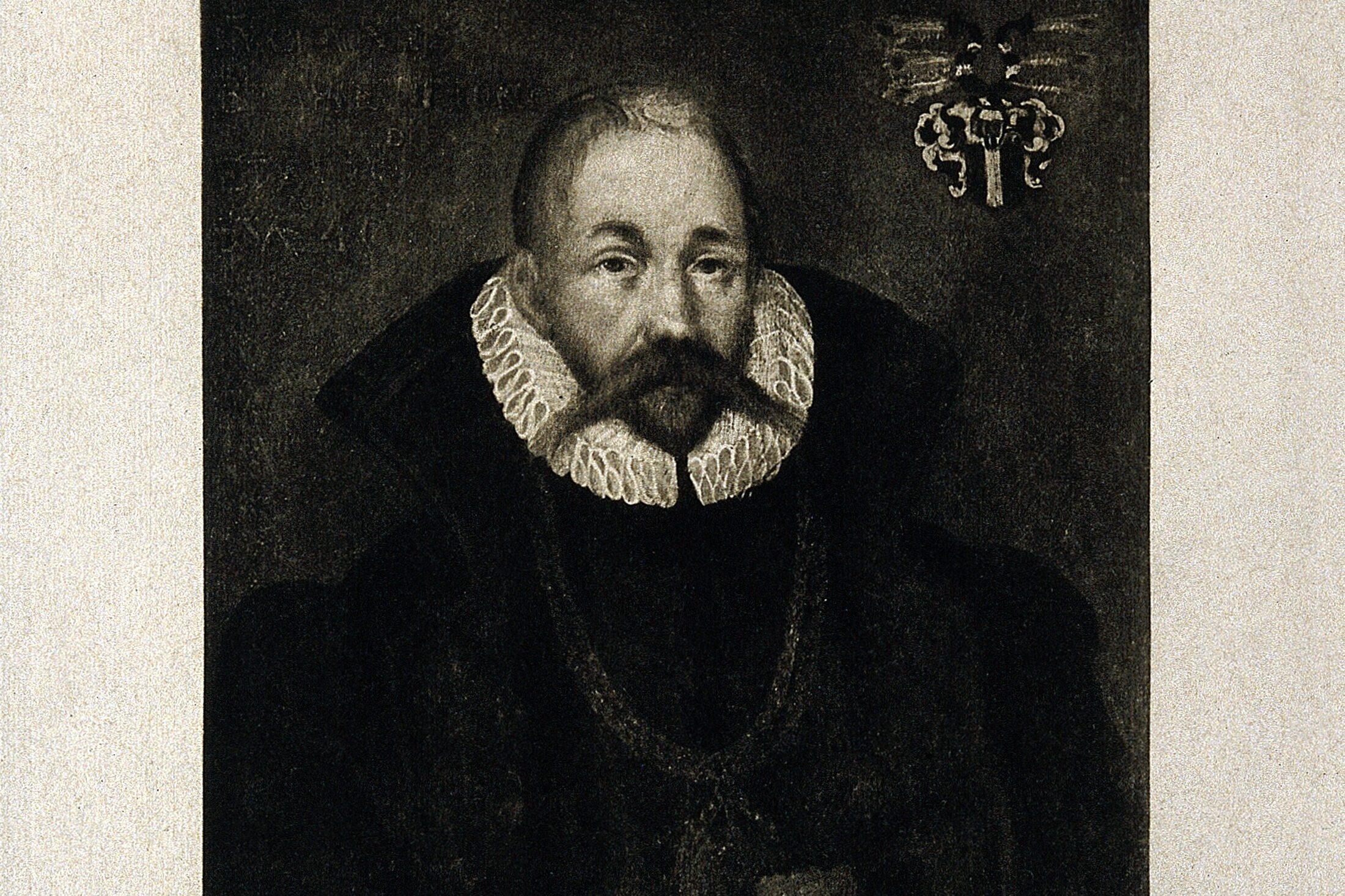
Tycho Brahe was one of the most important astronomers of the 16th century, but his personal life adds an almost surreal layer to his legacy. He lost part of his nose in a duel and wore a prosthetic, which may have been made of brass or another metal. Despite that, he continued his scientific work with remarkable precision, collecting astronomical data that would later help Johannes Kepler. Brahe also lived on a private island where he built advanced observatories funded by the Danish crown. His work significantly improved the accuracy of astronomical measurements before the invention of the telescope.
Beyond his scientific contributions, his lifestyle was highly unconventional. He kept a tame moose that reportedly died after becoming intoxicated at a banquet. He also had a court jester who may have had dwarfism and was believed to have prophetic abilities. Even Brahe’s death has been the subject of speculation, though modern research suggests illness rather than poisoning. The combination of serious scientific achievement and unusual personal details makes his life feel almost fictional. It is a reminder that even foundational figures in science can have stories that defy expectations.
7. Ada Blackjack
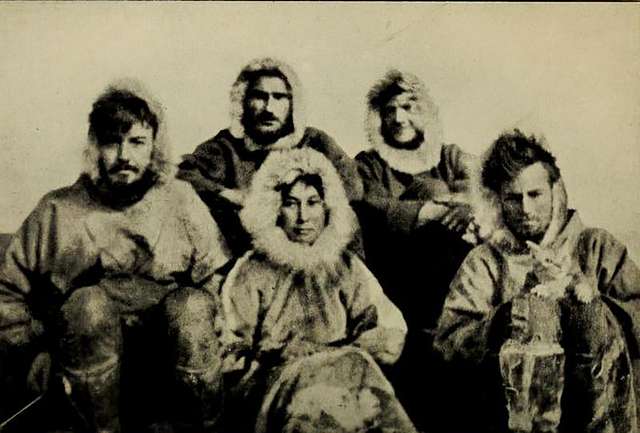
Ada Blackjack’s story is one of survival under extreme and unlikely circumstances. In 1921, she joined an Arctic expedition to Wrangel Island as a seamstress, not as an experienced explorer. When the rest of the team left to seek help and never returned, she was left behind with one other member who later died. That left Blackjack alone in one of the harshest environments on Earth. She had limited training and was initially afraid of hunting, which made her situation even more precarious.
Over time, she learned to survive by trapping animals and managing scarce supplies. She endured months of isolation, extreme cold, and constant uncertainty. When rescuers finally arrived in 1923, they found her alive along with the expedition’s cat. Her survival was widely reported at the time, though her story was not always told with full accuracy or respect. It remains one of the most remarkable documented survival stories in Arctic exploration. The fact that she had little prior experience makes it even harder to believe.
8. Joseph Merrick
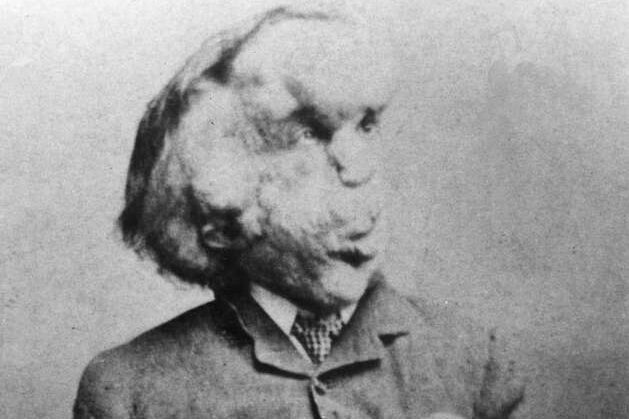
Joseph Merrick became known as “the Elephant Man” due to severe physical deformities caused by a medical condition, likely Proteus syndrome. In the late 19th century, he was exhibited in sideshows as a curiosity, which was common at the time. His life changed when he came under the care of Dr. Frederick Treves in London. Merrick was eventually given a place to live at the London Hospital, where he was treated with greater dignity. Despite his appearance, he was described by those who knew him as intelligent and gentle.
What makes his story feel almost fictional is the contrast between how he was treated and who he actually was. He formed friendships, wrote letters, and showed a clear appreciation for art and literature. His life has since inspired books, plays, and films, but those adaptations sometimes dramatize elements of his story. The documented facts are already powerful enough without embellishment. His journey from exploitation to a measure of acceptance is both unusual and deeply human. It challenges assumptions in a way that feels almost scripted, yet it is entirely real.
9. Hedy Lamarr

Hedy Lamarr is often remembered as a glamorous Hollywood star, but her work outside of film is what makes her story stand out. During World War II, she co-invented a frequency-hopping communication system with composer George Antheil. The idea was designed to prevent enemy forces from jamming torpedo guidance signals. While the technology was not widely used at the time, it later became foundational for modern wireless communication. Today, it is considered an early step toward technologies like Wi-Fi and Bluetooth.
The contrast between her public image and her technical contributions is striking. Lamarr was often typecast in film and not taken seriously as an inventor during her lifetime. Decades later, her work received broader recognition. The idea that a major film star helped develop concepts critical to modern communication sounds improbable at first. Yet it is well documented and supported by historical records. Her story highlights how easily certain achievements can be overlooked depending on context.
10. Hugh Glass

Hugh Glass’s survival story from the early 19th century is one of the most extreme on record. After being mauled by a grizzly bear during an expedition, he was left behind by his companions, who believed he would not survive. Instead, Glass regained consciousness and began a journey of hundreds of miles to reach safety. He traveled without proper supplies, using what little he could find along the way. At times, he survived on roots and scavenged meat.
He also had to navigate difficult terrain and avoid further danger while severely injured. His journey reportedly covered around 200 miles, though exact distances vary in historical accounts. Glass eventually reached a fort, astonishing those who had assumed he was dead. His story later inspired the film The Revenant, though the real events are already dramatic enough. It is difficult to imagine someone enduring that level of hardship and surviving. Yet the core details are supported by historical records from the time.
11. Nellie Bly
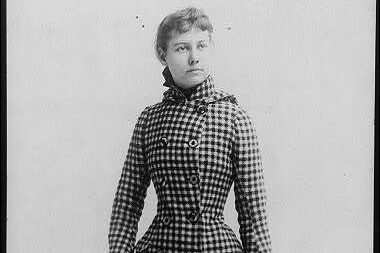
Nellie Bly was a pioneering investigative journalist who became famous for her undercover reporting. In 1887, she feigned mental illness to gain entry into a psychiatric institution on Blackwell’s Island. Once inside, she documented the conditions and treatment of patients, exposing serious abuses. Her reporting led to reforms and increased funding for mental health care. At a time when women faced significant professional barriers, her work stood out for both its courage and impact.
She later gained even more attention by attempting to travel around the world faster than the fictional character in Jules Verne’s novel. Bly completed the journey in 72 days, setting a real-world record. Her career combined investigative journalism with a flair for dramatic storytelling. The idea of someone risking institutionalization to expose injustice feels almost scripted. Yet it was a deliberate and carefully executed effort. Her work helped shape modern investigative reporting in a very tangible way.
12. Frane Selak

Frane Selak is often described as one of the luckiest or unluckiest people ever, depending on how you look at it. Over several decades, he reportedly survived a series of accidents that included a train derailment, a plane incident, and multiple car crashes. In one case, he was thrown from a train into a river and survived, while others did not. In another, he was ejected from a plane before it crashed. These accounts have been widely reported, though some details are difficult to independently verify in full.
What is confirmed is that he later won a significant lottery prize in Croatia. That final twist adds to the almost unbelievable nature of his story. However, some of the earlier incidents rely heavily on anecdotal reporting rather than detailed documentation. Because of that, parts of his story remain difficult to confirm with complete certainty. Even so, the combination of repeated survival and sudden wealth is unusual. It sits right on the edge between documented fact and folklore.