
1. The Lost Colony of Roanoke
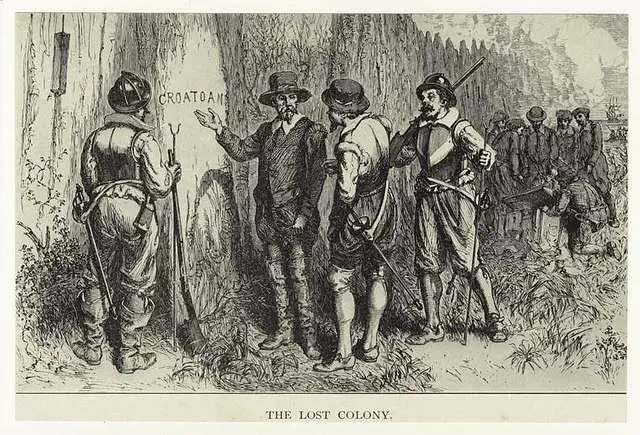
In 1587, more than 100 English settlers arrived on Roanoke Island, off the coast of what is now North Carolina. Led by Governor John White, the colony struggled early on and depended heavily on supply trips back to England. When White finally returned in 1590 after a long delay caused by war with Spain, the entire settlement had vanished. Houses were dismantled rather than destroyed, suggesting the colonists may have relocated instead of fleeing suddenly. The only clue left behind was the word “Croatoan” carved into a wooden post.
Historians have spent centuries trying to determine what happened to those settlers. One theory suggests they joined the nearby Croatan people and slowly assimilated into Native communities. Others believe famine, disease or conflict may have wiped them out. Archaeologists continue to investigate possible relocation sites across coastal North Carolina. Even so, the fate of the Roanoke colonists remains one of the oldest unsolved mysteries in American history.
2. The Disappearance of the Jamestown Settlers During the Starving Time
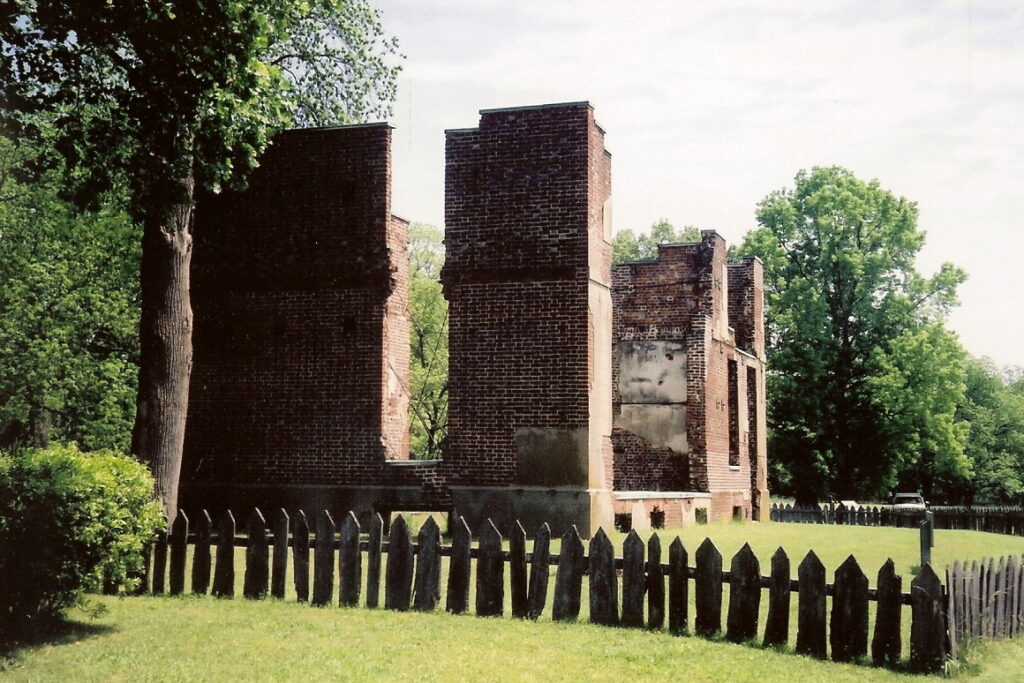
Jamestown, founded in 1607, is known as the first permanent English settlement in North America. But the colony nearly collapsed during the brutal winter of 1609 to 1610, a period known as the Starving Time. Of the roughly 500 settlers living there before winter began, only about 60 were still alive by spring. Archaeological evidence suggests colonists resorted to desperate survival tactics as food supplies ran out.
One of the lingering mysteries is exactly how conditions deteriorated so dramatically. Contemporary accounts describe famine, disease and attacks from nearby Powhatan tribes. Excavations have uncovered disturbing evidence that some settlers may have resorted to cannibalism during the worst months. Historians still debate how widespread this was and how the colony managed to survive at all. The full story of that winter remains incomplete despite centuries of research.
3. The Legend of the Bell Witch
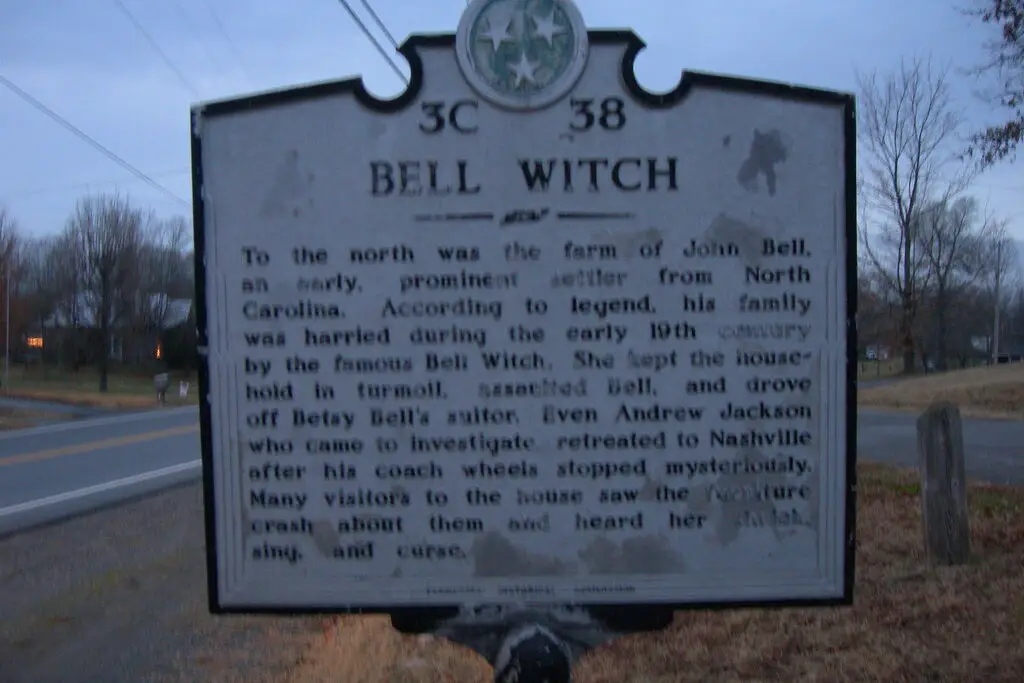
In the early 1800s, the Bell family of Tennessee claimed their home was plagued by a strange and aggressive spirit. According to family members and neighbors, the entity spoke, sang and physically tormented the household. Visitors reported hearing disembodied voices and witnessing unexplained noises throughout the property. The haunting became widely known in the region and drew curious observers from surrounding towns.
Some stories claim the entity even interacted with future president Andrew Jackson during a visit. Skeptics believe the events may have been exaggerated or the result of elaborate pranks. Others think family tensions or psychological factors may have fueled the stories. Despite many attempts to explain the case, no definitive answer has ever emerged. The Bell Witch legend still circulates as one of the strangest ghost stories from early American history.
4. The Oak Island Money Pit
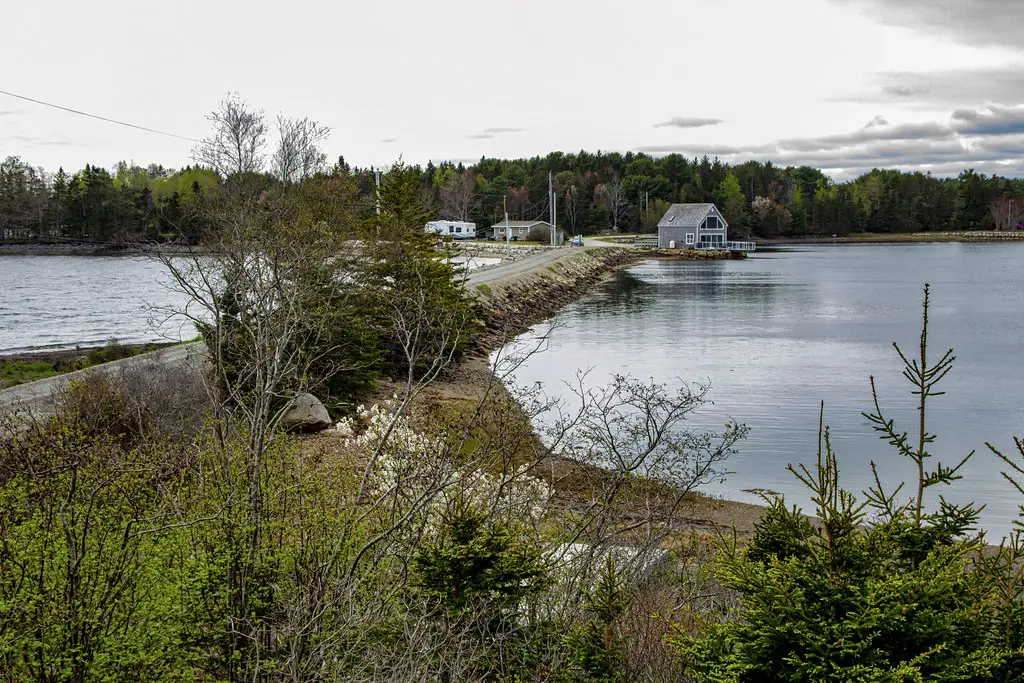
Since the late 1700s, treasure hunters have been digging on Oak Island in Nova Scotia searching for a mysterious buried cache. According to early accounts, a group of young men discovered a depression in the ground and began digging out of curiosity. As they dug deeper, they reportedly encountered wooden platforms placed at regular intervals, suggesting a carefully constructed shaft. Over time the site flooded repeatedly, frustrating excavation attempts.
Theories about what might be hidden below range from pirate treasure to lost manuscripts of William Shakespeare. Others speculate it could be a deposit from secret societies or even a natural geological formation mistaken for a treasure pit. Hundreds of expeditions have tried to solve the mystery over the past two centuries. Despite extensive excavation and millions of dollars spent, no confirmed treasure has ever been found. The true purpose of the pit remains unresolved.
5. The Identity of the Greenbrier Ghost’s Killer
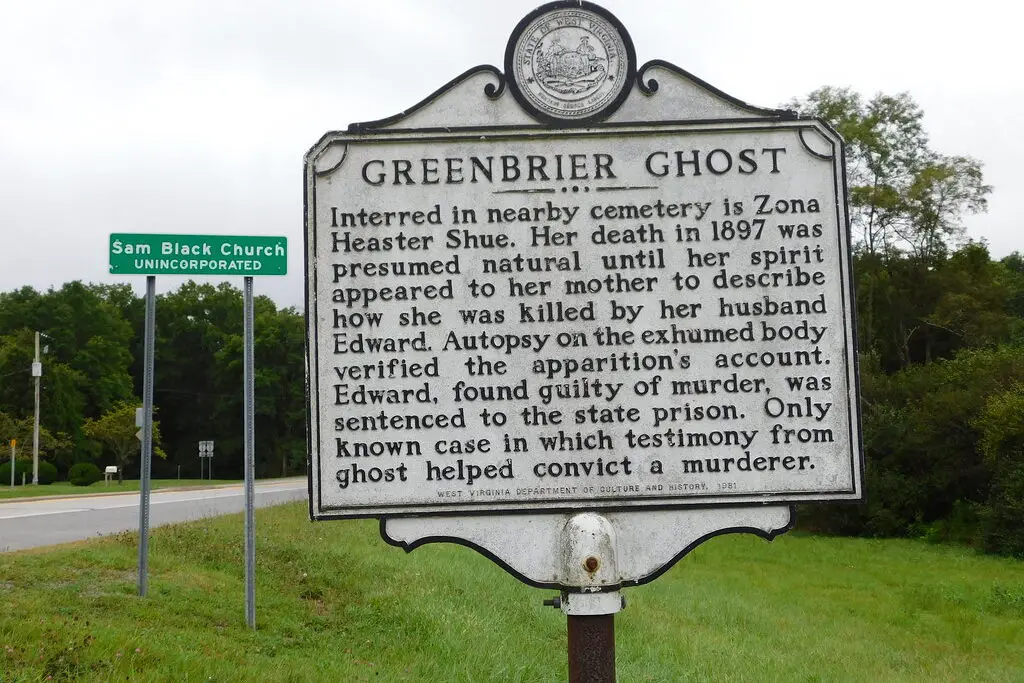
In 1897, a young woman named Zona Heaster Shue died suddenly in Greenbrier County, West Virginia. Her husband, Edward Shue, behaved suspiciously during the funeral, refusing to let anyone examine her body closely. Soon afterward, Zona’s mother claimed her daughter’s ghost appeared to her several times, insisting that Shue had murdered her. The story spread quickly through the small community.
Authorities eventually reopened the investigation after the mother’s claims attracted attention. An autopsy revealed that Zona’s neck had been broken, leading to Shue’s arrest. During the trial, testimony about the ghost was even mentioned in court. Shue was convicted of murder and sentenced to prison. While the conviction solved the crime itself, people still debate whether the mother’s visions were genuine experiences or a powerful coincidence.
6. The Voynich Manuscript’s Possible American Origins
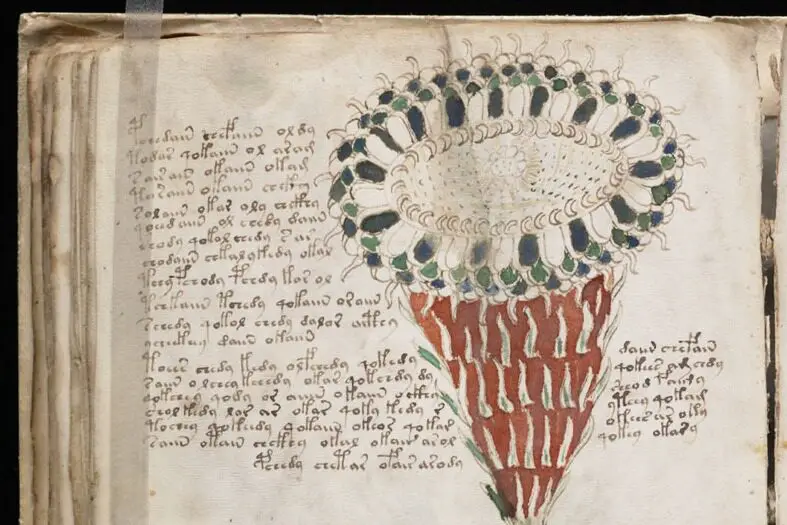
The Voynich Manuscript is one of the most mysterious books ever discovered. Filled with strange symbols, unknown language and odd illustrations of plants and diagrams, it has baffled scholars for more than a century. Some researchers believe parts of the book may reference plants native to the Americas. That possibility raises questions about whether it could have connections to early exploration of the New World.
Linguists, cryptographers and historians have all attempted to decode the text. Despite sophisticated analysis and modern computing tools, no one has conclusively translated the manuscript. Some believe it could be a lost scientific text or encoded medical guide. Others suspect it might simply be an elaborate hoax. If it truly contains references to early American plants, it could reshape our understanding of precolonial knowledge exchange. For now, its meaning remains undeciphered.
7. The Mystery of the Kensington Runestone
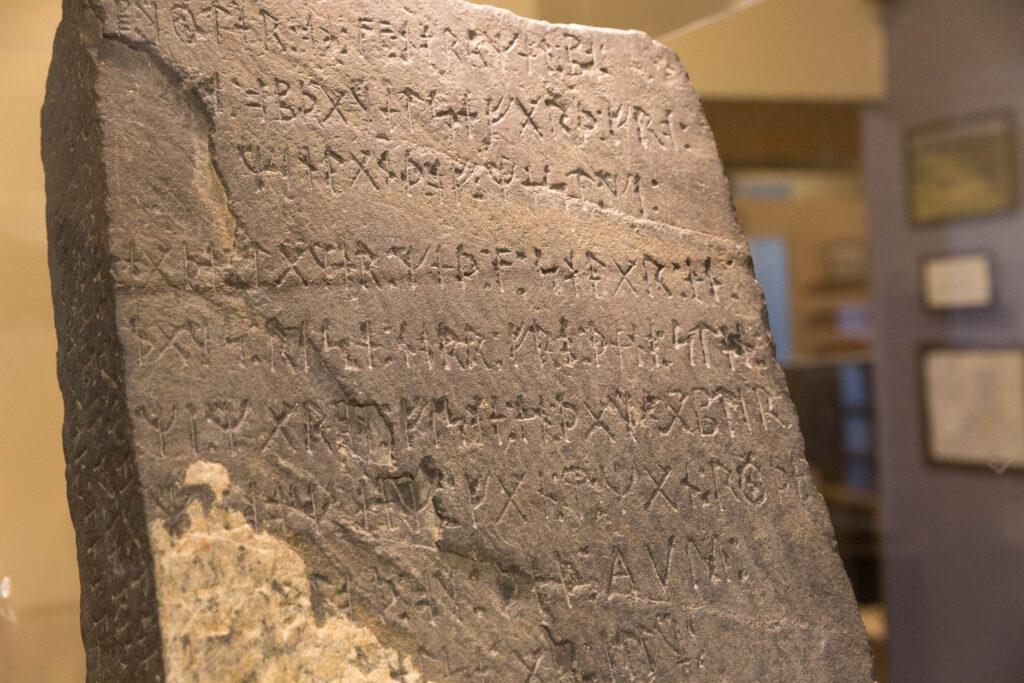
In 1898, a Swedish immigrant named Olof Ohman claimed he discovered a large stone slab while clearing land on his Minnesota farm. The stone contained runic inscriptions that appeared to describe a Norse expedition traveling through the region in 1362. If authentic, the stone would suggest that Scandinavian explorers reached deep into North America long before Columbus.
Many historians immediately dismissed the stone as a modern hoax. Linguists pointed out that some of the runes seemed inconsistent with medieval Scandinavian writing. Supporters, however, argue that the inscription may reflect regional variations or lost dialect forms. The debate has continued for more than a century. Some scholars still defend its authenticity while others remain firmly skeptical. The true origin of the Kensington Runestone is still uncertain.
8. The Salem Witch Trials Accusations
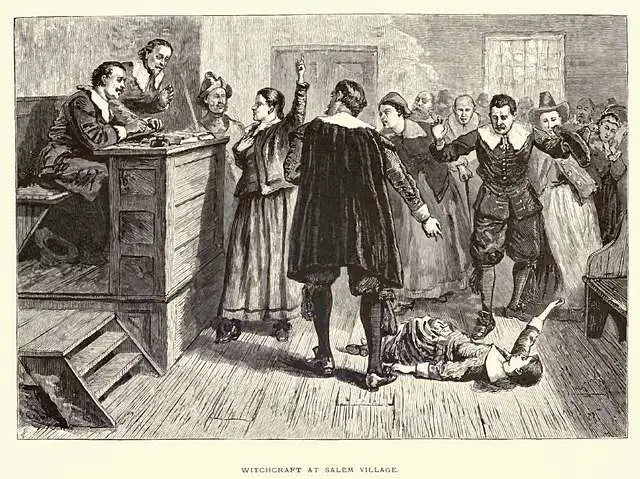
The Salem witch trials of 1692 remain one of the most unsettling episodes in early American history. Dozens of people were accused of practicing witchcraft after several young girls began displaying strange physical symptoms. Residents claimed to see visions, hear voices and suffer unexplained fits. Fear spread quickly throughout the Massachusetts colony.
Twenty people were ultimately executed before the trials finally ended. Historians have proposed many explanations for the strange behavior that sparked the accusations. Some suggest ergot poisoning from contaminated rye could have caused hallucinations. Others point to social tensions, religious extremism or personal grudges within the community. No single theory has been able to explain every detail of the events. The exact trigger behind the hysteria remains debated.
9. The Disappearance of the Beale Treasure
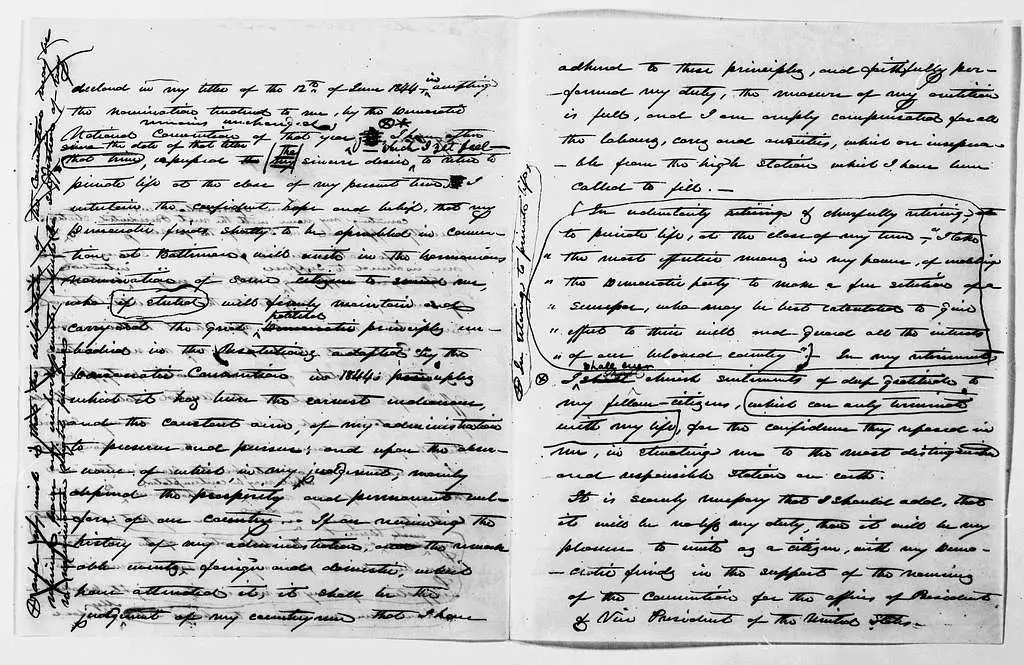
In the early 1800s, a man named Thomas J. Beale supposedly buried a massive treasure somewhere in Bedford County, Virginia. Before disappearing, he reportedly left behind three encrypted documents describing the treasure’s location and contents. One of the ciphers was eventually decoded, revealing a list of gold, silver and jewels said to be worth millions.
The other two codes, which supposedly reveal the exact location, remain unsolved. Treasure hunters have searched the Virginia countryside for generations. Some believe the entire story may be a fabricated hoax created in the 1800s. Others insist the treasure could still be hidden somewhere in the hills. Without the remaining codes cracked, the mystery continues to fuel speculation. No verified treasure has ever been recovered.
10. The Carolina Bays
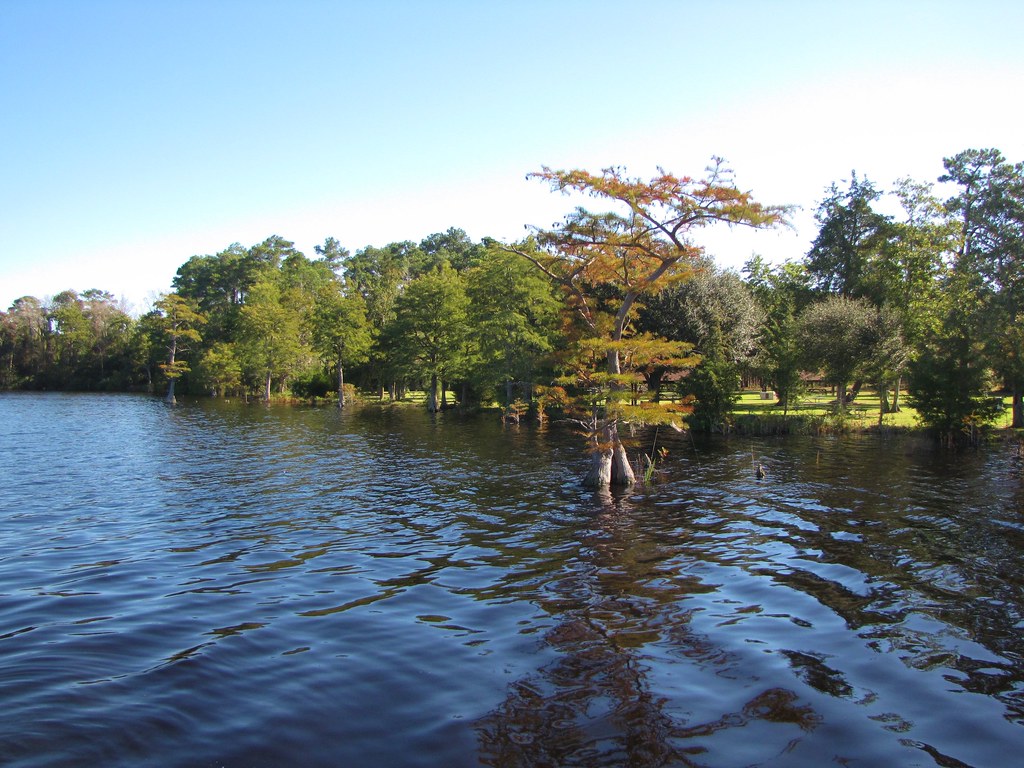
Across the coastal plains of the Carolinas and Georgia lie thousands of strange oval-shaped depressions known as Carolina Bays. Many of them are filled with water, forming shallow lakes or wetlands. Their unusual alignment and consistent shape puzzled scientists when they were first studied in the early 20th century.
Some early researchers suggested the bays were created by meteor impacts. Others proposed wind and water erosion during the last ice age shaped the landforms. More recent studies favor natural geological processes related to ancient climate patterns. However, the exact mechanism that formed the thousands of identical depressions is still debated. The landscape remains one of the most unusual geological puzzles in the eastern United States.
11. The Moving Coffins of Barbados
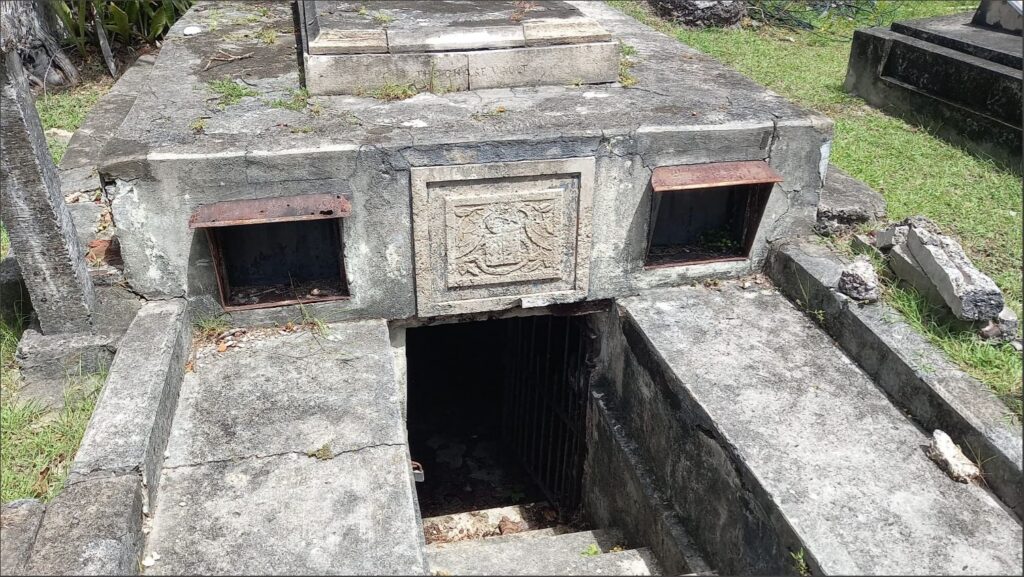
In the early 1800s, caretakers of a family tomb in Barbados discovered something deeply unsettling. Every time the vault was opened for a new burial, the heavy lead coffins inside had been violently rearranged. Some had been turned upside down or stacked against the walls. Yet the sealed stone entrance showed no signs of disturbance.
Officials carefully documented the phenomenon over several years. They even spread sand across the floor to detect footprints, but none ever appeared. After the final disturbance in 1820, the coffins were removed and the vault was sealed permanently. No clear explanation was ever found for how the coffins kept moving. The strange case remains one of the oddest burial mysteries associated with early colonial history.
12. The Disappearance of the Flannan Isles Lighthouse Keepers
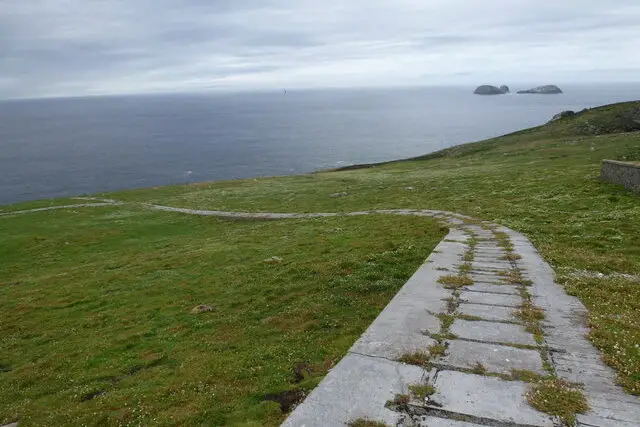
In December 1900, a ship passing the remote Flannan Isles off the coast of Scotland noticed something unusual. The lighthouse that normally guided ships through the dangerous waters was dark. When a relief crew finally landed on the island, they discovered that all three lighthouse keepers had vanished. Their oilskin coats were missing, but the lighthouse equipment appeared mostly undisturbed.
The last log entries described severe storms battering the island. Some investigators believed the men were swept away by massive waves while trying to secure equipment outside. Others speculated about accidents, foul play or even stranger explanations. No bodies were ever found and the exact circumstances remain unclear. The disappearance quickly became one of the most famous maritime mysteries of the era.