
1. The Disappearance of the Sodder Children (1945)

On Christmas Eve 1945, a house fire in Fayetteville, West Virginia, was initially believed to have killed five children from the Sodder family. But when the ashes were examined, investigators found no human remains, which raised immediate doubts. The parents, George and Jennie Sodder, were convinced their children had survived and been taken. There were strange details that didn’t quite add up, including a missing ladder, a cut phone line, and reports of unfamiliar men seen around the house beforehand.
Over the years, the family received tips suggesting the children were still alive, including a photo mailed to them in the ’60s claiming to show one of the sons as an adult. The case was never definitively solved, and no conclusive evidence of death was ever found. The Sodders spent the rest of their lives searching for answers. Even today, the case remains one of the most puzzling fire-related mysteries in American history. It leaves open the unsettling possibility that the children may not have died in the fire at all.
2. The Vanishing of Ambrose Bierce (1913)

Ambrose Bierce was a well-known writer and Civil War veteran who disappeared in Mexico during the Mexican Revolution. In 1913, he traveled south, reportedly to observe the conflict firsthand. His last known correspondence suggested he was heading to the town of Ojinaga, a site of active fighting at the time. After that, he was never heard from again.
Some believe Bierce was killed during the conflict, possibly executed or caught in crossfire. Others suggest he may have taken his own life, consistent with the dark tone of his writing. There are also theories that he simply vanished intentionally, choosing to disappear rather than grow old. No confirmed records of his death have ever been found. His disappearance remains one of the most enduring literary mysteries in American history.
3. The Mystery of the Mary Celeste (1872)
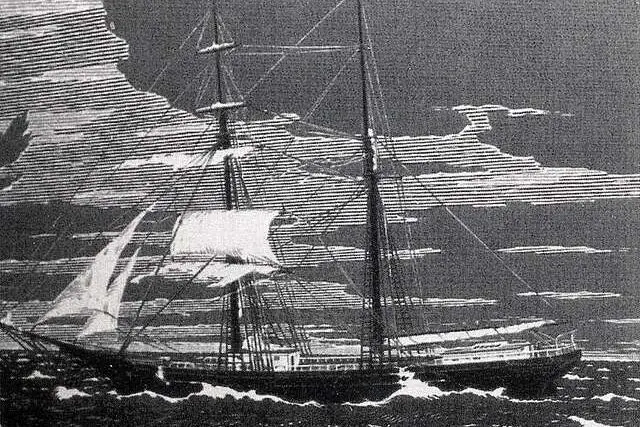
The merchant ship Mary Celeste was discovered adrift in the Atlantic Ocean in December 1872. The ship was in good condition, with cargo intact and no signs of a struggle, but the entire crew was missing. Personal belongings, including valuables, were left behind, suggesting the crew did not leave voluntarily under normal circumstances. Even the ship’s lifeboat was gone.
Various explanations have been proposed, including piracy, mutiny, and natural disasters like waterspouts. One widely discussed theory suggests that fumes from the cargo of industrial alcohol may have caused a panic. Still, no definitive evidence has ever supported a single explanation. The case quickly became famous and inspired numerous fictional retellings. To this day, no one knows exactly what happened to the people aboard.
4. The Hinterkaifeck Murders (1922)

In 1922, six people were brutally murdered on a remote farmstead in Germany, in what became known as the Hinterkaifeck murders. The victims included a family and their newly hired maid. Disturbingly, evidence suggested the killer may have stayed on the property for days before and after the murders. Footprints in the snow led to the house but not away from it.
Neighbors reported strange occurrences leading up to the crime, including unexplained noises in the attic and a missing set of keys. Despite extensive investigation, no suspect was ever definitively identified. The case has been reexamined many times, but it remains unsolved. The brutality and bizarre circumstances continue to draw attention more than a century later. It is still considered one of Germany’s most infamous unsolved crimes.
5. The Disappearance of the Beaumont Children (1966)

In January 1966, three siblings, known as the Beaumont children, went missing from Glenelg Beach in South Australia. They had taken a bus to the beach and were last seen playing near the shore. Witnesses later reported seeing them with an unidentified man. When they failed to return home, a massive search effort began.
Despite widespread publicity and numerous leads, the children were never found. The case had a profound impact on Australian society, changing how families viewed child safety. Over the decades, several suspects have been considered, but none have been definitively linked to the crime. New tips still occasionally emerge, but no resolution has been reached. It remains one of Australia’s most enduring missing persons cases.
6. The Somerton Man (1948)

In December 1948, an unidentified man was found dead on Somerton Beach in Adelaide, Australia. The case became known as the Somerton Man case. He had no identification, and the labels on his clothing had been removed. A small piece of paper with the words “Tamám Shud,” meaning “ended,” was found hidden in a pocket.
A copy of a rare book was later linked to the case, containing a coded message that has never been conclusively deciphered. For decades, theories ranged from espionage to personal tragedy. In 2022, DNA analysis suggested the man may have been an electrical engineer named Carl “Charles” Webb, but this identification is not universally accepted by all experts. Key questions about how and why he died remain unanswered. The case continues to attract both investigators and amateur sleuths.
7. The Lost Colony of Roanoke (1587)
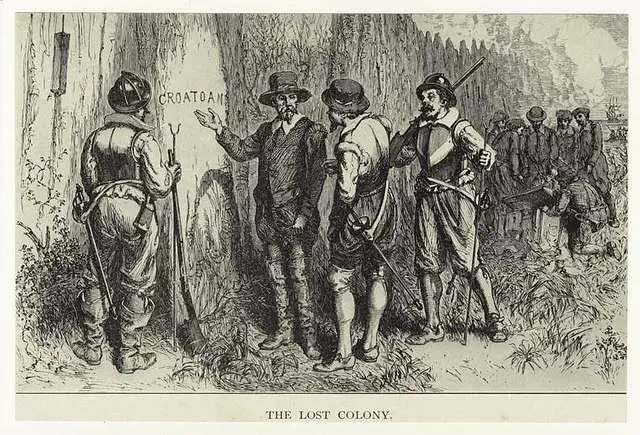
The Lost Colony of Roanoke is one of the earliest mysteries in American history. Over 100 English settlers established a colony on Roanoke Island, in what is now North Carolina. When their governor, John White, returned from a supply trip in 1590, the colony had vanished. There were no signs of struggle, but the word “CROATOAN” was carved into a post.
Historians have long debated what happened to the settlers. Some believe they integrated with local Indigenous tribes, while others suggest they may have perished due to disease or conflict. Archaeological evidence has provided some clues, but nothing definitive. The absence of clear records makes it difficult to confirm any single theory. The story has become a foundational mystery in early American history. It continues to be studied and debated centuries later.
8. The Green Children of Woolpit (12th Century)

In medieval England, reports emerged of two children with green-tinted skin found near the village of Woolpit. The story of the Green Children of Woolpit was recorded by chroniclers like William of Newburgh. The children spoke an unknown language and initially refused all food except beans. Over time, the boy died, but the girl survived and eventually learned English.
She claimed they came from a land where the sun never fully shone, which added to the mystery. Some historians believe the story may have a rational explanation, such as malnutrition causing a greenish skin tone. Others view it as folklore shaped by the storytelling traditions of the time. Because the accounts are limited and come from a distant era, many details remain uncertain. The story sits somewhere between history and legend, which makes it difficult to fully verify.
9. The Disappearance of Flight 19 (1945)

In December 1945, five U.S. Navy training planes vanished during a routine exercise over the Atlantic, an घटना often associated with the Bermuda Triangle. The group, known as Flight 19, reported navigation problems before losing contact. A rescue plane sent to search for them also disappeared shortly after takeoff. No wreckage from either the training flight or the rescue mission was ever conclusively recovered.
Some explanations point to human error, including navigational confusion by the flight leader. Others suggest mechanical failure or sudden weather changes. The incident helped fuel the legend of the Bermuda Triangle, although many researchers argue that the circumstances can be explained without invoking anything unusual. Still, the lack of physical evidence leaves room for speculation. The disappearance remains one of the most discussed aviation mysteries.
10. The Dancing Plague of 1518
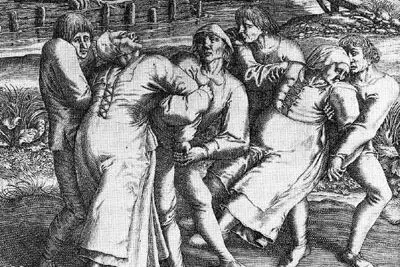
In 1518, residents of Strasbourg, in what is now France, began dancing uncontrollably in the streets. The event, known as the Dancing Plague of 1518, reportedly affected dozens and eventually hundreds of people. Some participants danced for days without rest, and historical accounts suggest that a number of them died from exhaustion or related complications.
Modern historians have proposed several explanations, including mass psychogenic illness or ergot poisoning from contaminated grain. However, no single theory has been universally accepted. The lack of detailed medical records makes it difficult to determine what actually happened. Contemporary sources are limited and sometimes contradictory. The event remains one of the strangest documented episodes of collective behavior in European history.
11. The Disappearance of Judge Joseph Force Crater (1930)
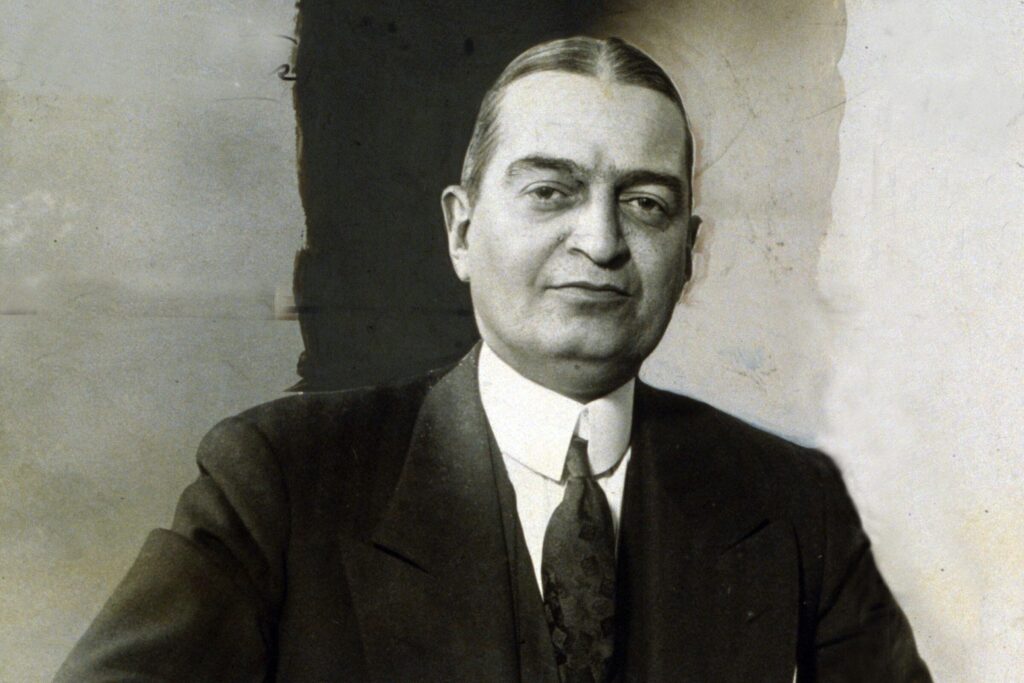
Joseph Force Crater was a New York Supreme Court judge who vanished in 1930. He was last seen leaving a restaurant in Manhattan after telling acquaintances he would return shortly. Instead, he disappeared without a trace. His case quickly became a national sensation and introduced the phrase “to do a Crater,” meaning to vanish mysteriously.
Investigators uncovered financial irregularities and possible connections to organized crime, but no definitive conclusion was reached. Crater’s remains were never found, and no one was ever charged in connection with his disappearance. Over time, public interest faded, but the mystery endured. The case was officially closed decades later without resolution. It remains one of the most famous missing persons cases in U.S. history.
12. The Lead Masks Case (1966)

In 1966, two men were found dead on a hill in Niterói, Brazil, in what became known as the Lead Masks Case. They were wearing formal suits and had strange lead masks covering their eyes. Nearby, investigators found a notebook with cryptic instructions referencing capsules and timing. There were no clear signs of violence.
Toxicology tests were inconclusive, and the exact cause of death was never firmly established. Some theories suggest involvement in spiritual or scientific experiments, while others point to possible self-induced poisoning. The unusual circumstances and lack of clear evidence have kept the case unresolved. It continues to be cited as one of Brazil’s most puzzling unsolved incidents. Key details about what the men were attempting remain unclear.