
1. Grossinger’s Catskill Resort Hotel
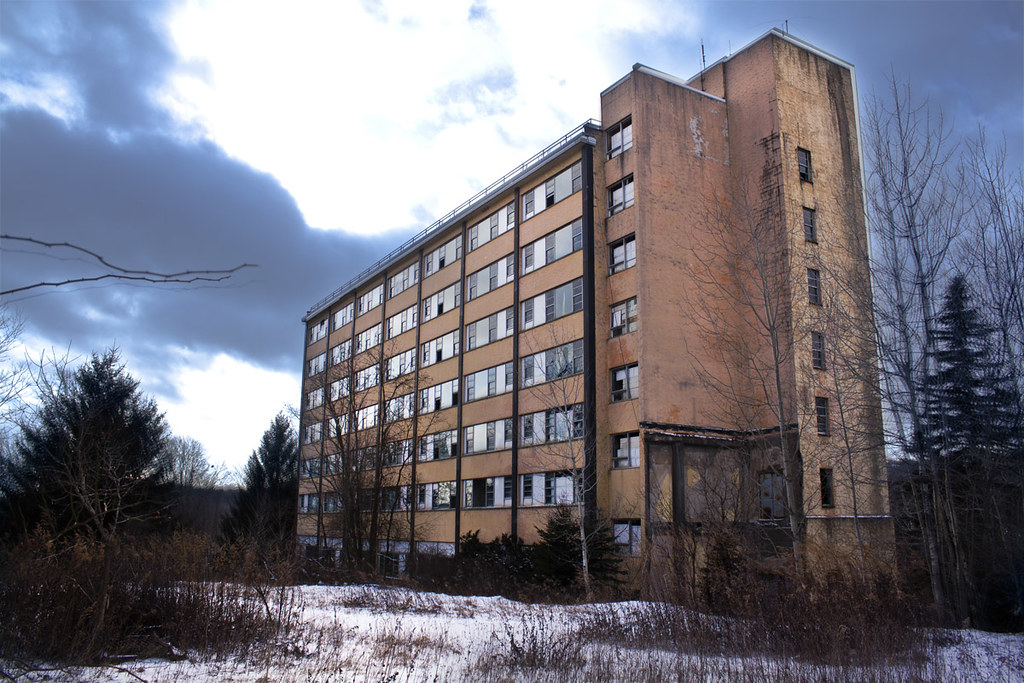
For decades, Grossinger’s Catskill Resort Hotel in Liberty, New York, was one of the most famous vacation spots in the Catskills. Founded in the early 1900s by Jennie and Asher Grossinger, it grew into a massive complex with golf courses, ski slopes, theaters, and hundreds of guest rooms. At its peak in the mid-20th century, celebrities, athletes, and politicians all passed through its doors. The resort even hosted boxing training camps for legends like Rocky Marciano. Ads promised fresh mountain air, luxury amenities, and nonstop entertainment. Families returned year after year because it felt like a complete summer world.
But by the late 1970s and 1980s, the Catskills resort era began to collapse. Air travel made other destinations more appealing, and younger travelers were looking elsewhere for vacations. Grossinger’s struggled to compete and finally closed in 1986. The once-glamorous property slowly fell into decay as buildings were abandoned and vandalized. Today, only fragments remain of what was once one of America’s most famous resort getaways.
2. The Nevele Grand Resort
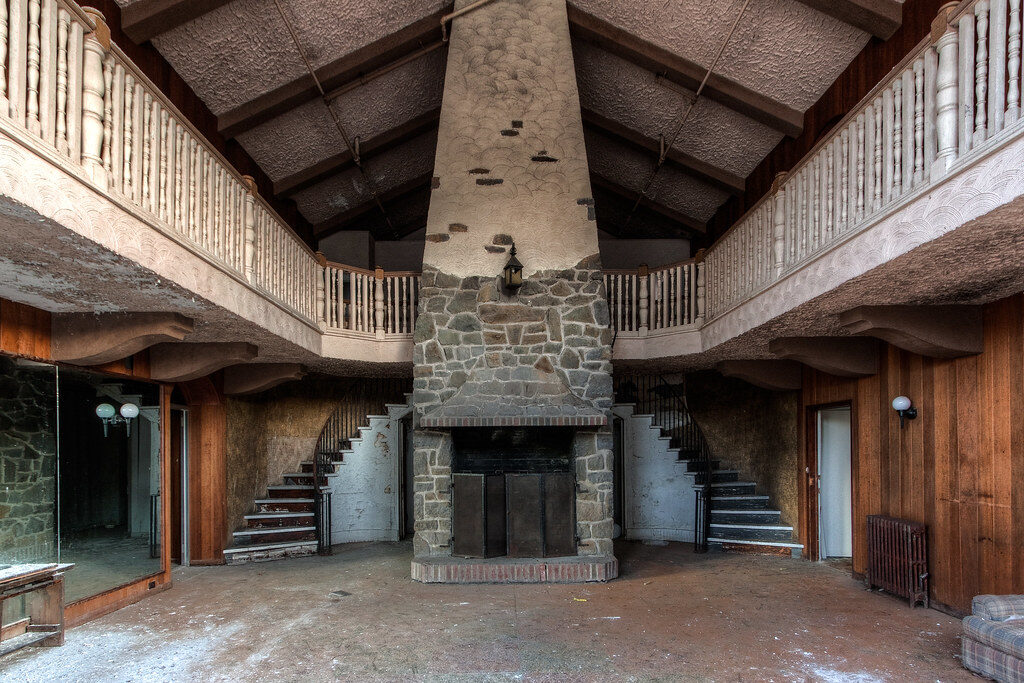
The Nevele Grand Resort in Ellenville, New York, was another giant of the Catskills vacation scene. Opened in 1903, the resort’s name famously spelled “Eleven” backward, referencing the nearby Route 209 and a playful marketing idea. By the 1950s and 1960s, the Nevele had grown into a huge complex with multiple hotels, golf courses, ski slopes, and entertainment venues. It advertised itself as a luxury escape where guests could enjoy fine dining, nightlife, and scenic mountain views. Families spent entire summers there, and entertainers regularly performed for packed audiences. Like many Catskills resorts, it thrived during the era when city families traveled north for long vacations.
The decline came gradually as travel habits changed in the late 20th century. The resort struggled financially and went through several ownership changes. After years of instability, it finally closed in 2009. Plans to redevelop the property surfaced several times but never fully materialized. Much of the large complex now sits abandoned, a reminder of how big the Catskills resort industry once was.
3. Salton Sea Beach Resort
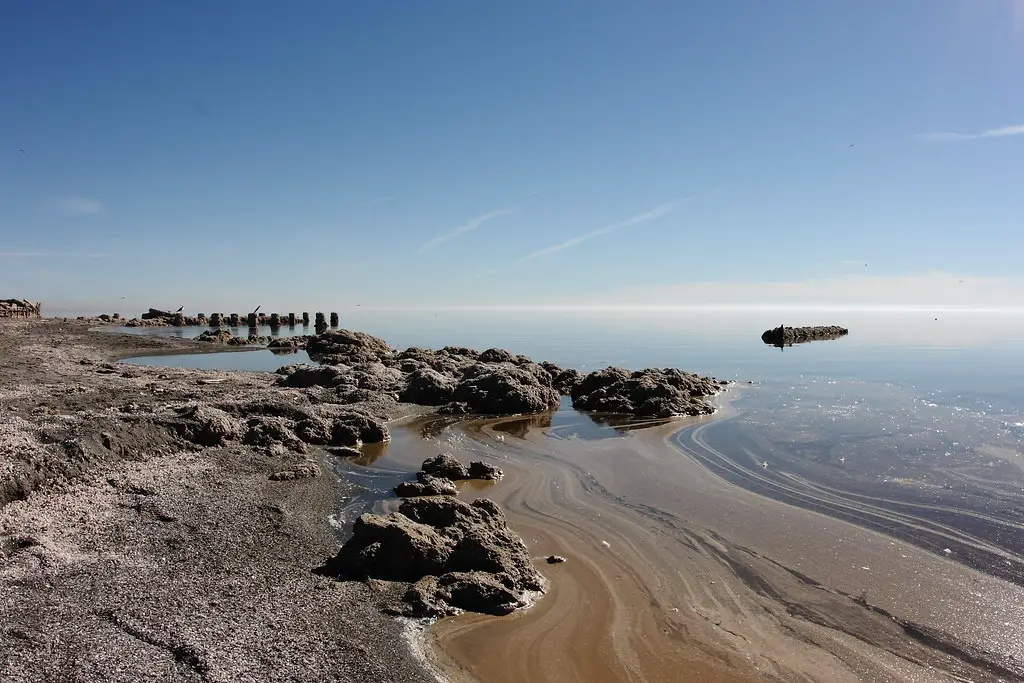
During the 1950s and early 1960s, California’s Salton Sea was promoted as a glamorous desert playground. Resorts and vacation communities sprang up along the shoreline, including Salton Sea Beach. Developers promised boating, fishing, water skiing, and sunny resort living. At the time, the lake attracted hundreds of thousands of visitors each year. Celebrities reportedly visited the area, and advertisements portrayed it as the next Palm Springs. New hotels, marinas, and vacation homes were built quickly to meet demand.
The problem was the lake itself. Rising salinity and pollution gradually killed off fish populations and created strong odors. As wildlife declined and the shoreline became less appealing, tourism collapsed. Many resort developments were abandoned or left half empty. Today, Salton Sea Beach and nearby communities remain sparsely populated and surrounded by decaying structures. The dream of a desert Riviera never fully recovered.
4. Lee Plaza Hotel
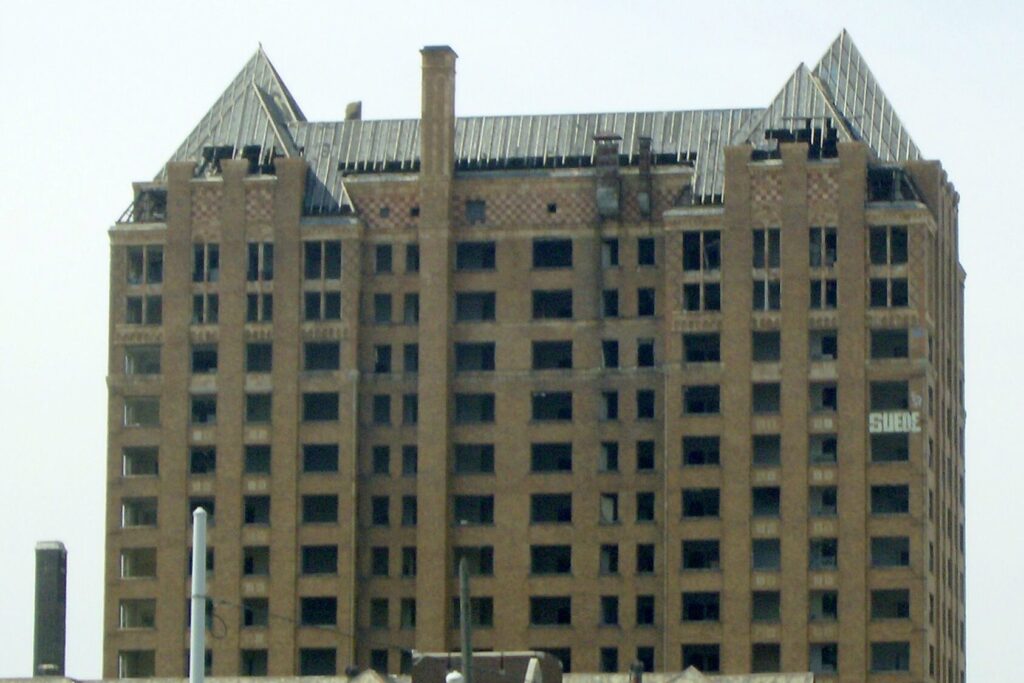
The Lee Plaza Hotel in Detroit opened in 1929 and was originally marketed as a luxury residential hotel. Designed in an ornate Renaissance Revival style, it offered elegant apartments, dining rooms, and sweeping views of the city. Early advertisements emphasized its high-end lifestyle and glamorous setting. During the mid-20th century, it remained a prominent Detroit address. Residents enjoyed amenities similar to those found at luxury resorts. The building’s striking architecture made it one of the city’s most recognizable landmarks.
Detroit’s economic struggles eventually affected the property. By the 1990s, the building had fallen into serious decline. The Lee Plaza closed in 1997 and sat abandoned for decades. Its once-grand interior deteriorated as windows broke and water damage spread. In recent years, redevelopment plans have begun moving forward, but for a long time it stood as one of Detroit’s most famous abandoned buildings.
5. Kupari Resort Complex
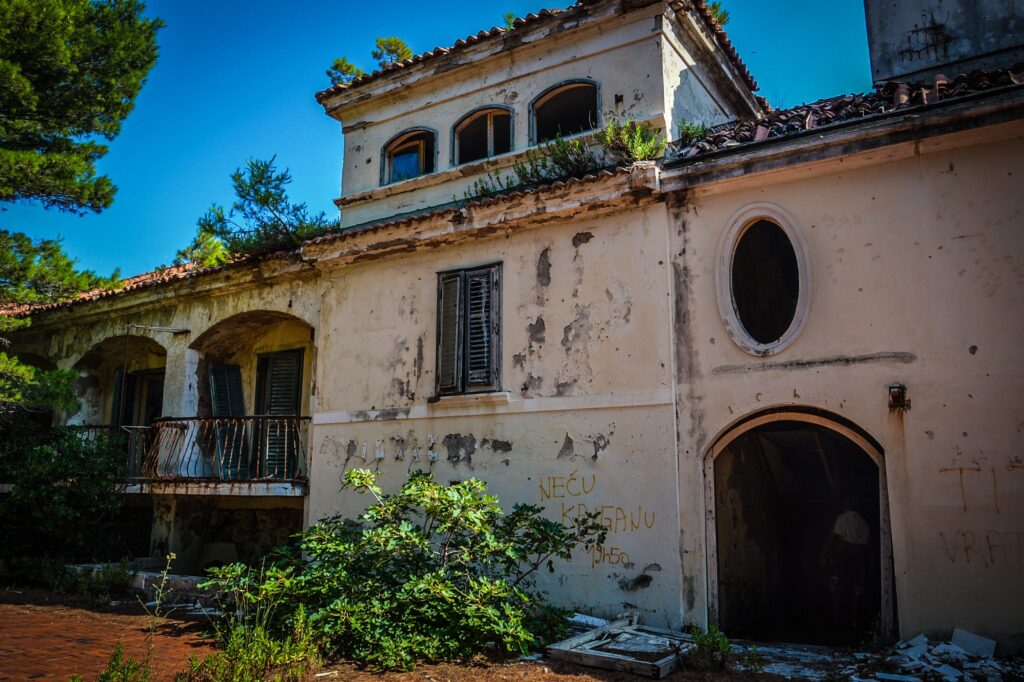
Kupari, located on Croatia’s Adriatic coast near Dubrovnik, was once a stunning seaside resort area. During the Yugoslav era, several modern hotels were built there for military personnel and government guests. The complex included beachfront hotels, villas, and recreational facilities overlooking the turquoise Adriatic Sea. In its prime during the 1960s through the 1980s, Kupari was considered an elite vacation destination. The setting was undeniably beautiful, with dramatic coastal views and Mediterranean weather. Guests enjoyed a quiet escape far from crowded cities.
The resort’s fate changed dramatically during the Croatian War of Independence in the early 1990s. Several hotels were damaged during military fighting in the region. After the war, the resort complex was never fully restored. Many of the buildings remain abandoned today, their concrete structures slowly weathering near the shoreline. Despite redevelopment proposals, Kupari has spent decades frozen between its glamorous past and an uncertain future.
6. Ponce Intercontinental Hotel
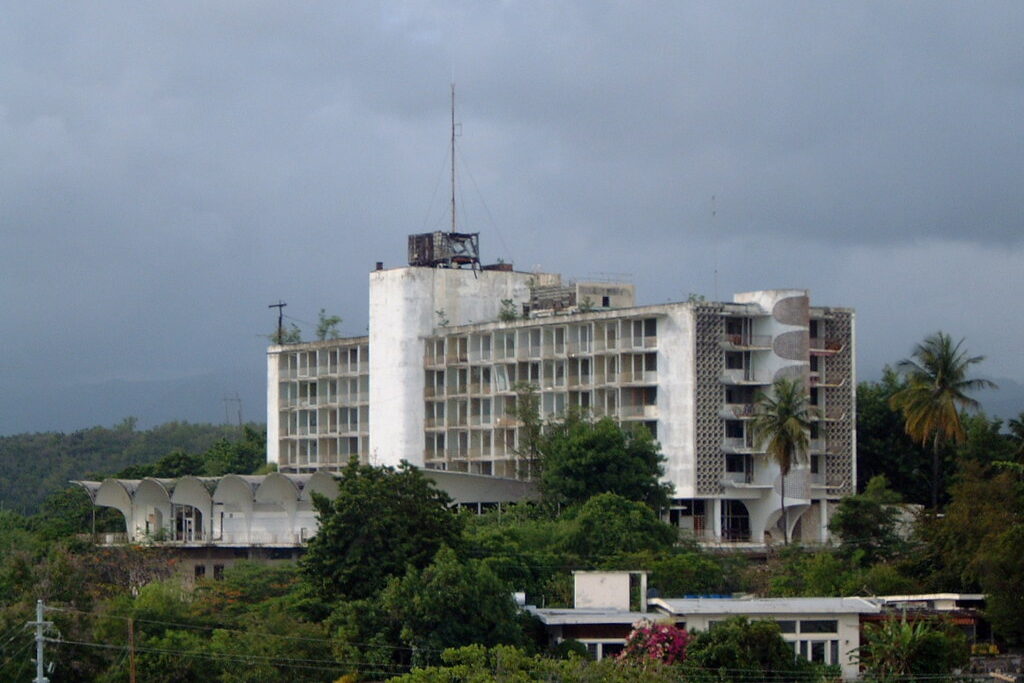
The Ponce Intercontinental Hotel opened in 1960 in Ponce, Puerto Rico, as one of the island’s most modern luxury resorts. Designed by architect William Tabler, the hotel featured sleek mid-century architecture and sweeping views of the Caribbean Sea. Advertisements promoted it as a glamorous tropical escape for international travelers. The property included pools, entertainment spaces, and upscale dining areas. During its early years, it attracted tourists and high-profile visitors. It represented Puerto Rico’s growing reputation as a luxury travel destination.
By the late 1970s and early 1980s, the hotel struggled financially as tourism patterns shifted. The property eventually closed and sat unused for many years. Without regular maintenance, parts of the building deteriorated significantly. Storm damage and tropical weather also took their toll. Although redevelopment ideas have surfaced at various times, the once-polished resort complex has long remained largely abandoned.
7. Penn Hills Resort
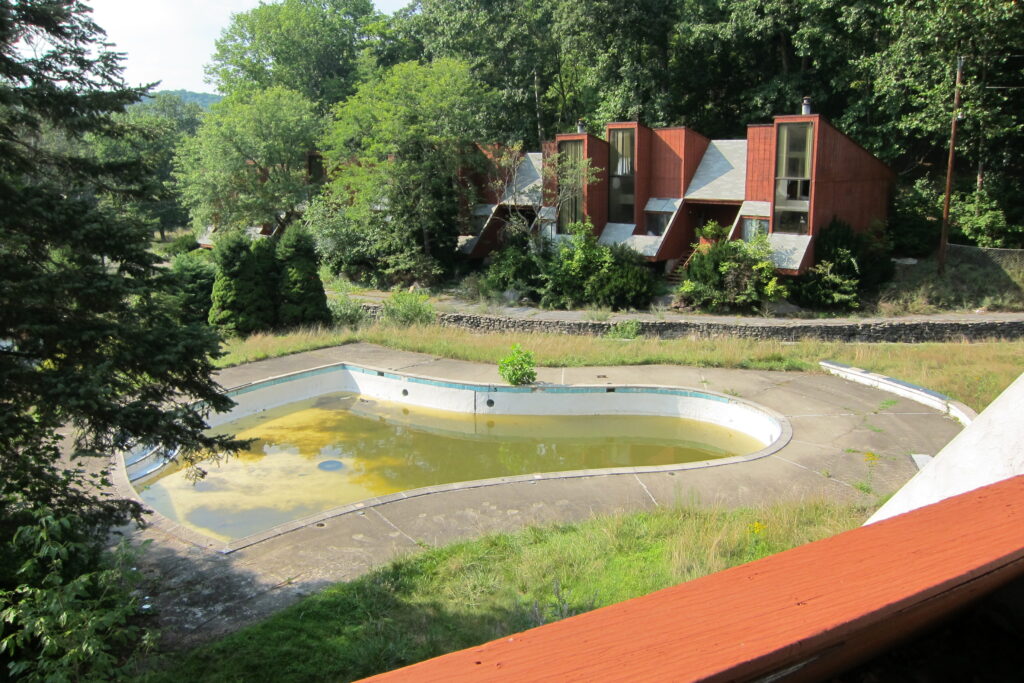
Penn Hills Resort in the Pocono Mountains of Pennsylvania was once famous for romantic getaways. Opened in 1944, it became particularly popular with honeymooners and couples seeking a quiet escape. The resort’s heart-shaped tubs and champagne-glass whirlpool baths became widely recognized symbols of its brand. Advertisements promised luxury, privacy, and scenic mountain surroundings. Throughout the 1960s and 1970s, it was a well-known destination for couples across the Northeast. Its quirky amenities helped make it one of the region’s most recognizable resorts.
The popularity faded as newer resorts appeared and travel tastes changed. By the early 2000s, Penn Hills was struggling to maintain its aging facilities. The resort finally closed in 2009. Afterward, the property sat abandoned for years and attracted photographers interested in urban exploration. Many of the buildings were eventually demolished, but the site still carries the reputation of one of the Poconos’ most unusual resort relics.
8. The Haludovo Palace Hotel
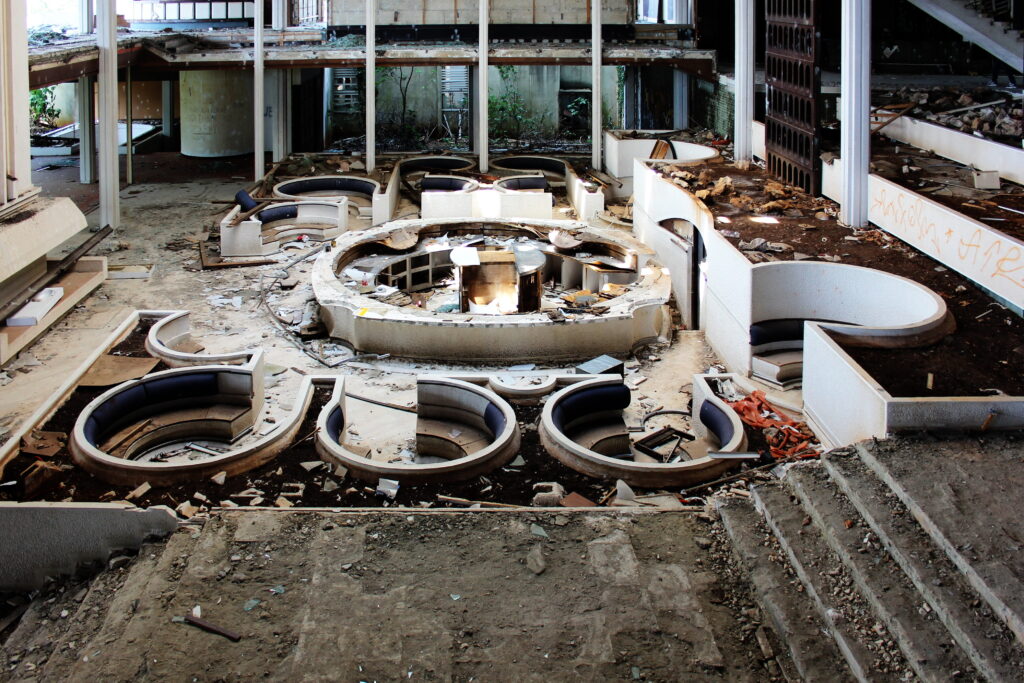
Haludovo Palace Hotel on the Croatian island of Krk opened in 1972 and quickly became one of the most extravagant resorts in the region. It was financed in part by Penthouse magazine publisher Bob Guccione. The resort complex included a casino, luxury hotel, and beachfront facilities overlooking the Adriatic Sea. Promotional materials promised lavish parties, upscale entertainment, and glamorous nightlife. At its peak, the resort hosted international guests seeking a high-end vacation destination. The property’s bold design reflected the flashy style of the early 1970s.
Financial problems began almost immediately. The casino operation struggled, and the resort changed ownership multiple times over the years. After the breakup of Yugoslavia and economic turmoil in the region, the complex eventually shut down. Today the once-glittering buildings stand abandoned along the coastline. Their crumbling halls contrast sharply with the sunny beaches that originally drew visitors.
9. El Hotel del Salto
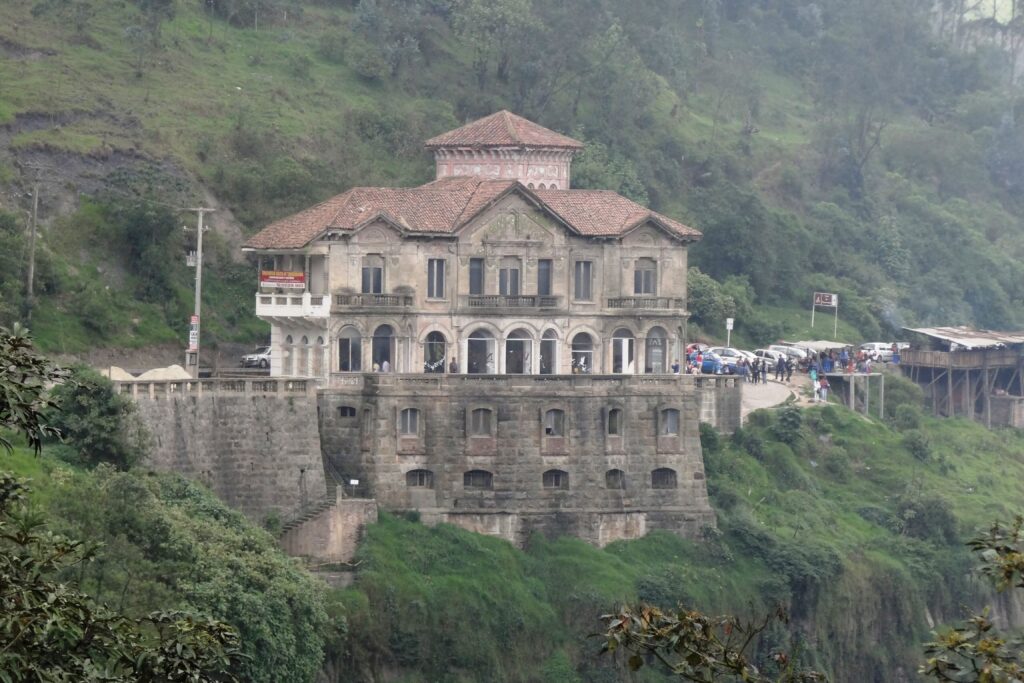
El Hotel del Salto sits dramatically beside Tequendama Falls near Bogotá, Colombia. Built in the 1920s, the elegant mansion-style hotel overlooked one of the country’s most famous waterfalls. Early advertisements promoted it as a luxurious retreat where guests could enjoy spectacular natural scenery. Wealthy travelers visited the hotel to experience the dramatic views and fresh mountain air. For a time, it was considered one of Colombia’s most prestigious destinations. The setting made it appear almost like a castle perched above the gorge.
Over time, environmental problems affected the surrounding river. Pollution in the Bogotá River created unpleasant conditions near the falls. Tourism gradually declined and the hotel closed in the late 20th century. For years, the empty building gained a reputation for eerie stories and local legends. Eventually it was restored and converted into a museum, preserving its dramatic architecture while acknowledging its unusual history.
10. Coco Palms Resort
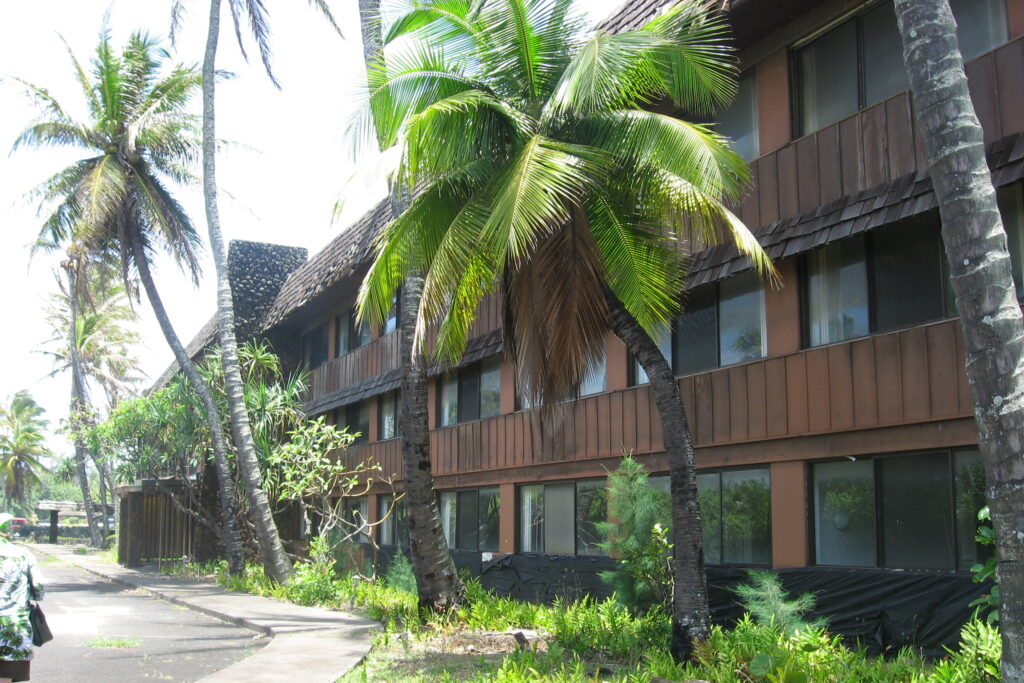
Coco Palms Resort on the island of Kauai in Hawaii opened in 1953 and quickly became a popular tropical getaway. The resort featured lagoons, palm-lined grounds, and traditional Hawaiian-style entertainment. It became widely known after appearing in the 1961 Elvis Presley film Blue Hawaii. Guests could stay in cottages around the property and attend luaus on the scenic grounds. For years, it was marketed as a classic island paradise. Travelers came for the lush scenery and relaxed atmosphere.
The resort’s fortunes changed after Hurricane Iniki struck Hawaii in 1992. The powerful storm caused extensive damage across Kauai, including the Coco Palms property. The resort closed after the hurricane and never reopened. Several redevelopment plans were proposed over the decades, but none were completed. The once-famous resort has remained largely abandoned ever since.
11. The Diplomat Resort (Hallandale Beach)
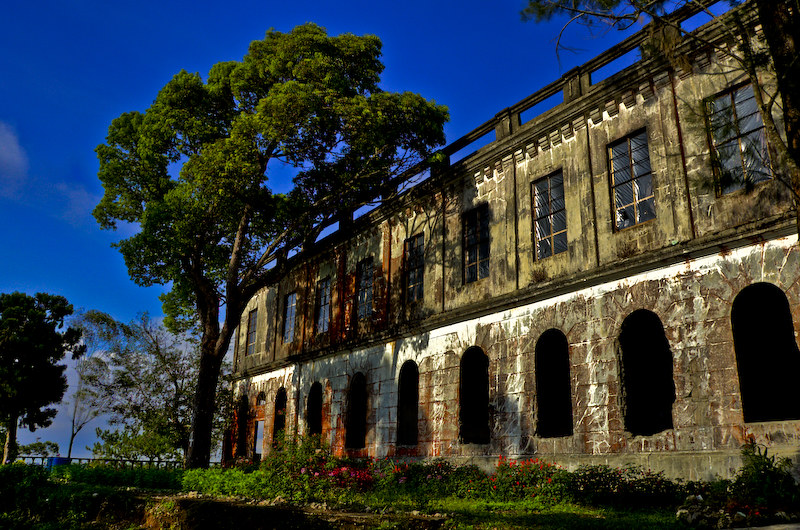
The Diplomat Resort in Hallandale Beach, Florida, originally opened in 1958 as a large oceanfront destination hotel. It was marketed as a glamorous resort with a casino, entertainment venues, and luxury accommodations. Celebrities and entertainers frequently performed there during its early years. The property was designed to attract both vacationers and convention crowds. With its beachfront setting and bright architecture, it fit perfectly into the booming Florida tourism industry of the mid-20th century. For a time, it was one of the region’s most recognizable resorts.
The original structure declined in the late 20th century as newer resorts replaced it. The building eventually closed and sat empty before being demolished in 1998. A completely new Diplomat Resort complex was later built nearby, but the original structure that once symbolized Florida resort glamour no longer exists. Its story reflects how quickly the tourism industry can evolve. What was once promoted as the ultimate beach paradise eventually became outdated.
12. Varosha Beach Resorts
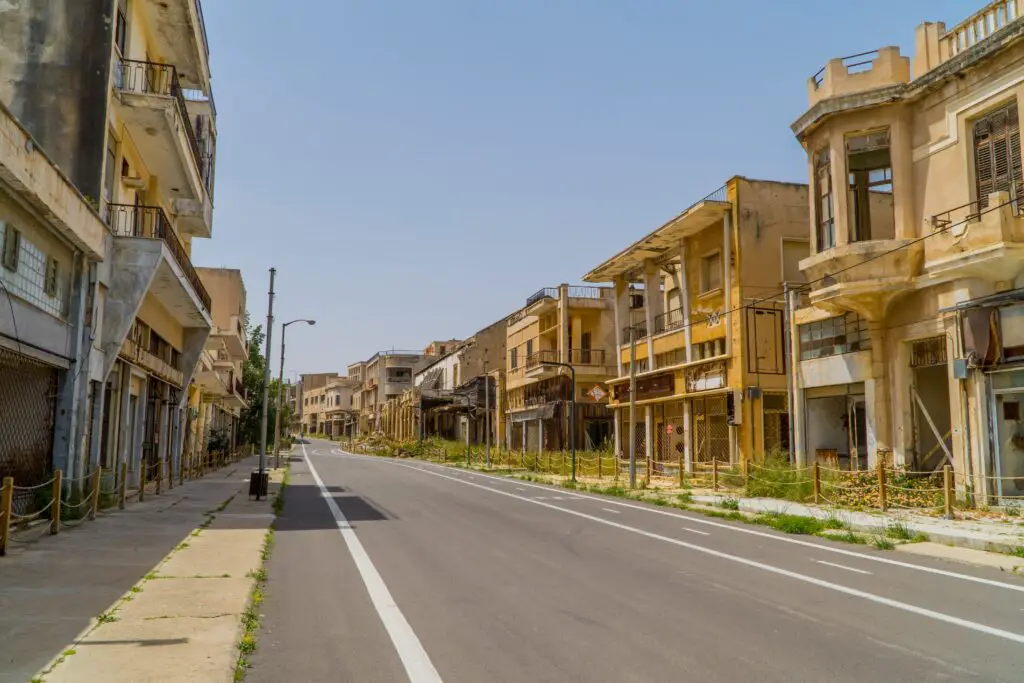
Varosha, a district of Famagusta in Cyprus, was once one of the Mediterranean’s most fashionable resort areas. During the 1960s and early 1970s, luxury hotels lined the beach and attracted international tourists. Hollywood celebrities such as Elizabeth Taylor and Brigitte Bardot reportedly visited the area during its peak years. Advertisements described Varosha as a glamorous coastal destination with sunny beaches and modern hotels. Thousands of visitors arrived each year to enjoy the Mediterranean setting. It was widely considered one of Cyprus’s most successful tourist districts.
Everything changed in 1974 during the Turkish invasion of Cyprus. The area was suddenly evacuated and sealed off by the military. Hotels, homes, and businesses were left exactly as they were. For decades, the district remained closed and largely abandoned. Today Varosha is one of the most famous ghost resort areas in the world, its empty hotels still facing the sea.