
1. Six Flags New Orleans (Louisiana)
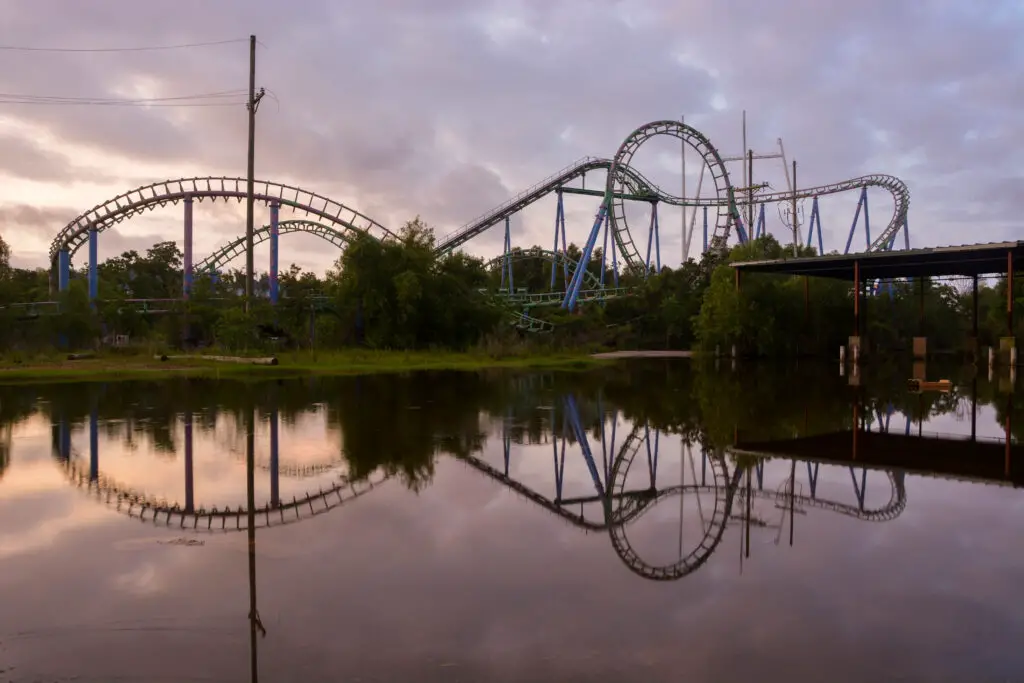
After Hurricane Katrina hit in 2005, Six Flags New Orleans never reopened, even though much of the park remained physically intact. Walking through it today, you can still see faded signage, roller coaster tracks, and buildings that look like they were simply paused mid-day. The bright colors and themed areas haven’t completely disappeared, which makes it feel eerily like guests could return at any moment. Some rides still stand upright, including the rusting remains of what used to be one of the park’s biggest attractions. Over the years, nature has slowly crept in, but it hasn’t fully erased the park’s layout or atmosphere. It’s been used as a filming location for movies and TV shows, which has helped preserve parts of it in a strange way. The combination of decay and structure makes it feel frozen in time.
There have been multiple redevelopment proposals, but none have successfully transformed the site. For now, it remains one of the most recognizable abandoned theme parks in the country. Security keeps most visitors out, but aerial footage and documentaries have shown just how intact it still is. The park’s parking lots, entry gates, and even some ticket booths are still visible. It’s not hard to imagine crowds walking through again, even though it’s been nearly two decades. That contrast between abandonment and familiarity is what makes it so unsettling. It doesn’t feel gone, it just feels paused.
2. Pripyat Amusement Park (Ukraine)
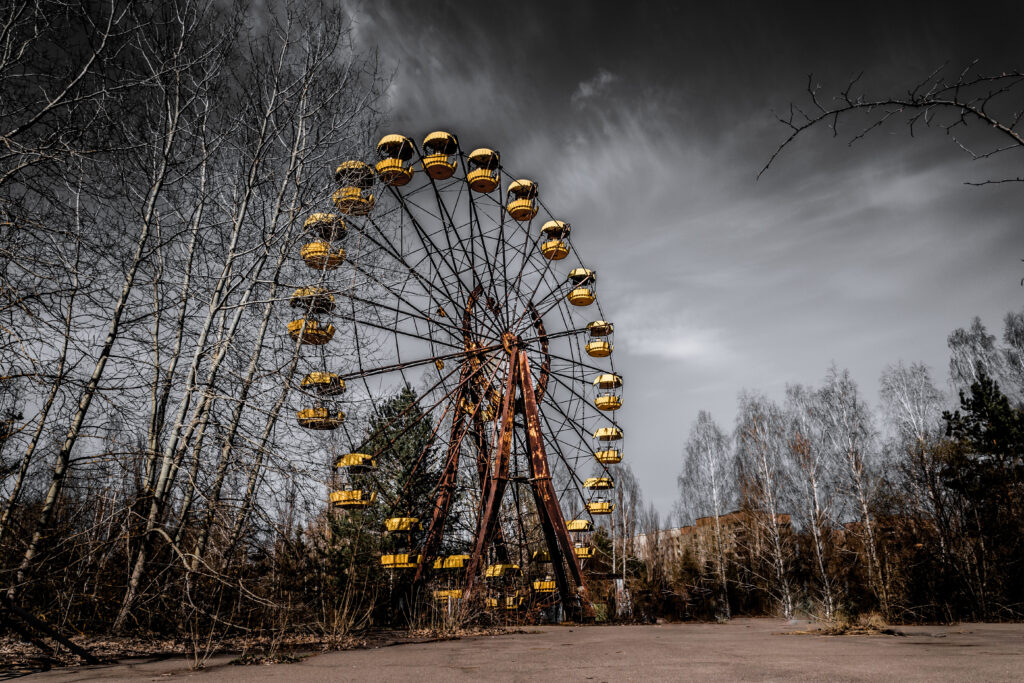
The amusement park in Pripyat was supposed to open in May 1986, but the Chernobyl disaster happened just days before its grand opening. Because of that timing, many of the rides were never used by the public at all. The iconic Ferris wheel still stands, bright yellow against a backdrop of overgrown trees. Unlike many abandoned places, this one was never worn down by years of use, which adds to its strange preserved feeling. The bumper cars and ticket booths remain in place, as if they were waiting for opening day that never came. Over time, rust and nature have taken hold, but the structure is still clearly recognizable. It’s one of the most photographed abandoned attractions in the world.
Pripyat itself was evacuated almost overnight, leaving behind an entire city that still feels intact in many ways. The amusement park is often the most haunting part because it represents a moment that never got to happen. Visitors today can only access it through guided tours due to radiation risks. Even so, the layout and design remain easy to understand at a glance. It still looks like a functioning park at first, until you notice the silence and decay. That contrast makes it one of the most chilling examples of an attraction frozen in time. It’s less about what happened there and more about what didn’t.
3. Michigan Central Station (Detroit, Michigan)
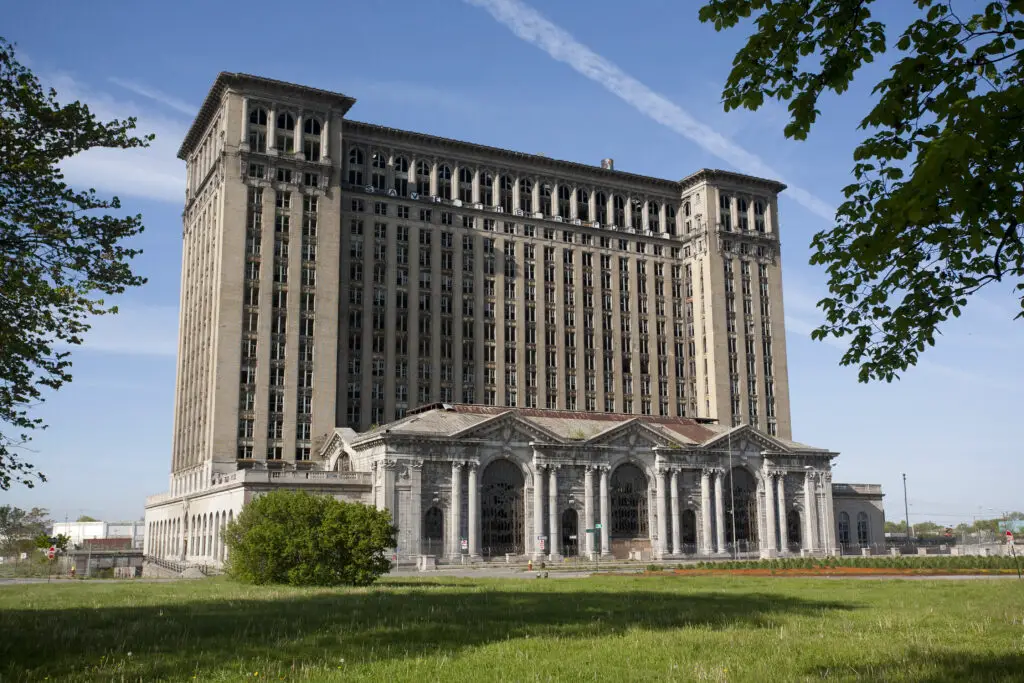
Michigan Central Station opened in 1913 and was once one of the grandest train stations in the United States. After closing in 1988, the massive Beaux-Arts building sat empty for decades, yet much of its structure remained intact. The waiting room, with its high ceilings and large windows, still looks like it could welcome travelers again. Even in its most deteriorated state, the scale and design never lost their impact. Broken windows and graffiti added to the atmosphere, but the bones of the building were always strong. It became a symbol of Detroit’s decline for many years. Despite that, it never fully lost its sense of purpose.
In recent years, restoration efforts led by Ford have transformed the station significantly, though it had long been abandoned before that work began. For a long time, people would pass by and imagine what it must have looked like in its prime. Its layout remained clearly readable, from ticket counters to platforms. It never felt like a ruin in the traditional sense, more like a building waiting to be brought back. Even during its abandoned years, it held onto its identity as a working station. That lingering sense of function is what made it stand out. It always felt like it was on the verge of reopening.
4. Nara Dreamland (Nara, Japan)
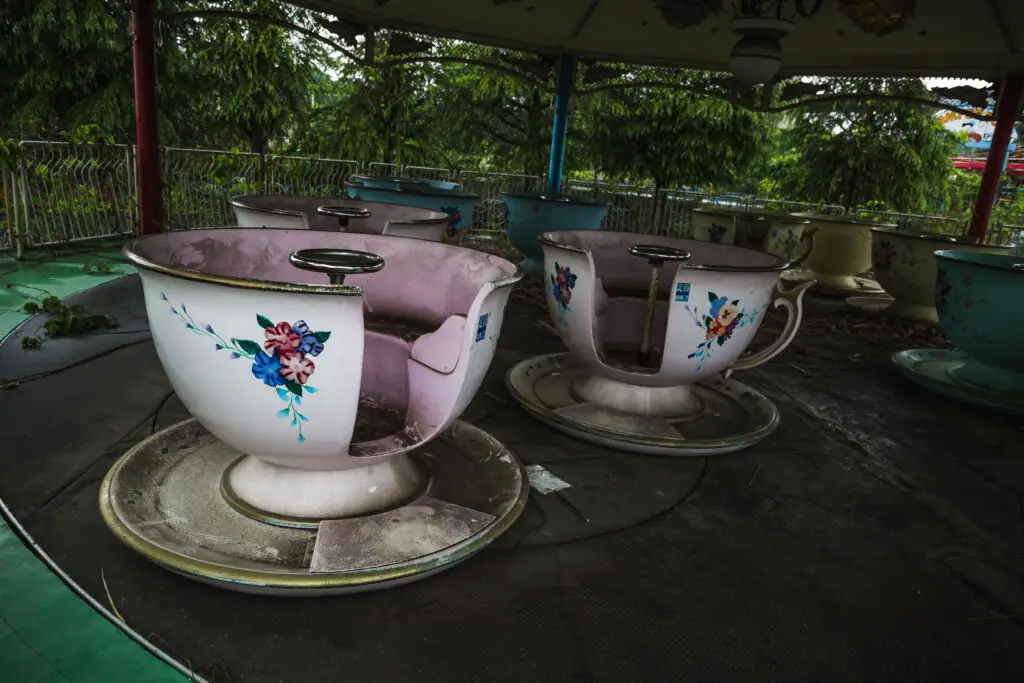
Nara Dreamland opened in 1961 and was heavily inspired by Disneyland, complete with similar castle structures and themed areas. When it closed in 2006, many of the rides and decorations were simply left in place. For years, the park sat largely untouched, giving it an almost preserved appearance. The pathways, signage, and attractions still looked like a functioning amusement park, just without any visitors. Roller coasters, spinning rides, and character statues remained visible and recognizable. Urban explorers were drawn to it because it felt so intact compared to other abandoned parks. It had a strangely quiet, almost peaceful atmosphere.
Eventually, the site was demolished starting in 2016, but for about a decade it stood as one of the most famous abandoned theme parks in the world. During that time, it looked remarkably ready to reopen, despite its closure. The layout was easy to navigate, and many structures were still in good condition. It didn’t feel like something forgotten so much as something waiting. Photos from its final years show how little had changed since it closed. That sense of suspension is what made it so compelling. It looked like a park that had simply been locked up for the night.
5. Varosha (Famagusta, Cyprus)
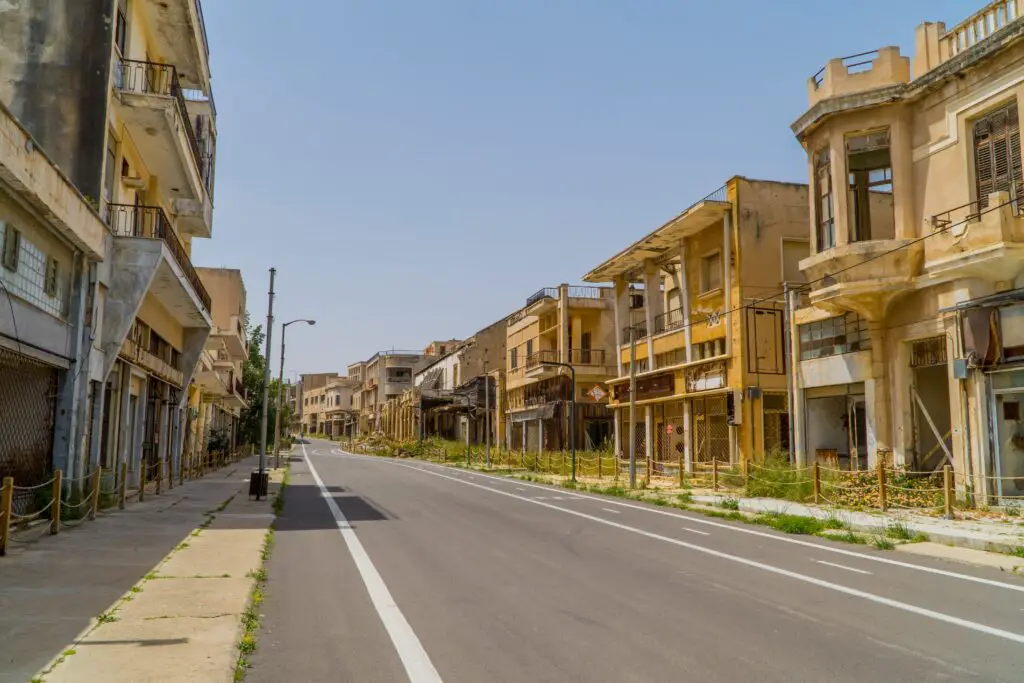
Varosha was once a thriving tourist district in Cyprus, filled with hotels, shops, and beachfront attractions. In 1974, it was abandoned almost overnight during the Turkish invasion of Cyprus. Many buildings were left fully furnished, with personal belongings still inside. For decades, the area was fenced off and inaccessible to the public. From a distance, the hotels and streets still looked structurally sound. The beachfront, in particular, gives the impression that tourists could return at any moment. It’s not a collapsed ruin, it’s a preserved snapshot of a resort town.
In recent years, parts of Varosha have been partially reopened under controversial circumstances, but much of it remains abandoned. Walking through it today, you can still see storefronts and hotels that look ready to operate. The layout of the town hasn’t changed, and many signs are still visible. It feels less like a ghost town and more like a place caught mid-pause. The passage of time is visible, but it hasn’t erased the original purpose of the area. That’s what makes it so striking. It still looks like a destination waiting for visitors.
6. Wonderland Amusement Park (Beijing, China)
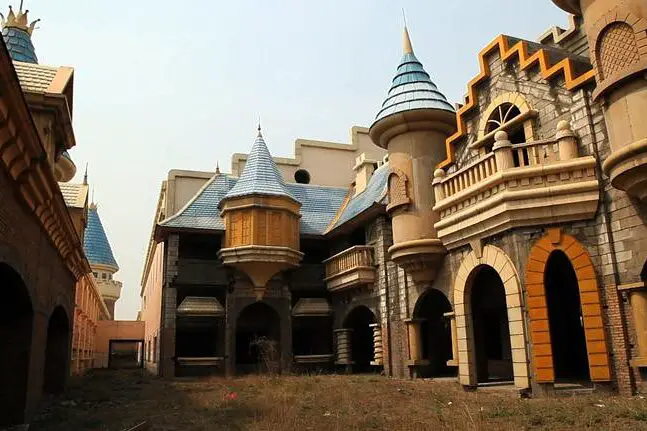
Originally planned as one of the largest amusement parks in Asia, Wonderland Amusement Park was never completed due to financial issues. Construction stopped in the late 1990s, leaving behind partially built castles and structures. The most recognizable feature was a large, unfinished castle that looked like it belonged in a fantasy park. Even though it was never operational, the layout suggested what it was meant to become. For years, it stood as a surreal, incomplete version of a theme park. The open spaces and skeletal structures made it look ready, but unfinished. It became a popular subject for photographers.
Eventually, the site was demolished in 2013 and redeveloped, but for years it remained a haunting symbol of stalled ambition. It didn’t look like something abandoned after use, but something abandoned just before completion. That gave it a different kind of eerie presence. The structures were still clean enough to imagine them finished and filled with visitors. It felt like a park waiting for the final step that never came. The vision was still visible in every corner. That clarity made it feel strangely alive despite never opening.
7. Dogpatch USA (Arkansas)
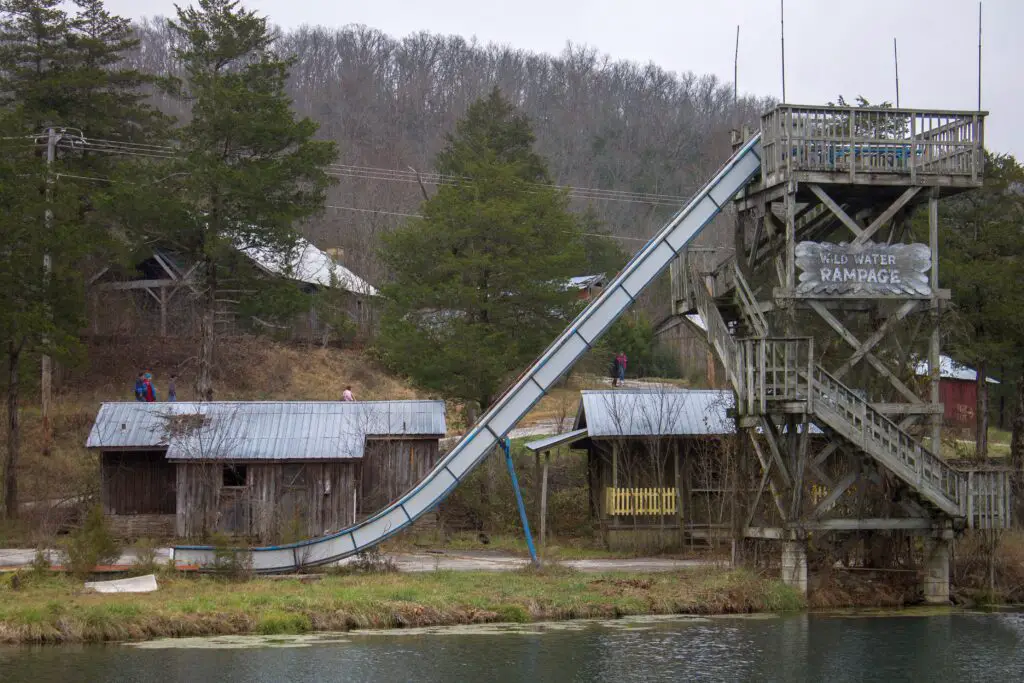
Dogpatch USA opened in 1968 as a theme park based on the comic strip “Li’l Abner.” When it closed in 1993, much of the park was left behind, including buildings, rides, and themed areas. For years, visitors could still see storefronts and attractions that looked like they were ready for guests. The rustic design helped preserve its appearance, since it blended into the surrounding landscape. Even as it aged, the park retained its original layout and charm. Wooden structures, signage, and pathways remained visible. It felt more like a quiet town than a ruined park.
Ownership changes and legal issues kept the property in limbo for decades. At times, parts of it were briefly reopened or repurposed, but it never returned to full operation. The structures stayed standing long enough to give the impression that it could come back. Eventually, redevelopment plans began to change the site. Still, for many years, it stood as a near-complete theme park without visitors. That sense of readiness made it especially unusual. It never fully looked like it was gone.
8. Salton Sea Beach and Yacht Club (California)
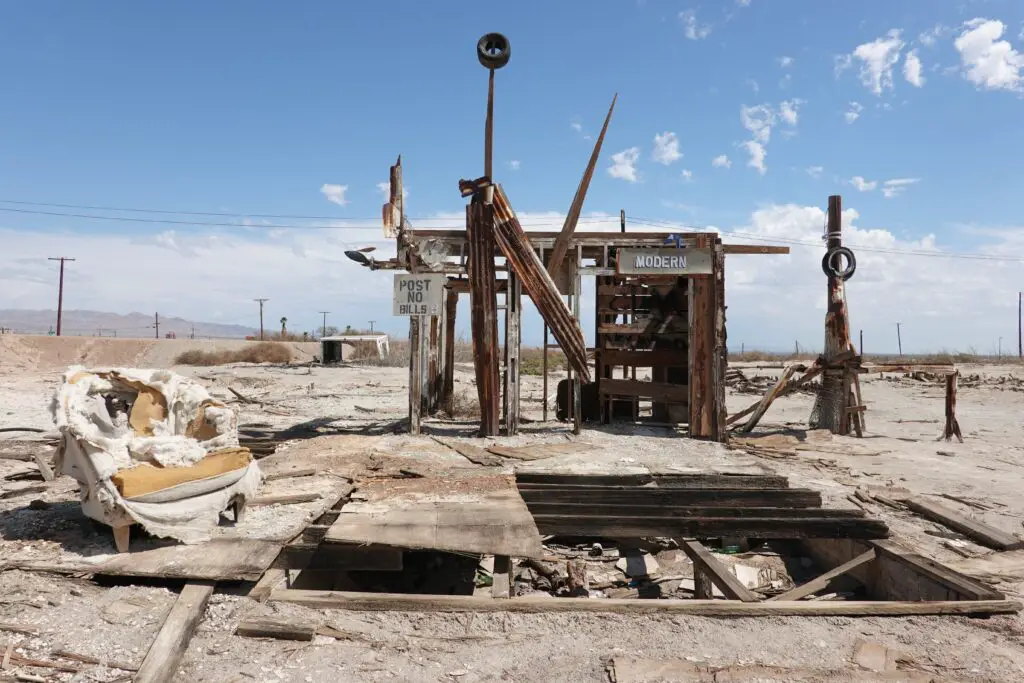
The Salton Sea was once a booming resort destination in the 1950s and ’60s, complete with marinas, yacht clubs, and beach attractions. Environmental issues and rising salinity caused the area to decline rapidly. Many of the buildings were abandoned, but not destroyed. The yacht club structures and beachside properties still stand, weathered but recognizable. Boats, docks, and signage give the impression of a place that once thrived. Even now, some areas look like they could be revived with enough effort. The shoreline still has a strange beauty to it.
The surrounding communities never fully disappeared, but they shrank significantly. That leaves parts of the area feeling frozen between past and present. The infrastructure is still there, even if it’s no longer used as intended. You can still trace where tourists once gathered and spent their time. It doesn’t feel completely abandoned, just underused. That distinction makes it stand out from other sites. It looks like a destination that simply faded out instead of collapsing.
9. Glenrio Ghost Town (Texas and New Mexico)
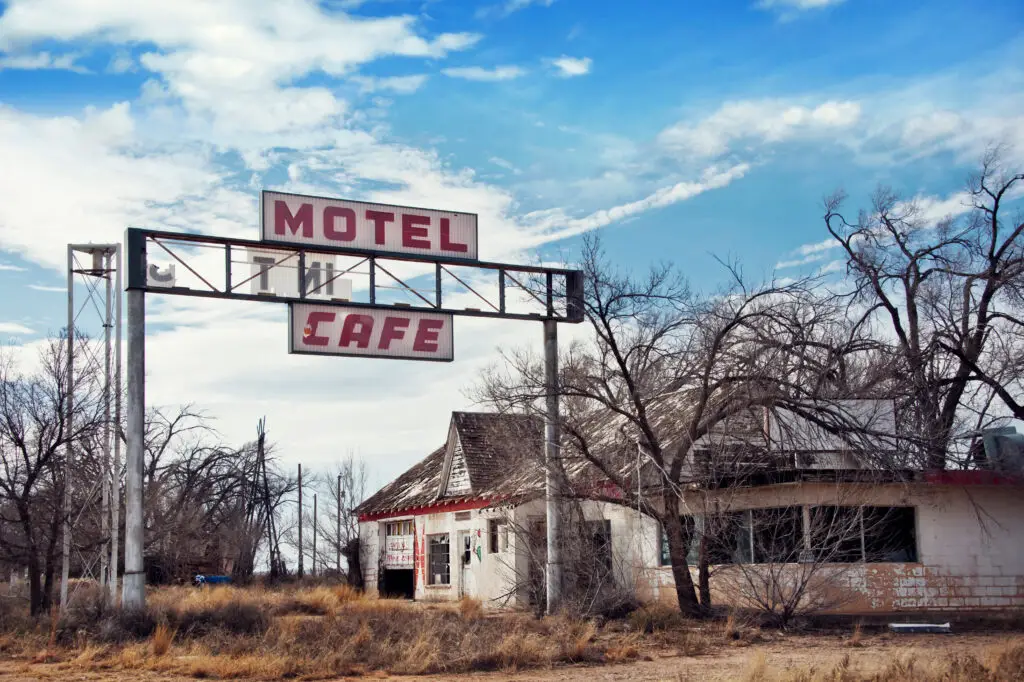
Glenrio was once a busy stop along Route 66, filled with motels, diners, and gas stations catering to travelers. When the interstate highway system bypassed it, the town quickly declined. Many of the buildings were left standing, including service stations and roadside attractions. Even today, you can see intact facades with old signage still visible. The layout of the town remains clear, with streets and structures still in place. It looks like a place that could reopen if traffic returned. There’s a strong sense of mid-century design still present.
Because it wasn’t destroyed, just abandoned, Glenrio retains much of its original character. The buildings haven’t been heavily altered, which adds to the feeling of authenticity. It’s often used as a filming location because it looks so complete. Visitors can still walk through parts of it and recognize what each building once was. That clarity makes it feel less like a ruin and more like a paused town. The connection to Route 66 adds another layer of nostalgia. It feels like a piece of history waiting to be used again.
10. Holy Land USA (Waterbury, Connecticut)
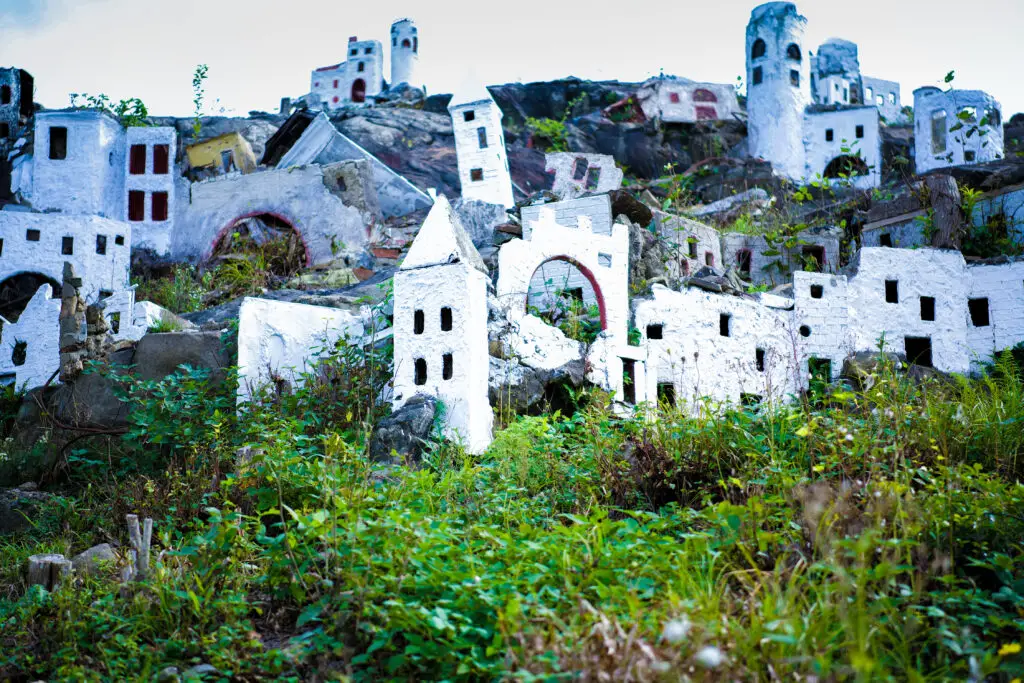
Holy Land USA opened in the 1950s as a religious theme park featuring replicas of biblical scenes. After closing in the 1980s, many of the structures were left behind. The hillside layout, with its pathways and displays, is still visible today. Some of the buildings and installations remain intact, even if they’ve weathered over time. The large cross overlooking the site has been restored and remains a focal point. The park’s design still makes sense when you walk through it. It doesn’t feel completely lost.
In recent years, there have been efforts to maintain parts of the site, particularly the cross. That has helped preserve its presence in the community. While the park itself isn’t operational, it hasn’t disappeared either. Visitors can still see how it was laid out and imagine what it once offered. It feels more like a dormant attraction than a destroyed one. The sense of purpose is still there, even if the activity isn’t. That lingering identity makes it stand out.
11. Lake Shawnee Amusement Park (West Virginia)
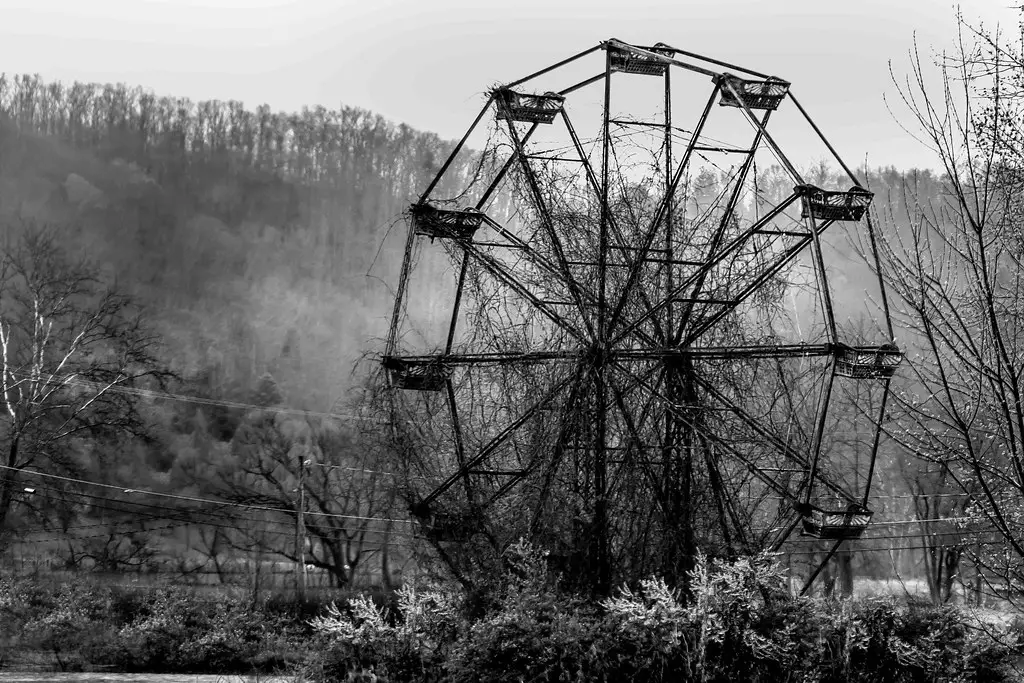
Lake Shawnee Amusement Park operated intermittently from the 1920s through the 1960s before closing permanently. Many of the rides, including swings and a Ferris wheel, were left behind. The park gained a reputation for being haunted, which has kept interest in it alive. Structurally, much of the park still exists, with rides standing in place. The layout is still easy to understand, even decades later. It looks like an amusement park that could be restored. The setting near the lake adds to its atmosphere.
Today, the site is occasionally opened for tours and events, which has helped preserve it. Unlike many abandoned parks, it hasn’t been completely sealed off or demolished. That gives it a different kind of presence. Visitors can walk through and see how everything was arranged. It doesn’t feel erased, just inactive. The combination of preservation and decay is what makes it so striking. It still resembles a functioning attraction at first glance.
12. Spreepark (Berlin, Germany)
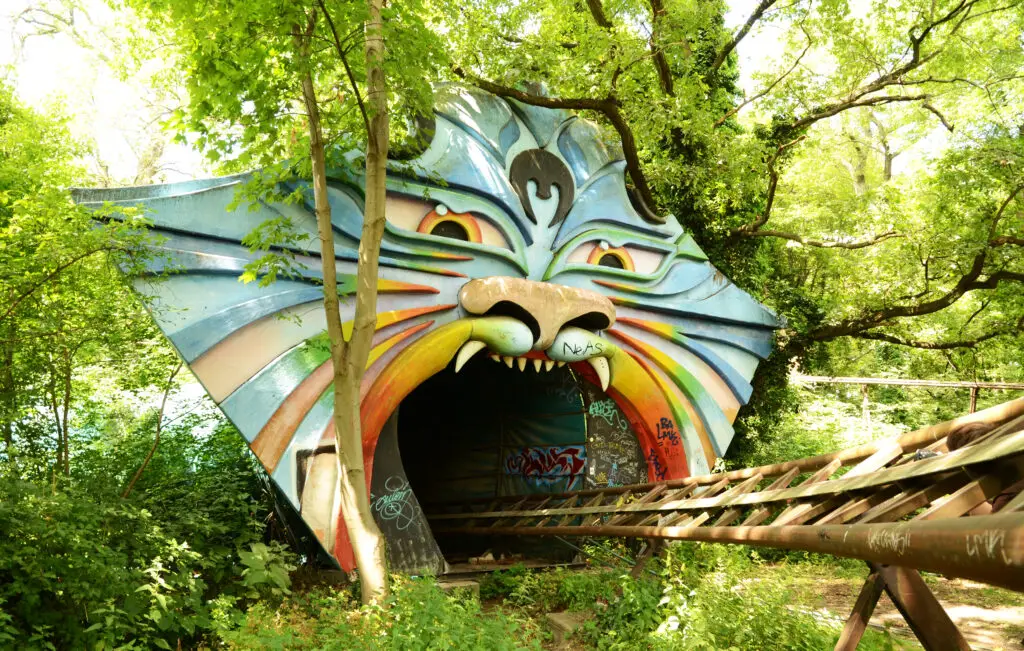
Spreepark opened in East Berlin in 1969 and closed in 2002 after financial troubles. Many of the rides were left behind, including a Ferris wheel that still stands today. The park’s layout remains largely intact, with pathways and themed areas still visible. For years, it sat quietly, becoming overgrown but not destroyed. The combination of nature and man-made structures created a surreal environment. It still looked like a park waiting for maintenance crews to return. The remnants of attractions were easy to recognize.
In recent years, there have been plans to redevelop and restore parts of Spreepark. Some cleanup and preservation work has already taken place. Even during its most abandoned years, it retained a sense of structure and purpose. It didn’t feel chaotic or collapsed. Instead, it felt paused, like operations had stopped unexpectedly. That’s what made it so compelling to visitors and photographers. It still looked ready, just unattended.
13. Buck Hill Inn (Pennsylvania)
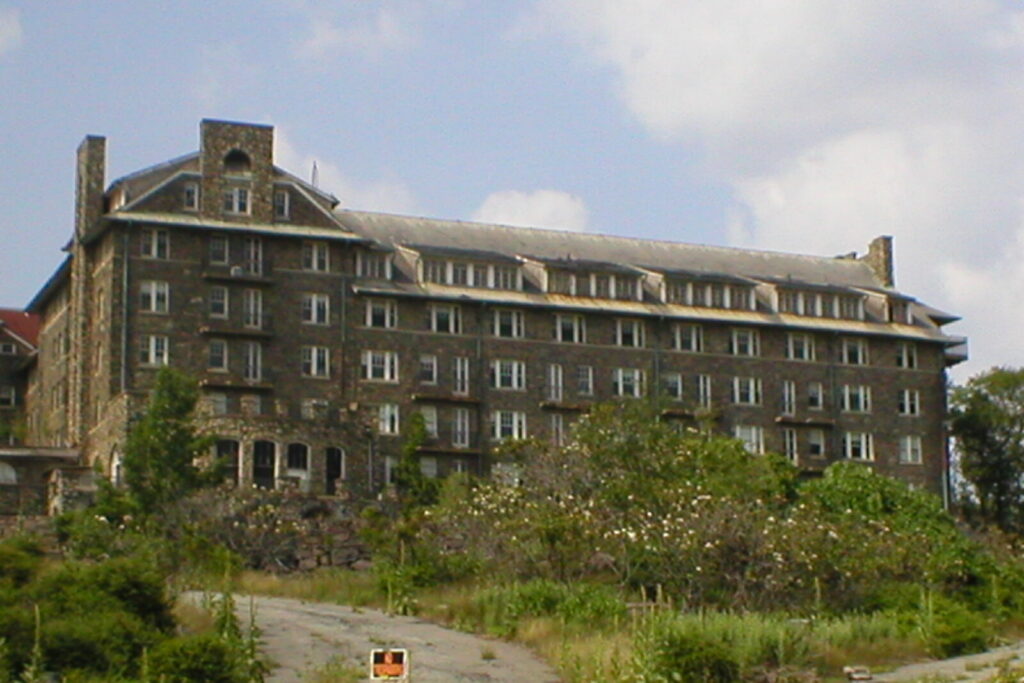
Buck Hill Inn was once a popular resort in the Pocono Mountains, attracting guests for decades before closing in 1990. The large hotel building remained standing for years after its closure, with interiors still partially intact. From the outside, it looked like a grand resort that could reopen with some work. The grounds, including golf areas and surrounding land, still reflected its original purpose. Even as it aged, the structure held onto its identity. It didn’t immediately look like a ruin. Instead, it felt like a place waiting for renovation.
Over time, the building deteriorated and was eventually demolished in 2016. Before that, it was a well-known example of an abandoned resort that still felt functional. People who visited or photographed it often commented on how intact it seemed. The layout of rooms, hallways, and common areas was still recognizable. It wasn’t hard to imagine guests returning. That sense of near-readiness is what made it memorable. It stood as a reminder of how quickly places can be left behind without completely disappearing.