
1. Spreepark Ferris Wheel (Berlin, Germany)
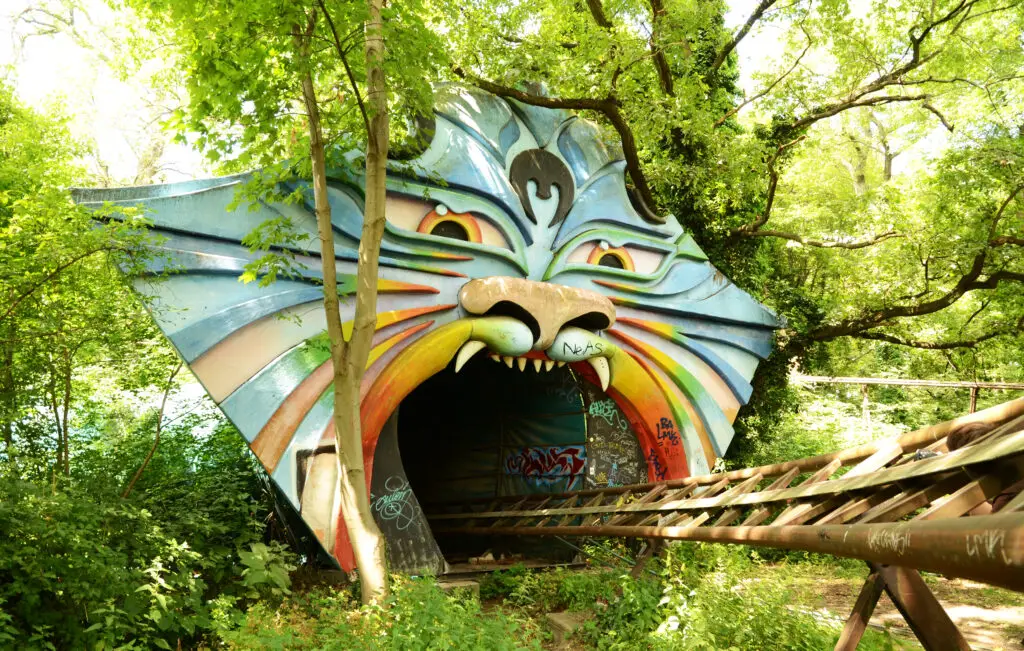
The rusted Ferris wheel at Berlin’s abandoned Spreepark has become one of the most photographed symbols of amusement park decay. After the park closed in 2002, the wheel was left standing, slowly deteriorating in place. Years of exposure to the elements weakened its structure, making any attempt at dismantling risky and expensive. The metal supports are unstable, and corrosion has spread through key load bearing components.
Officials have repeatedly cited safety concerns as the main reason it remained untouched for so long. Removing it would require extensive stabilization work just to prevent collapse during the process. For years, it was considered safer to let it stand rather than risk a catastrophic failure. Today, it remains a haunting reminder of how quickly joy can turn into hazard.
2. Pripyat Ferris Wheel (Ukraine)
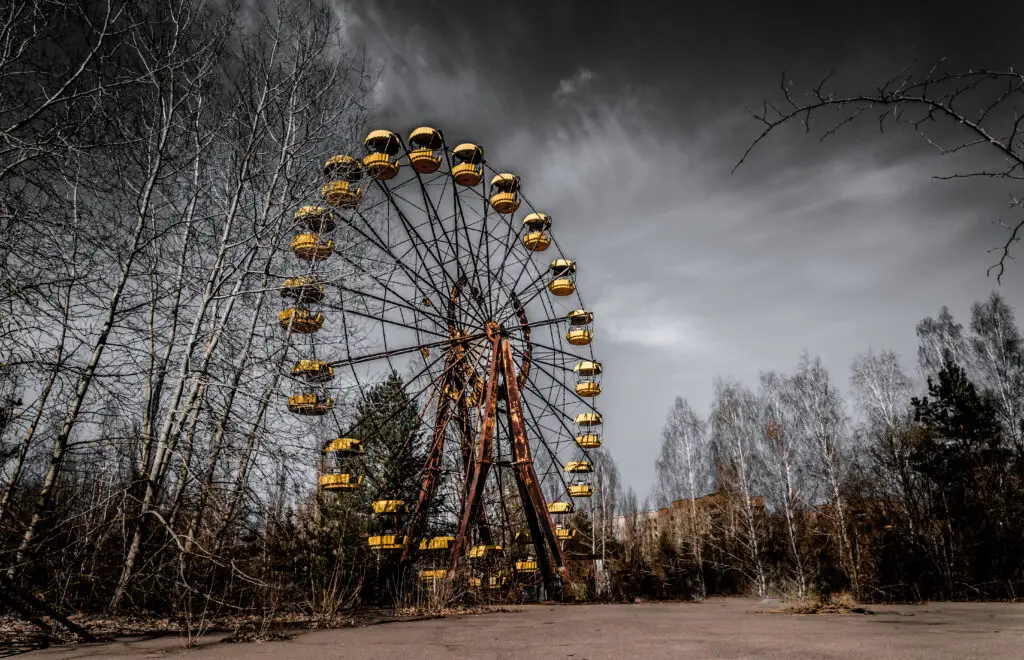
The Ferris wheel in Pripyat was meant to open just days before the Chernobyl disaster changed everything. Instead, it never officially carried passengers and has stood frozen in time since 1986. Radiation contamination made any dismantling effort extremely dangerous for workers. Even brief exposure during demolition would require strict protective measures.
Over time, the structure weakened while still remaining contaminated. That combination makes removal both technically difficult and medically risky. For decades, it was considered safer to leave the wheel standing rather than disturb radioactive materials. It remains one of the most chilling abandoned rides in the world.
3. Six Flags New Orleans Mega Zeph Roller Coaster (Louisiana)
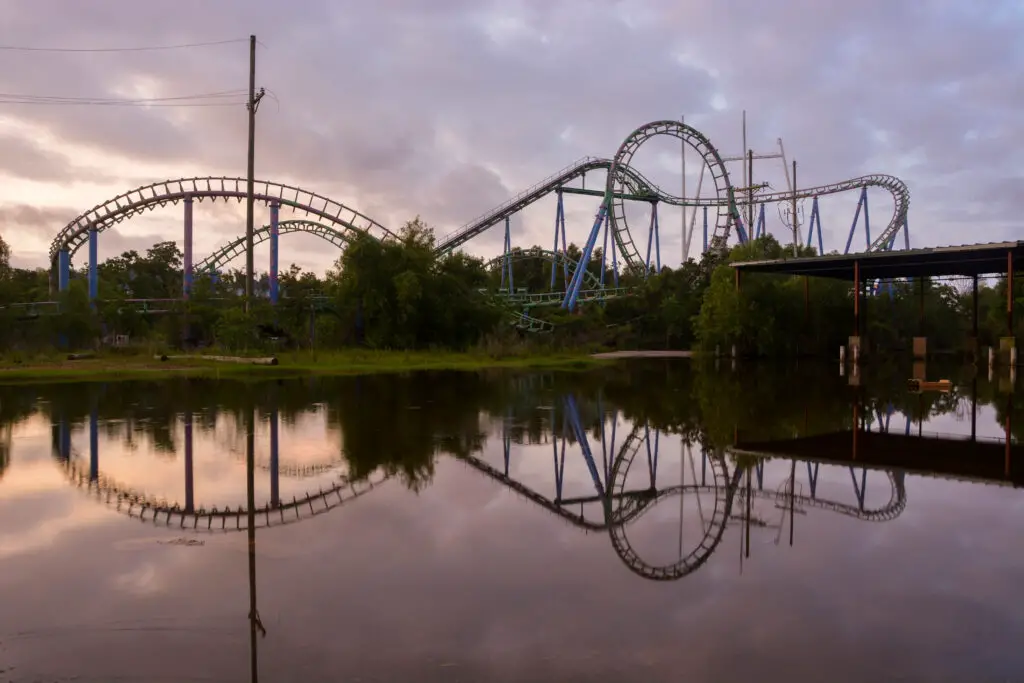
When Hurricane Katrina flooded Six Flags New Orleans, the Mega Zeph roller coaster was left submerged in corrosive water for weeks. The damage compromised the steel framework and wooden supports beneath the track. Structural instability became a major concern once the water receded. Any attempt to dismantle it would require extensive reinforcement first.
Engineers warned that cutting into the structure could cause sections to collapse unpredictably. As a result, the coaster stood untouched for years. It became a symbol of abandonment and risk, looming over the empty park. Even now, it’s remembered as a ride that was safer left alone than taken apart.
4. Chernobyl Dodgem Pavilion (Ukraine)
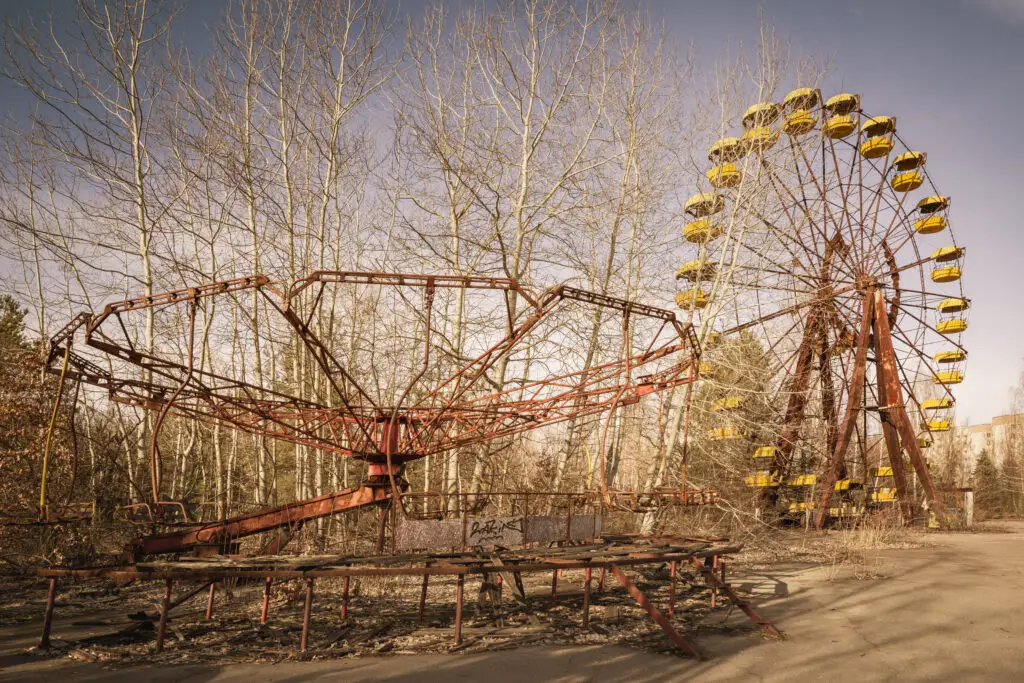
The bumper car pavilion at the Pripyat amusement park looks harmless at first glance. But like everything in the exclusion zone, it is contaminated with radiation. Dismantling the structure would involve disturbing radioactive dust and materials embedded in the floor and walls. That alone makes removal a serious health risk.
Over time, the building deteriorated, increasing the chance of collapse during demolition. Authorities opted to leave it standing rather than expose workers to unnecessary danger. The ride remains frozen in eerie silence. It is a quiet but unsettling reminder of invisible hazards.
5. Nara Dreamland Steel Dragon (Japan)
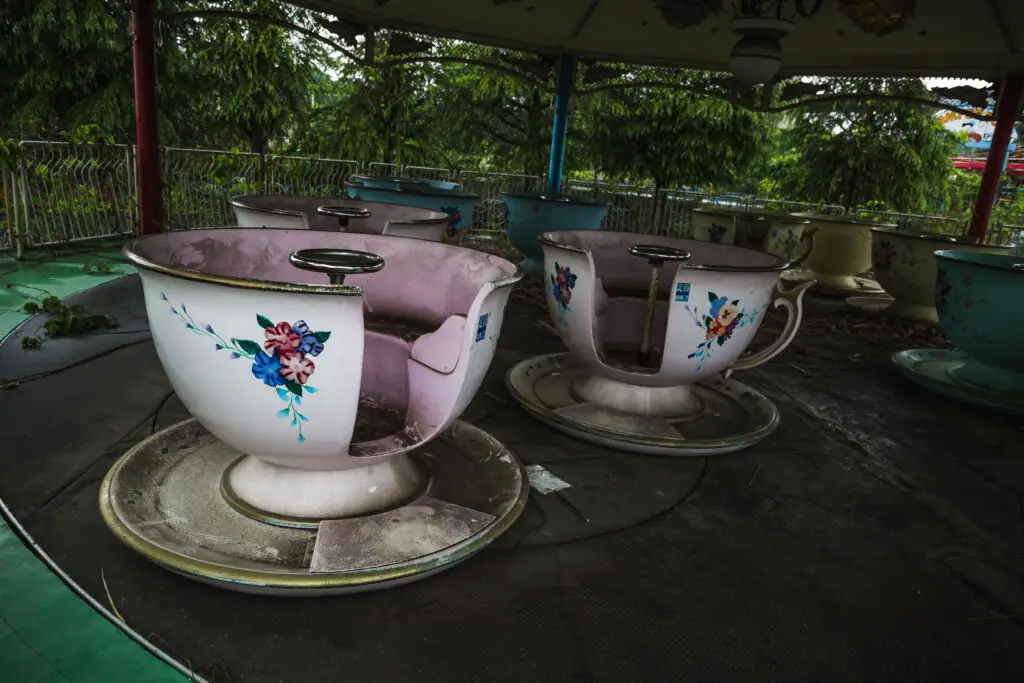
Nara Dreamland’s roller coaster sat abandoned for years after the park closed in 2006. The steel structure rusted heavily in Japan’s humid climate, weakening joints and supports. Engineers warned that dismantling it without reinforcement could cause uncontrolled structural failure. That made removal far more complicated than expected.
For years, the coaster stood untouched because of these risks. When demolition finally happened, it required careful planning and specialized crews. Until then, it was considered too unstable to approach. The ride became a favorite subject for urban explorers who understood just how dangerous it truly was.
6. Dadipark Roller Coaster (Belgium)
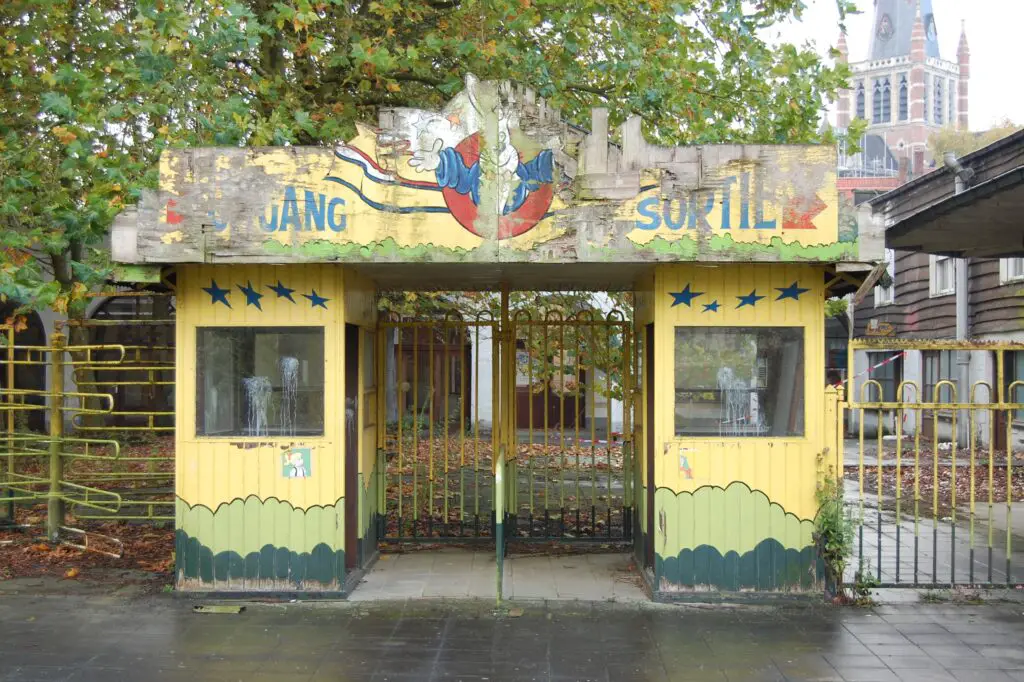
Dadipark closed suddenly in 2002, leaving its aging roller coaster behind. The ride was already old and built with outdated safety standards. Over time, rust and neglect made the structure increasingly unstable. Dismantling it posed serious risks due to unknown structural weaknesses.
Authorities hesitated for years, fearing collapse during removal. The coaster remained standing as the rest of the park decayed around it. Eventually, controlled demolition was required to remove it safely. Until then, it was considered safer untouched than dismantled.
7. Lake Shawnee Ferris Wheel (West Virginia)
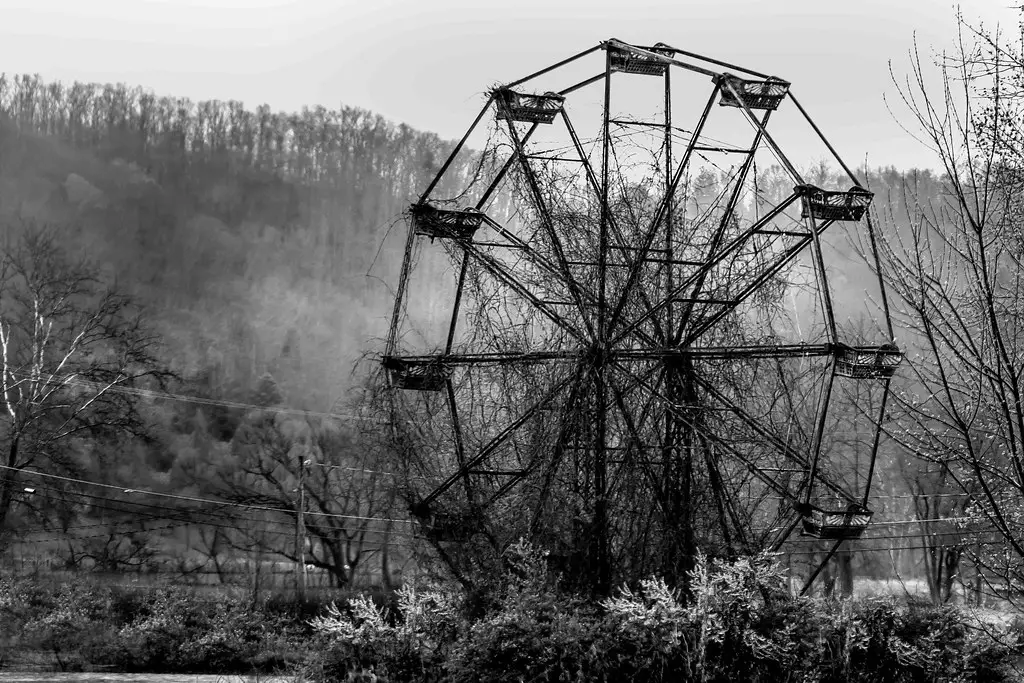
Lake Shawnee Amusement Park closed in the late 1960s and was left to decay. Its Ferris wheel rusted heavily while remaining structurally unpredictable. The ride’s age made it difficult to assess which components could fail during dismantling. That uncertainty made removal dangerous.
Local officials avoided touching it for years. The wheel became part of the park’s eerie reputation. Even experienced engineers were cautious around it. Sometimes, leaving it alone felt like the safest option.
8. Gulliver’s Kingdom Giant Slide (Japan)
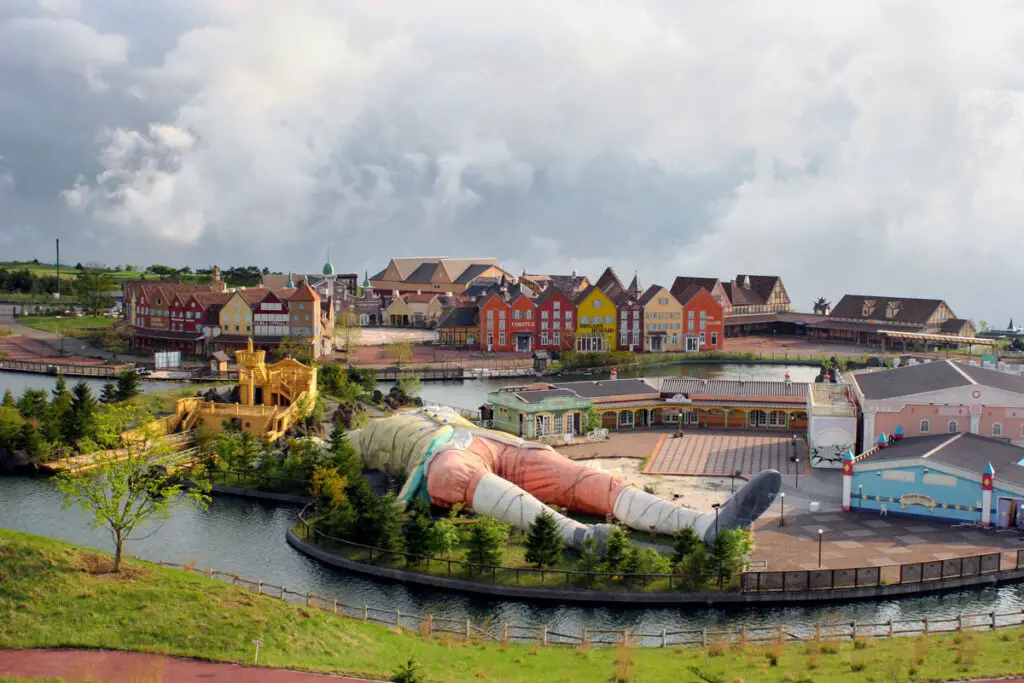
Gulliver’s Kingdom closed in 2001, leaving its massive slide exposed to harsh weather. Over time, metal supports weakened and warped. The elevated structure made dismantling particularly risky. A collapse during removal could have caused serious injuries.
Because of this, the slide remained standing long after closure. Crews eventually had to approach it with extreme caution. Until then, it loomed silently over the abandoned park. It was a reminder that size alone can make removal dangerous.
9. Joyland Amusement Park Roller Coaster (Kansas)
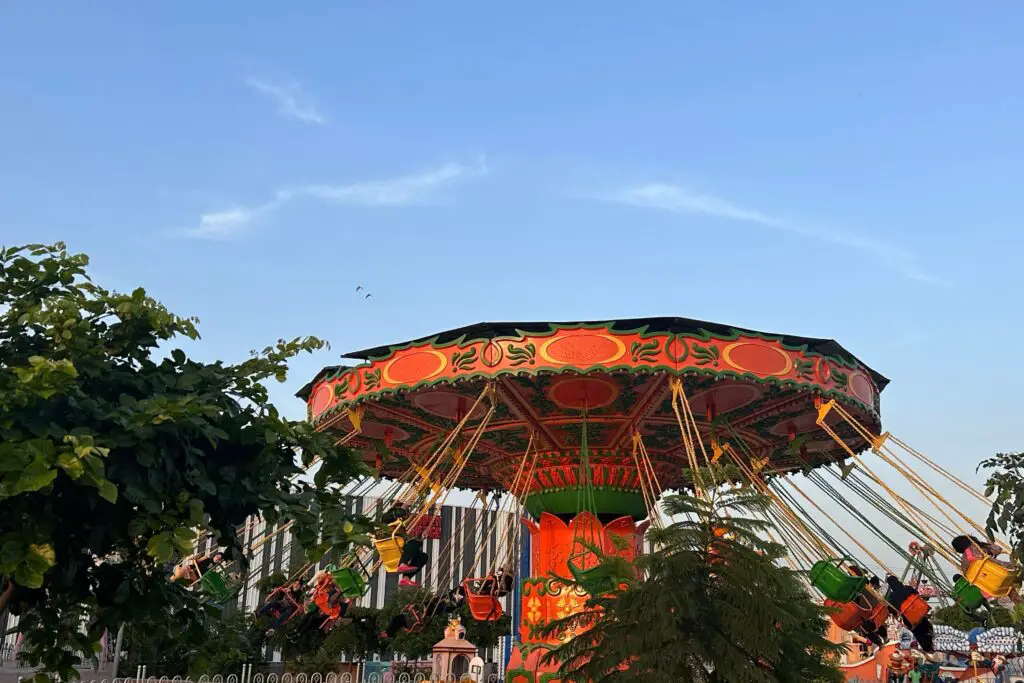
Joyland’s wooden roller coaster stood abandoned for years after the park closed in 2006. Wood rot weakened key supports, making the structure unpredictable. Dismantling it risked sudden collapses. Even walking near it was considered unsafe.
The coaster remained untouched as plans stalled. Weather continued to degrade the structure. Eventually, it required careful demolition rather than simple dismantling. For a long time, it was simply too risky to approach.
10. Tivoli World Boomerang Coaster (Australia)
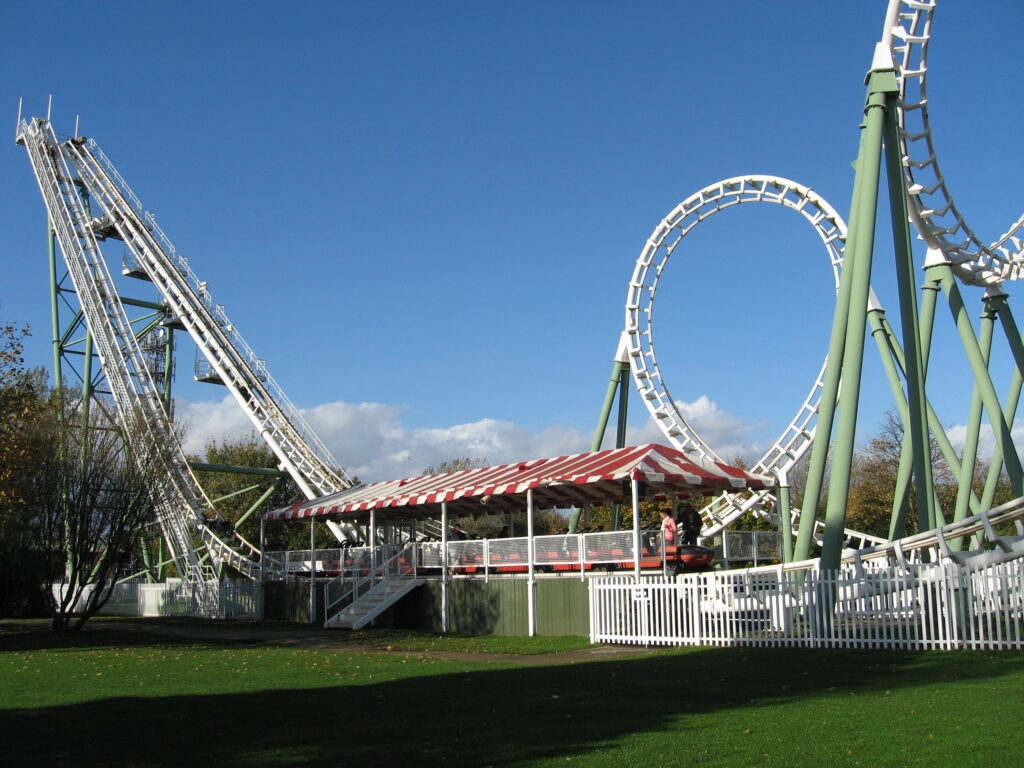
After Tivoli World closed in 2006, its Boomerang coaster sat exposed to coastal weather. Salt air accelerated corrosion throughout the steel structure. Engineers warned that cutting into the ride could trigger chain reactions of collapse. That made dismantling extremely dangerous.
The coaster remained standing for years as a result. It became a symbol of failed redevelopment plans. Only after extensive safety planning could it be removed. Until then, it was safer left untouched.
11. Lincoln Park Cyclone (Massachusetts)
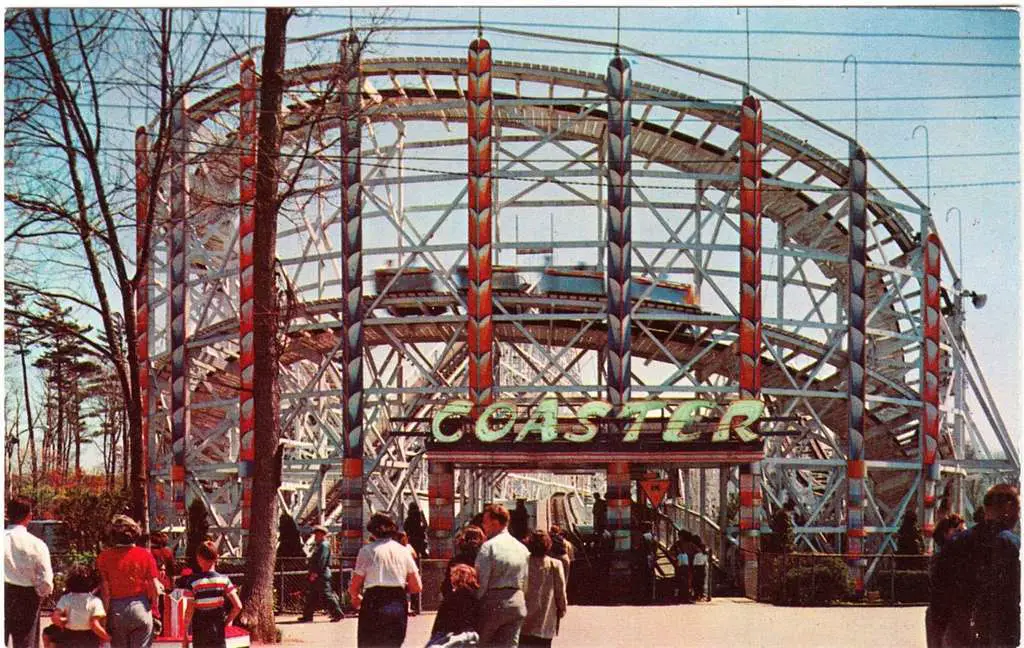
The Cyclone roller coaster at Lincoln Park was already aging when the park closed in the 1980s. Years of neglect weakened its wooden frame. Engineers feared dismantling it would cause uncontrolled collapses. The ride stood as a decaying landmark for years.
Its removal required careful planning and reinforcement. Until then, it was considered too unstable to take apart safely. The coaster became part of local legend. Its danger grew with every passing year.
12. Wonderland Amusement Park Sky Ride (Texas)
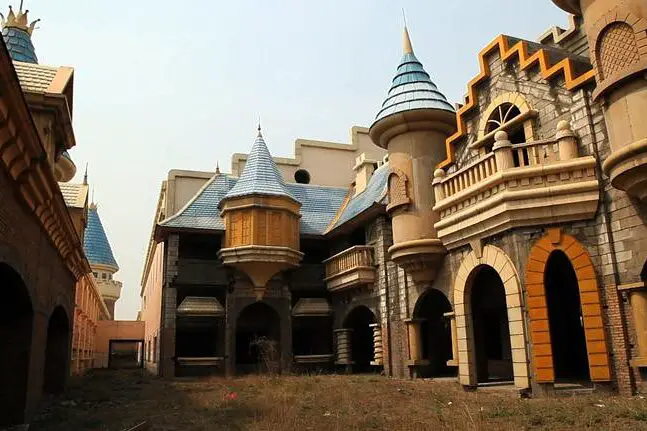
Wonderland’s Sky Ride towers remained standing after the attraction shut down. The elevated cables and towers deteriorated over time. Removing them posed risks due to height and structural instability. Wind damage made the cables unpredictable.
For years, the ride remained in place. Crews avoided dismantling it without proper safety measures. Eventually, controlled removal was required. Until then, it was simply too risky.
13. Chippewa Lake Park Big Dipper (Ohio)
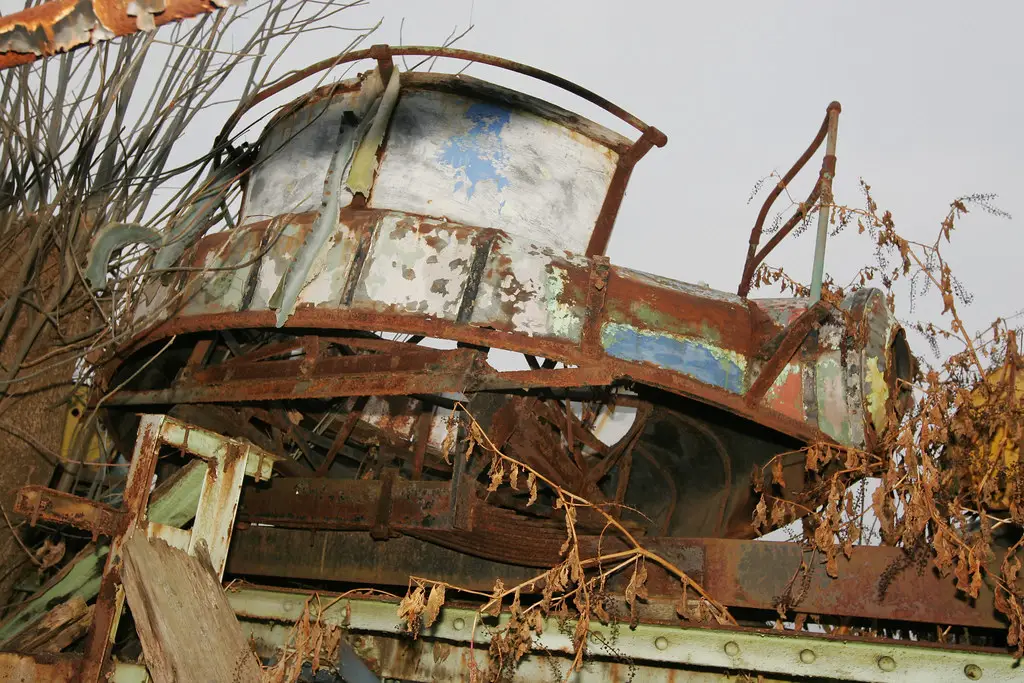
The Big Dipper wooden coaster sat abandoned for decades after the park closed. Wood rot and rust compromised its supports. Any dismantling effort risked sudden collapse. The coaster became increasingly dangerous over time.
For years, it was left standing as plans stalled. Eventually, it required a carefully managed demolition. Until then, it loomed as a fragile relic. Its danger was as real as its nostalgia.
14. Parque del Terror Ferris Wheel (Spain)
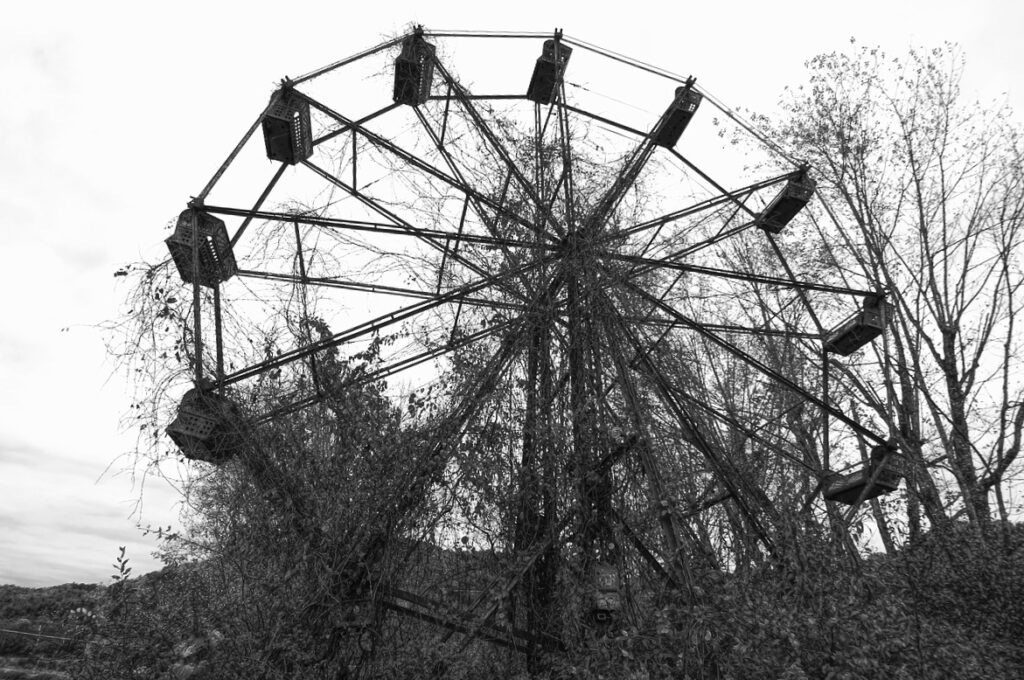
This abandoned Ferris wheel rusted heavily after the park shut down. Structural decay made it unstable at height. Engineers warned that dismantling could cause partial collapse. That risk delayed removal for years.
The wheel remained standing as the park decayed. It became a striking visual landmark. Only specialized crews could eventually remove it. Until then, it was safer untouched.
15. Holy Land USA Sky Ride (Connecticut)
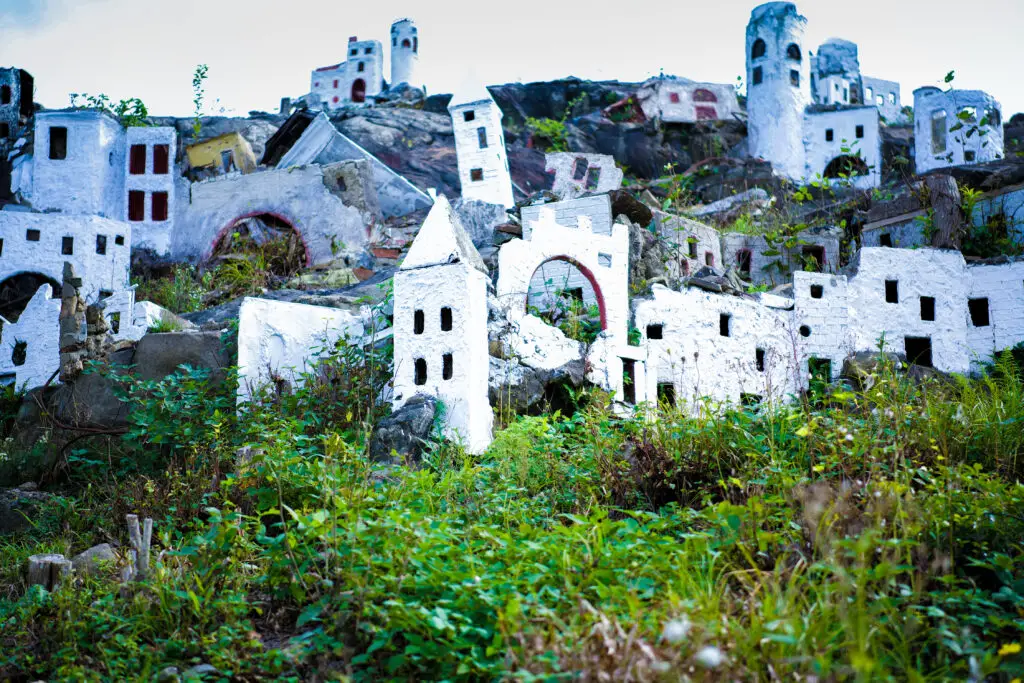
Holy Land USA’s Sky Ride towers remained long after the park closed. Weather damage weakened the elevated structures. Dismantling them posed fall risks and collapse hazards. Officials avoided removal for years.
The ride stood as a decaying silhouette on the hillside. Its instability made it too dangerous to approach casually. Eventually, careful demolition was required. Until then, leaving it alone felt like the safest choice.