
1. The Trojan Horse
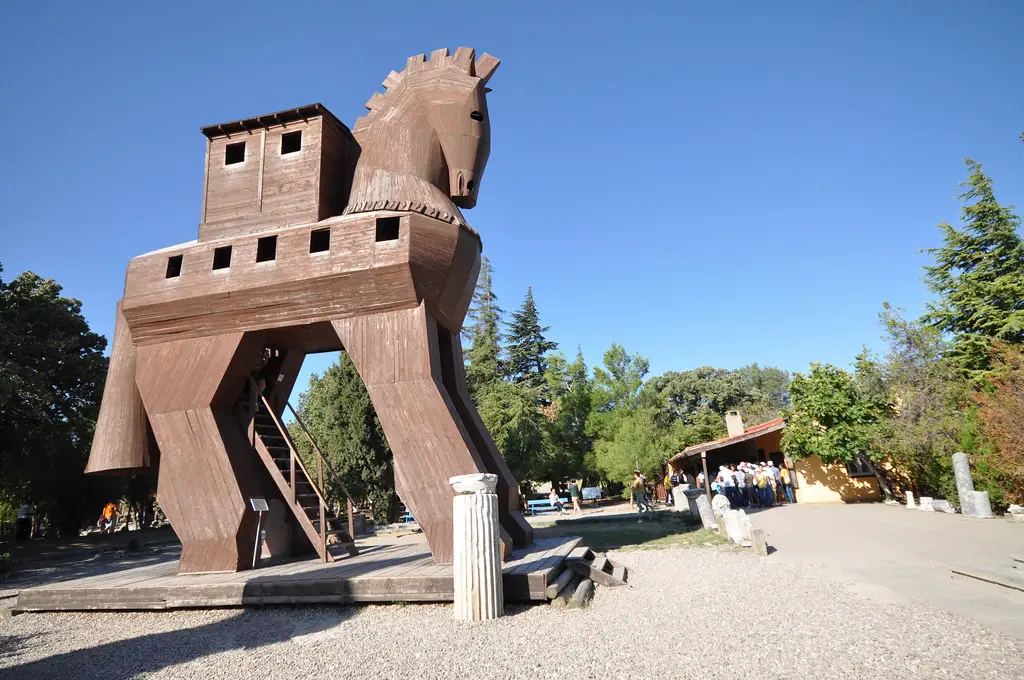
The story of the Trojan Horse is one of the most famous tales from ancient history, describing how Greek soldiers hid inside a massive wooden horse to infiltrate the city of Troy. It comes primarily from sources like The Aeneid by Virgil and earlier Greek traditions tied to The Iliad. The idea of an entire army sneaking into a fortified city this way sounds dramatic, but also raises practical questions. Moving such a large object into a guarded city without inspection seems unlikely by modern military logic. There is also no archaeological evidence confirming the existence of the horse itself. Some historians suggest it may have been a metaphor for a siege engine or even an earthquake that breached the walls.
Because the main sources are literary rather than historical records, scholars tend to treat the story as myth or symbolic storytelling rather than literal fact. Ancient writers often blended history with legend, especially when describing events that happened centuries earlier. The lack of contemporary documentation makes it difficult to separate truth from embellishment. While the city of Troy itself did exist, the details of its fall remain uncertain. The Trojan Horse endures more as a powerful narrative device than a confirmed event.
2. George Washington and the Cherry Tree
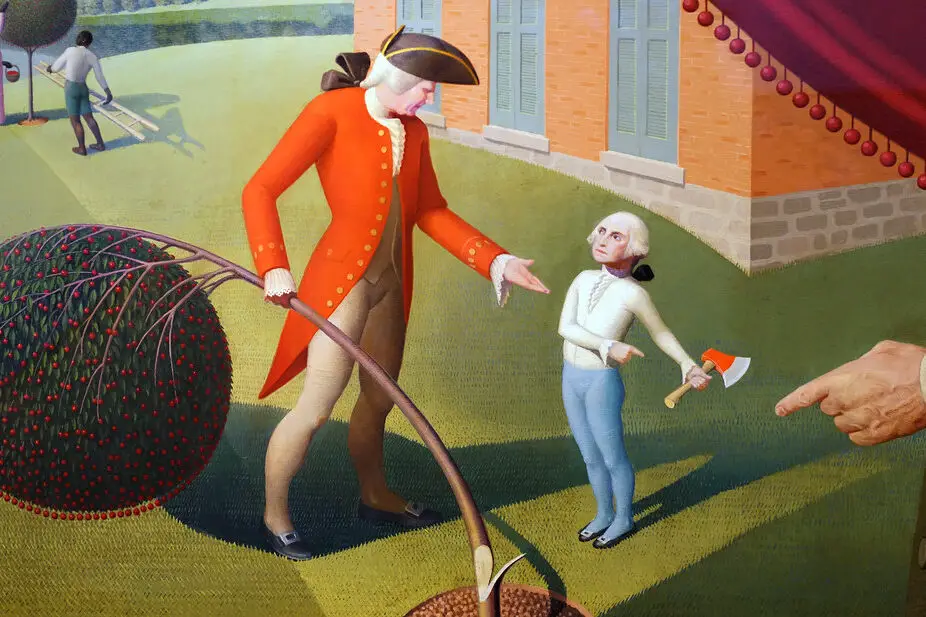
The tale of George Washington confessing to chopping down a cherry tree and saying he “cannot tell a lie” is often presented as a defining childhood moment. It has been repeated in textbooks and popular culture for generations. However, the story first appeared in a biography written by Mason Locke Weems after Washington’s death. Weems admitted to including moral anecdotes designed to teach lessons rather than strictly document facts. There are no contemporary accounts from Washington’s lifetime that mention the incident. Historians widely agree it was invented to illustrate honesty.
The persistence of the story shows how easily a compelling anecdote can become accepted history. Early American writers were often more interested in shaping national character than verifying every detail. Over time, the cherry tree story became symbolic of Washington’s reputation rather than evidence of an actual event. Modern historians treat it as folklore rather than biography. It remains a useful example of how myth can attach itself to real figures.
3. Marie Antoinette’s “Let Them Eat Cake”
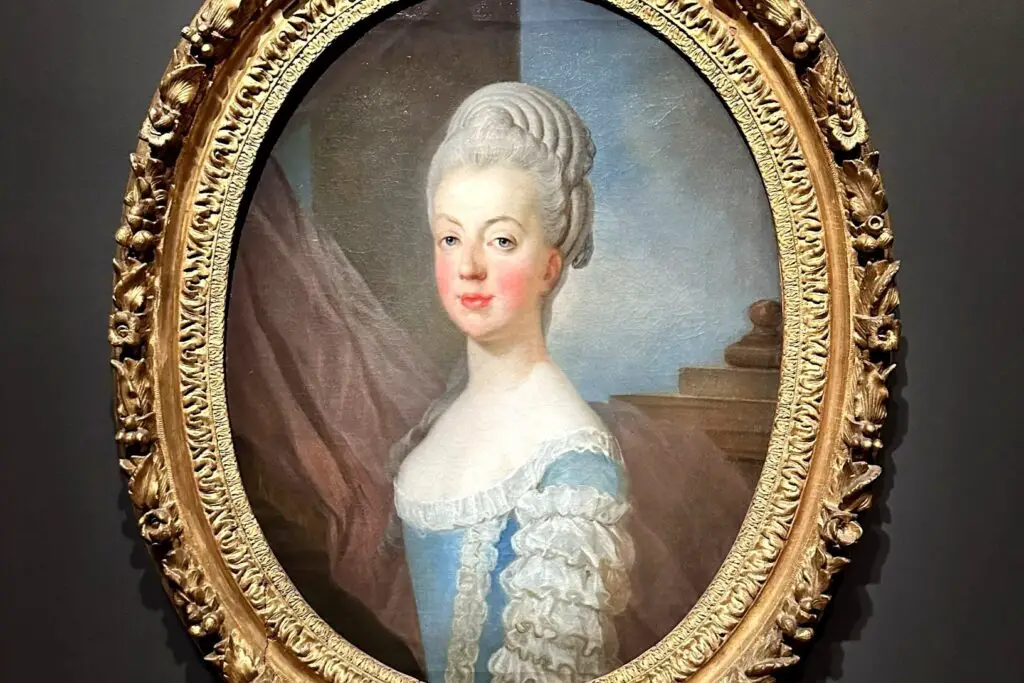
The phrase “Let them eat cake” is commonly attributed to Marie Antoinette as a sign of her supposed indifference to the poor. It is often cited as a turning point in public anger before the French Revolution. However, there is no reliable evidence that she ever said it. A similar phrase appeared in the writings of Jean-Jacques Rousseau years before Antoinette became queen. Rousseau attributed it vaguely to a “great princess,” without naming her.
Historians generally agree the quote was retroactively attached to Antoinette to reinforce her negative image. Revolutionary propaganda frequently exaggerated or fabricated stories about the monarchy. The phrase fit the narrative of a disconnected aristocracy, which made it easy to spread. Over time, it became accepted as fact despite lacking documentation. It now serves as a cautionary example of how political messaging can reshape historical memory.
4. The Salem “Witch” Confessions
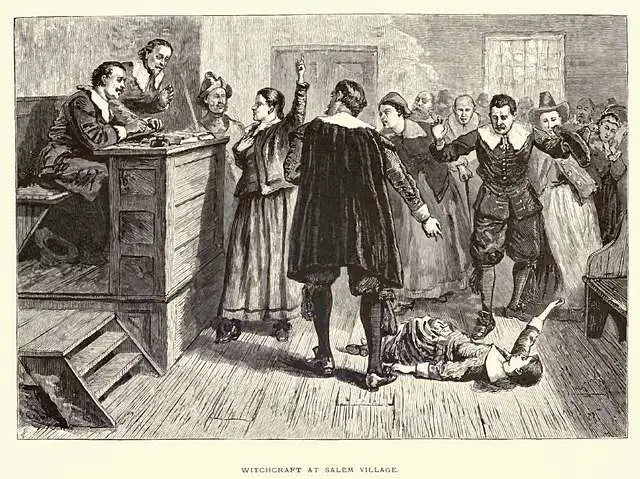
The events of the Salem witch trials are often remembered as a straightforward case of mass hysteria. Dozens of people confessed to witchcraft, sometimes in vivid detail. On closer inspection, many of those confessions were obtained under intense pressure. Accused individuals were often threatened with execution if they did not admit guilt. In some cases, confessing was the only way to avoid being hanged. This raises serious doubts about how genuine those confessions were.
Historians now view many of these admissions as coerced rather than sincere. The legal system at the time allowed for spectral evidence and questionable interrogation methods. Social tensions, fear, and religious extremism all played a role. The narrative of voluntary confession does not hold up under scrutiny. Instead, the trials reveal how fragile justice can be under panic. The records show more about the environment than about actual belief in witchcraft.
5. Rasputin’s “Unkillable” Death
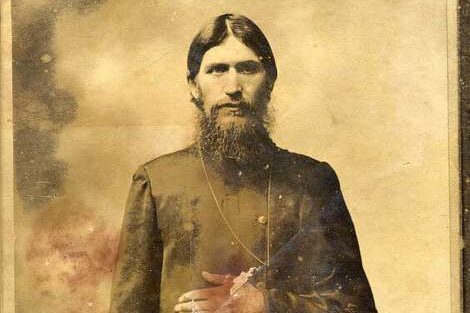
The death of Grigori Rasputin is often described as almost supernatural. According to popular accounts, he survived poisoning, multiple gunshots, and even drowning before finally dying. These details largely come from later retellings by those involved, particularly Prince Felix Yusupov. However, autopsy reports from the time do not support all of these dramatic claims. There is no confirmed evidence that cyanide poisoning occurred. The number of gunshots and sequence of events also appear to have been exaggerated.
Historians believe the story was embellished to make Rasputin seem more formidable and mysterious. His reputation during his life already bordered on myth. After his death, those involved had incentives to dramatize the event. The real cause of death appears to have been gunshot wounds rather than a prolonged, cinematic struggle. Over time, the exaggerated version became more widely known than the documented facts. It remains one of the most persistent historical myths.
6. The Disappearance of the Roanoke Colony
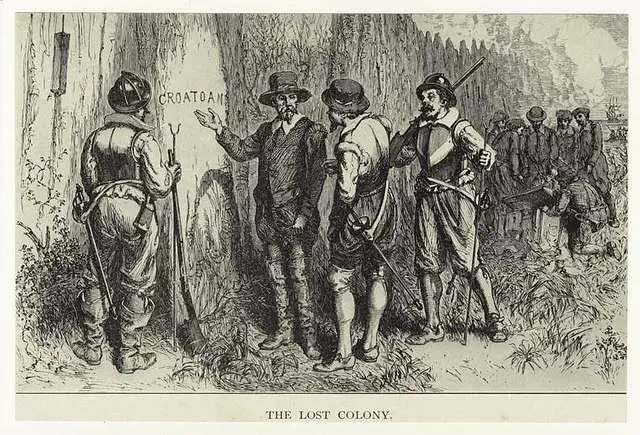
The Roanoke Colony disappearance is often framed as a complete and inexplicable vanishing. When settlers returned, they found the word “Croatoan” carved into a post and no sign of the colony. For years, this has been treated as a mystery bordering on the supernatural. However, historians now consider more grounded explanations. Evidence suggests the settlers may have integrated with nearby Indigenous groups. Archaeological findings support the possibility of relocation rather than disappearance.
The idea of a sudden, total vanishing is likely an oversimplification. Early colonial records were incomplete and often unreliable. The lack of direct evidence leaves room for speculation, but not necessarily for mystery in the dramatic sense. Many experts believe the colony’s fate was gradual and practical rather than mysterious. The story persists because it captures imagination, not because it defies explanation. It illustrates how gaps in records can turn into legends.
7. Nero “Fiddling” While Rome Burned
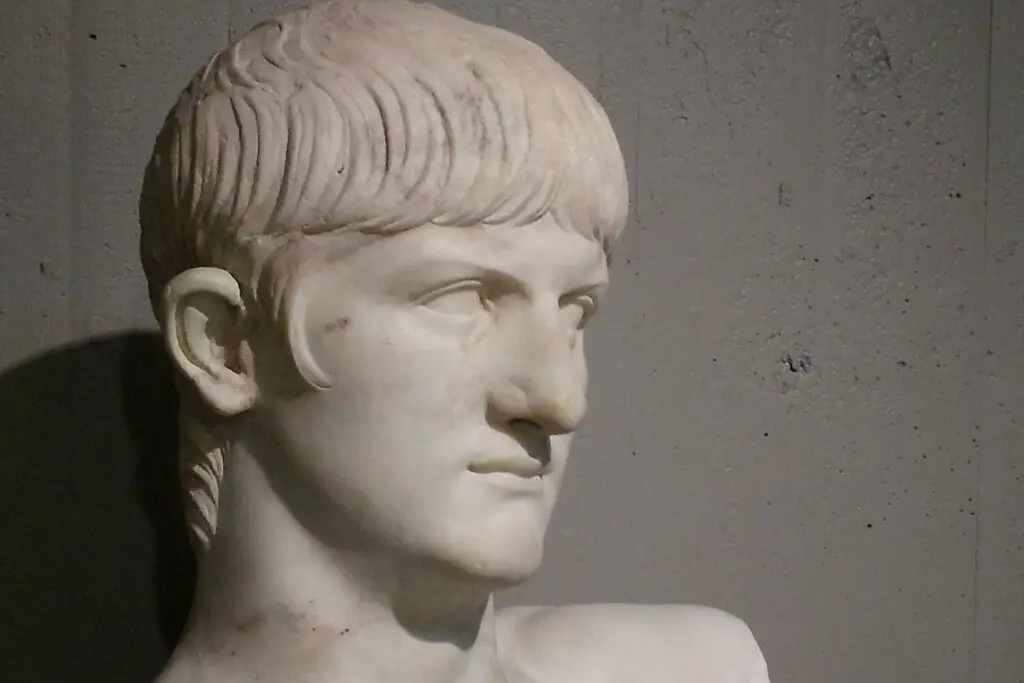
The image of Nero playing music while Rome burned in 64 CE is widely known. The phrase “fiddling while Rome burned” has become shorthand for neglect during crisis. However, the violin did not exist in Nero’s time, making the literal image impossible. Ancient sources suggest Nero may have been elsewhere when the fire began. Some accounts even claim he organized relief efforts afterward. The story likely evolved over time as part of his negative portrayal.
Much of what is known about Nero comes from writers who were hostile to him. This makes it difficult to separate fact from political bias. The dramatic image of him playing music during disaster fits a moral narrative but lacks firm evidence. Historians generally view it as exaggerated or symbolic. The reality was likely more complex and less theatrical. It demonstrates how reputations can shape historical storytelling.
8. Pocahontas and John Smith
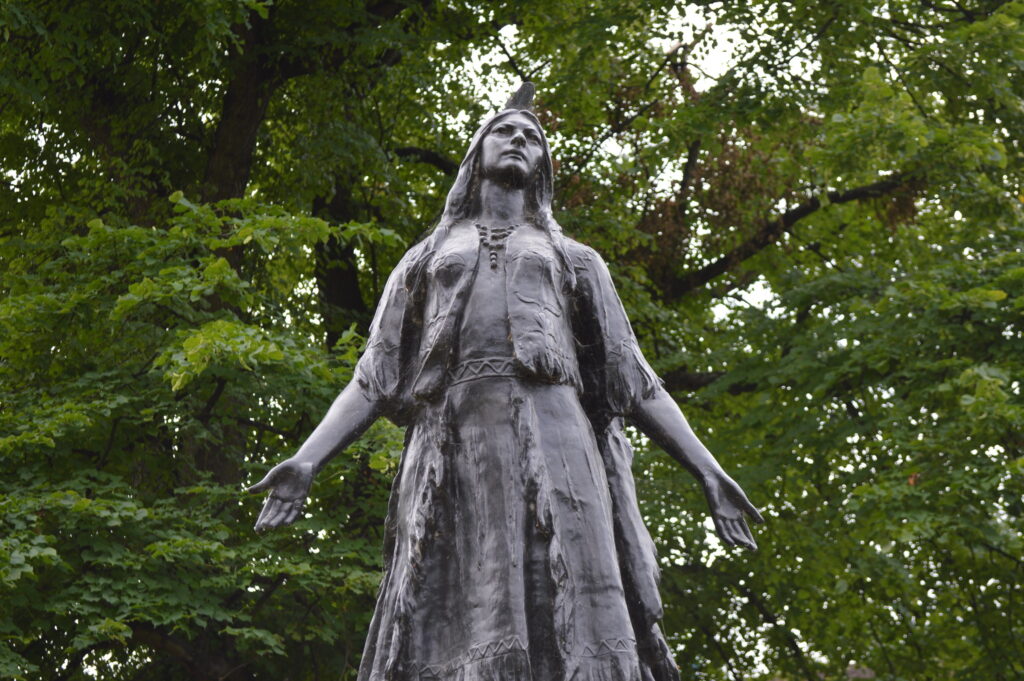
The story of Pocahontas saving John Smith from execution is often presented as a defining moment in early American history. According to Smith, she intervened just as he was about to be killed. However, Smith did not mention this event in his earliest writings. The story appeared years later in a more detailed account. Some historians believe it may have been misunderstood or embellished. It is possible the event was a ritual rather than a rescue.
Scholars note that Smith had a tendency to dramatize his experiences. Cultural misunderstandings between English settlers and Indigenous peoples were common. What Smith interpreted as a life-threatening situation may have been part of a ceremonial adoption process. The lack of corroborating evidence adds to the uncertainty. The story remains widely known, but its accuracy is debated. It reflects how perspective can shape historical narratives.
9. The Curse of Tutankhamun’s Tomb
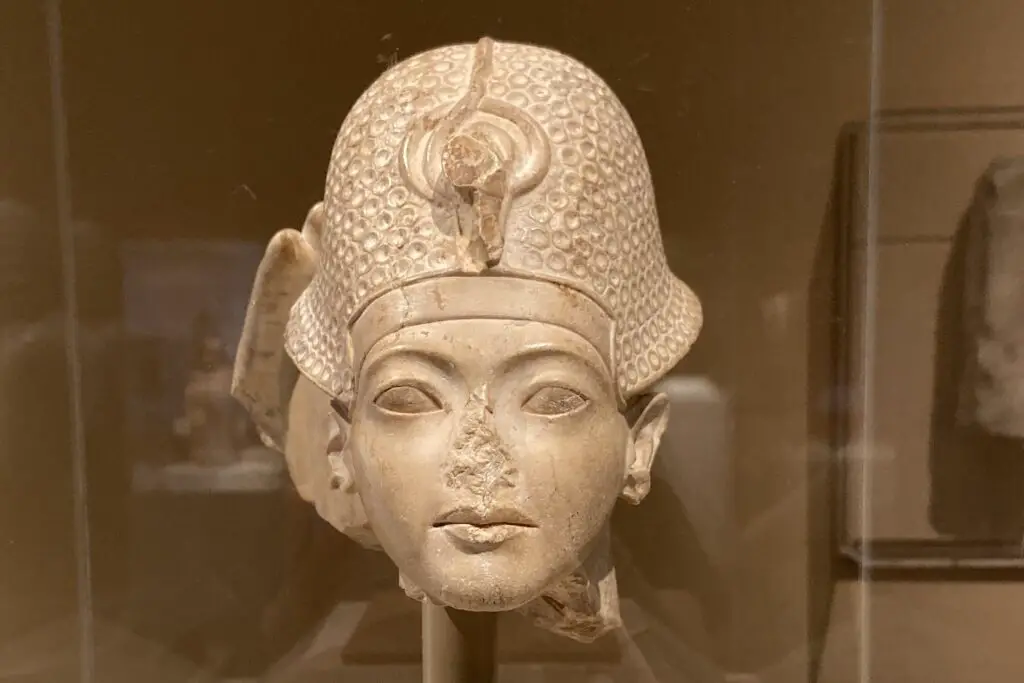
When Tutankhamun’s tomb was opened in 1922, reports of a curse quickly spread. Several individuals connected to the excavation, including Lord Carnarvon, died within a few years. This led to widespread belief in a supernatural curse. However, statistical analysis shows that many people involved lived long lives afterward. There is no consistent pattern of unusual deaths among the group. Medical explanations account for the deaths that did occur.
The idea of a curse was amplified by media coverage at the time. Sensational stories helped sell newspapers and capture public attention. In reality, the evidence does not support a supernatural explanation. Most historians consider the curse a product of storytelling rather than fact. The fascination persists because it adds intrigue to an already significant discovery. It demonstrates how media can shape historical perception.
10. The Great Fire of Chicago and Mrs. O’Leary’s Cow

The Great Chicago Fire is often blamed on a cow owned by Catherine O’Leary that supposedly kicked over a lantern. This story became widely accepted almost immediately. However, later investigations found no evidence supporting this claim. The story likely originated from a journalist seeking a colorful explanation. O’Leary herself denied the accusation.
Historians now agree the exact cause of the fire is unknown. The cow story persists because it is simple and memorable. It also unfairly placed blame on a single individual. Over time, the narrative overshadowed more complex explanations involving dry conditions and urban density. The myth became more famous than the facts. It remains a clear example of how misinformation can take hold.
11. Napoleon’s Height
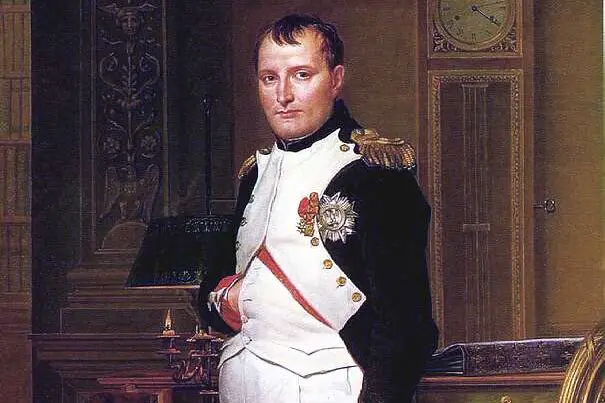
Napoleon Bonaparte is often described as unusually short, contributing to the idea of a “Napoleon complex.” This perception comes from conflicting measurements and translation issues. French units of measurement differed from British ones at the time. When converted correctly, Napoleon’s height was about average for a man of his era. British propaganda also played a role in portraying him as small and insignificant.
The image of Napoleon as short became entrenched despite evidence to the contrary. Political cartoons and satire reinforced the stereotype. Over time, it evolved into a psychological concept. Historians now recognize the discrepancy as largely a matter of measurement and bias. The myth persists because it fits a compelling narrative. It highlights how perception can override data.
12. The Dancing Plague of 1518
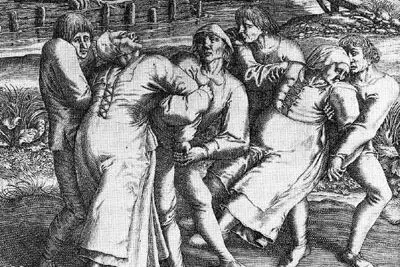
The Dancing Plague of 1518 involved dozens of people reportedly dancing uncontrollably for days or even weeks. Some accounts claim participants danced to the point of exhaustion or death. While the event itself is documented, the cause remains uncertain. Early explanations included supernatural forces or divine punishment. Modern theories suggest mass psychogenic illness or stress-induced behavior. The exact trigger, however, is still debated.
The dramatic descriptions may have been exaggerated over time. Contemporary records are limited and sometimes inconsistent. It is difficult to determine how many people were affected or how severe the outcomes were. Historians approach the event cautiously due to these uncertainties. The story remains unusual but not fully understood. It illustrates how limited records can leave room for speculation.
13. Vikings Wearing Horned Helmets
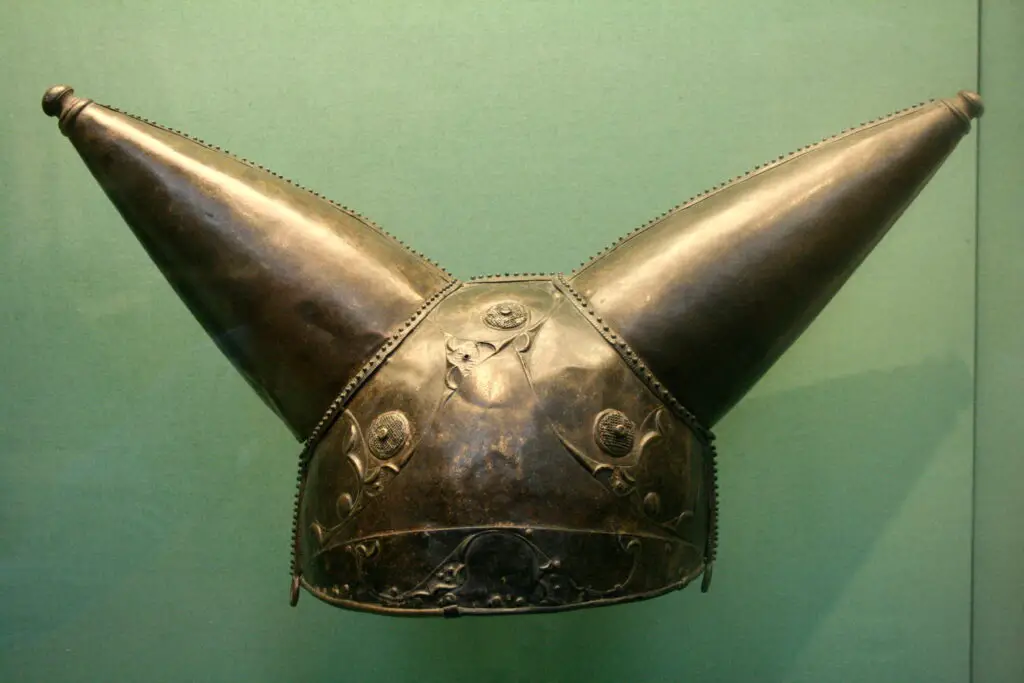
The image of Vikings wearing horned helmets is widely recognized in popular culture. It appears in films, illustrations, and even sports mascots. However, there is no archaeological evidence supporting this depiction. Actual Viking helmets found by archaeologists are practical and lack horns. The horned version likely originated in 19th-century artistic interpretations. It was later reinforced by opera costumes, particularly in productions influenced by Richard Wagner.
The persistence of this image shows how cultural representations can override historical accuracy. Once established, the visual became difficult to correct. Many people still associate Vikings with horned helmets despite the evidence. Historians consistently point out the inaccuracy. The myth continues because it is visually striking and easy to recognize. It serves as a reminder that popular imagery is not always reliable.
14. The Library of Alexandria’s Destruction

The destruction of the Library of Alexandria is often described as a single catastrophic event that wiped out vast knowledge. Some versions blame Julius Caesar, while others point to later rulers. In reality, evidence suggests the library declined over time rather than being destroyed all at once. Multiple incidents, including fires and political changes, likely contributed. There is no definitive account describing a single moment of destruction.
Historians view the loss as gradual and complex. The narrative of a single dramatic event simplifies a much longer process. This makes the story easier to tell but less accurate. The lack of detailed records adds to the uncertainty. The idea of a sudden loss of knowledge is compelling, which helps explain its popularity. It reflects how historical events are often condensed into simpler narratives.
15. Albert Einstein Failing Math
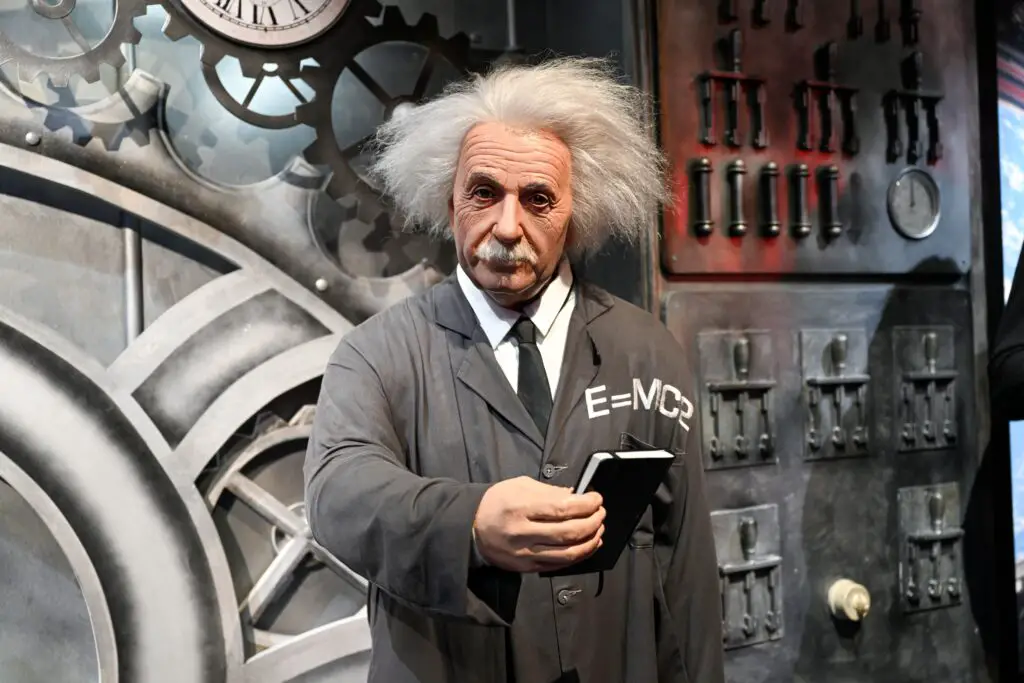
The claim that Albert Einstein failed math as a student is often used to inspire perseverance. However, school records show he performed well in mathematics from a young age. The confusion may come from differences in grading systems or misinterpretation of his academic history. Einstein did struggle with some aspects of formal education, particularly rigid instruction styles. But there is no evidence he failed math. In fact, he excelled in it.
The story persists because it offers a relatable narrative about overcoming difficulty. It simplifies a more nuanced reality about education and learning styles. Historians and educators consistently debunk the claim. Despite this, it continues to circulate widely. The myth reflects how appealing stories can overshadow documented facts. It remains one of the most common misconceptions about a historical figure.