
1. George Washington and the Cherry Tree Story
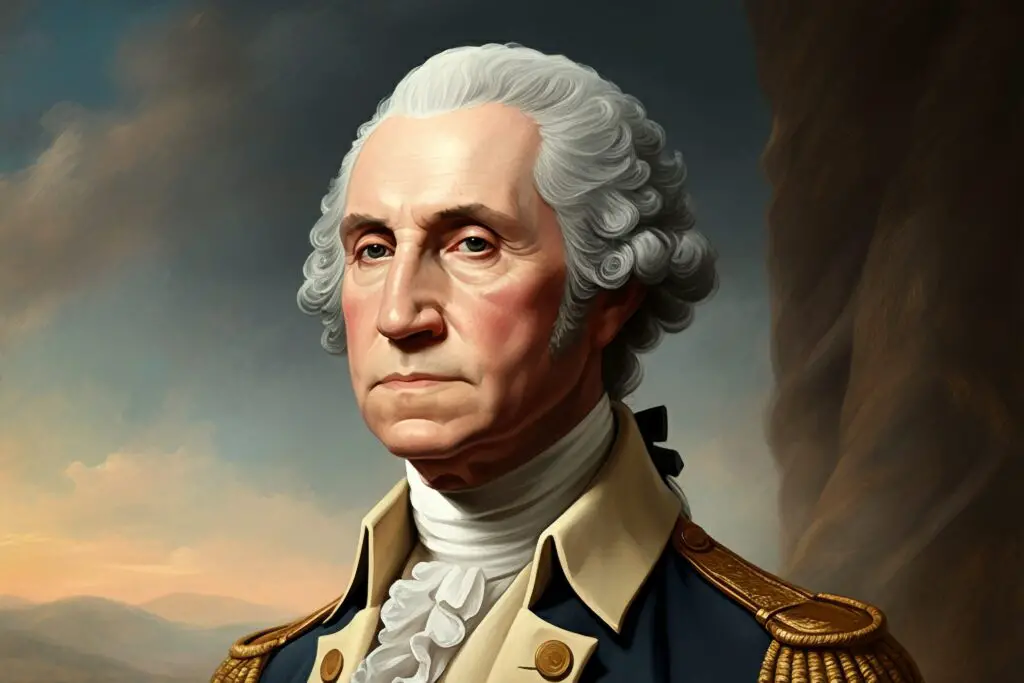
The story of George Washington confessing “I cannot tell a lie” after chopping down a cherry tree is one of the most widely repeated tales in American history. It has been used for generations to illustrate Washington’s honesty, especially in children’s books and early education. The problem is that there is no evidence it actually happened. The story first appeared in an 1806 biography written by Parson Weems, several years after Washington’s death. Weems was known for adding moralizing anecdotes to make his subjects more admirable.
Historians generally agree the cherry tree story is apocryphal, meaning it was invented rather than recorded from real events. Washington’s reputation for integrity was well established without it, so the anecdote was likely meant to reinforce an already positive image. Over time, it became so embedded in American culture that many people assumed it was factual. It still appears in some educational contexts today, though usually with clarification. The real Washington was complex, and reducing him to a single moral lesson oversimplifies his life. The story says more about early American storytelling than it does about Washington himself.
2. Paul Revere’s “Midnight Ride” as a Solo Heroic Act
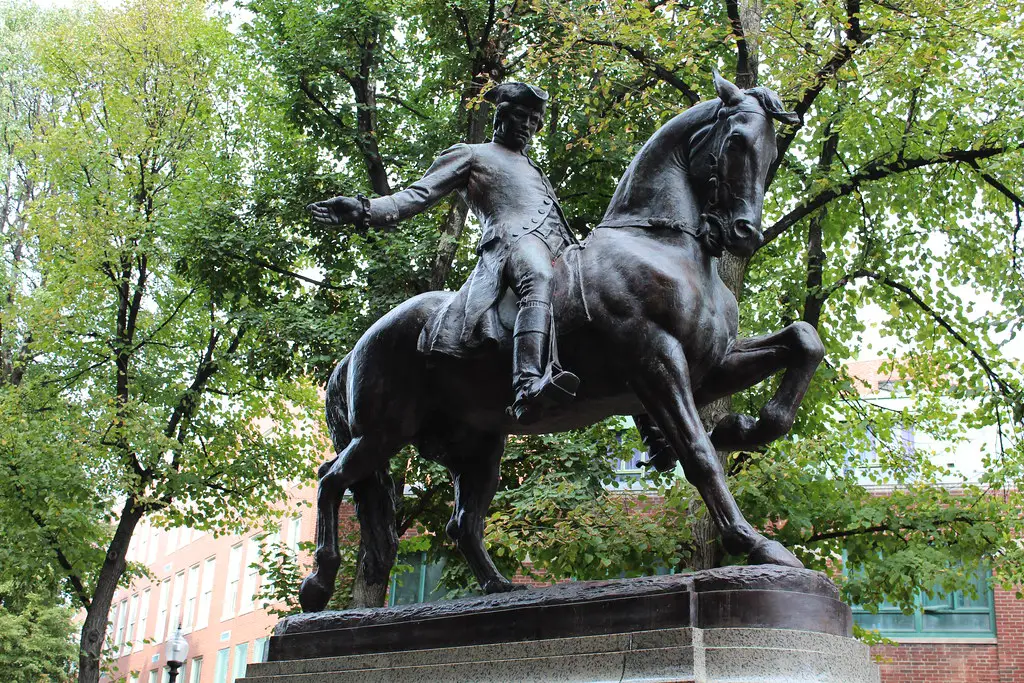
Paul Revere is often portrayed as a lone rider racing through the night shouting warnings that the British were coming. This version comes largely from Henry Wadsworth Longfellow’s 1860 poem “Paul Revere’s Ride,” which dramatized the event for patriotic effect. In reality, Revere was part of a coordinated effort that included several riders, notably William Dawes and Samuel Prescott. They were working within an organized alarm system already in place in colonial Massachusetts.
Revere did not complete the ride as often depicted, either. He was captured by British troops before reaching Concord, and it was Prescott who successfully carried the warning forward. The famous line about shouting in the streets is also inaccurate, since secrecy was crucial and riders avoided drawing unnecessary attention. Longfellow’s poem reshaped public memory by focusing on a single heroic figure. As a result, Revere became far more famous than others who played equally important roles. The real story is more about teamwork than individual heroism.
3. Betsy Ross Sewing the First American Flag Alone
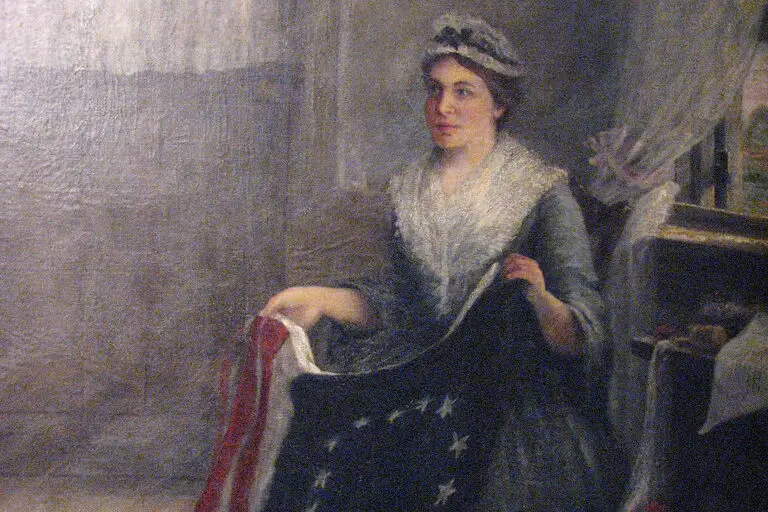
The idea that Betsy Ross created the first American flag at the request of George Washington is widely taught. According to the story, she even suggested the five-pointed star design. However, there is no contemporary evidence from the 1770s to support this claim. The story did not emerge until nearly a century later, when Ross’s grandson shared it publicly in 1870. By that time, the Revolutionary War generation had long passed.
Historians consider the account possible but unproven, and many view it as unlikely. Flag-making was a common trade, and multiple individuals may have contributed to early designs. The Continental Congress did pass a resolution in 1777 describing the flag, but it did not name a designer. Ross may have been one of several seamstresses involved in producing flags. The simplified version of her as the sole creator is easier to tell but not well documented. It reflects how historical figures are often shaped into clear, memorable narratives.
4. Davy Crockett as a Larger-Than-Life Frontiersman
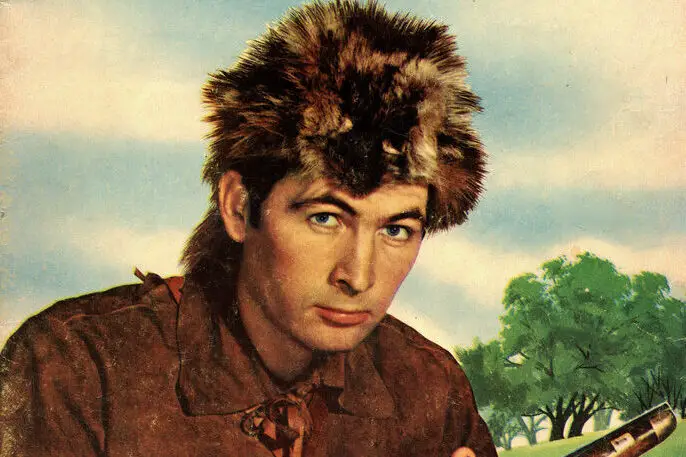
Davy Crockett became famous during his lifetime, but much of his legend was exaggerated through storytelling and popular culture. He was a real congressman and soldier, and he did die at the Battle of the Alamo in 1836. However, stories about his exploits, like wrestling bears or performing superhuman feats, were often embellished in newspapers and stage plays. Crockett himself sometimes contributed to these tales, recognizing their value for his political image.
Later portrayals, especially in the 20th century, amplified the myth even further. The coonskin cap image, for example, became iconic but was not something he wore as regularly as depicted. Accounts of his death at the Alamo also vary, with some suggesting he may have been captured before being killed. Historians rely on conflicting reports from Mexican and American sources, so the exact details remain uncertain. What is clear is that Crockett’s reputation grew well beyond documented fact. His legend became a symbol of frontier independence rather than a strictly accurate biography.
5. Johnny Appleseed Randomly Planting Apple Trees for Kindness
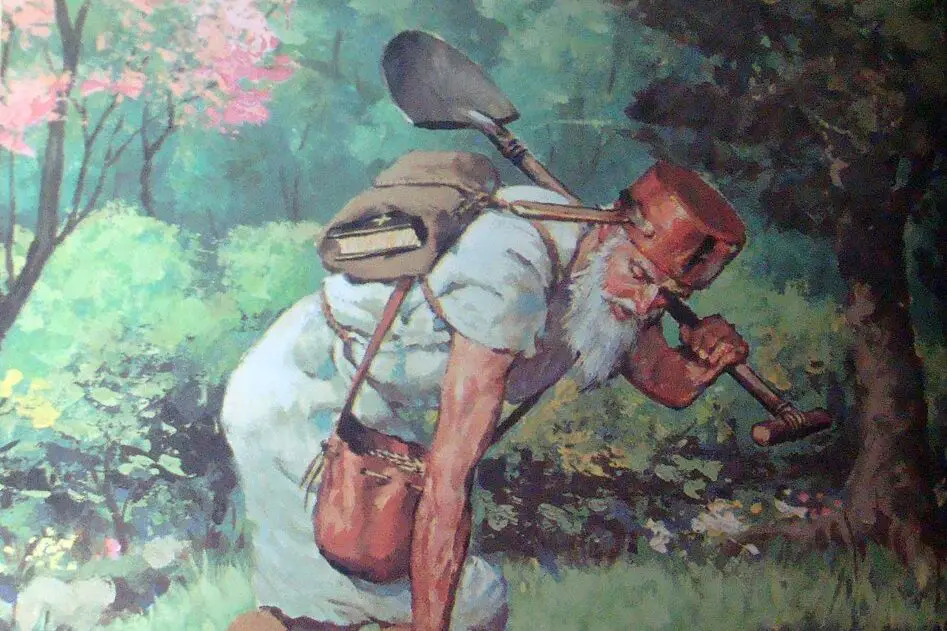
Johnny Appleseed is often portrayed as a wandering figure scattering apple seeds out of generosity. In reality, John Chapman was a businessman as well as a missionary. He deliberately planted nurseries in strategic locations on the American frontier. These orchards helped him establish land claims and generate income by selling trees to settlers. Apples at the time were often used for cider rather than eating, which was safer than drinking untreated water.
Chapman’s lifestyle was still unusual, and he was known for his religious beliefs and simple way of living. However, the image of him casually tossing seeds without purpose is misleading. His work was organized and economically motivated, even if it also had a spiritual dimension. The myth likely developed because it is more appealing to imagine him as purely selfless. Over time, the practical aspects of his work were overshadowed. The real story blends entrepreneurship with frontier survival.
6. Pocahontas Saving John Smith in a Dramatic Rescue
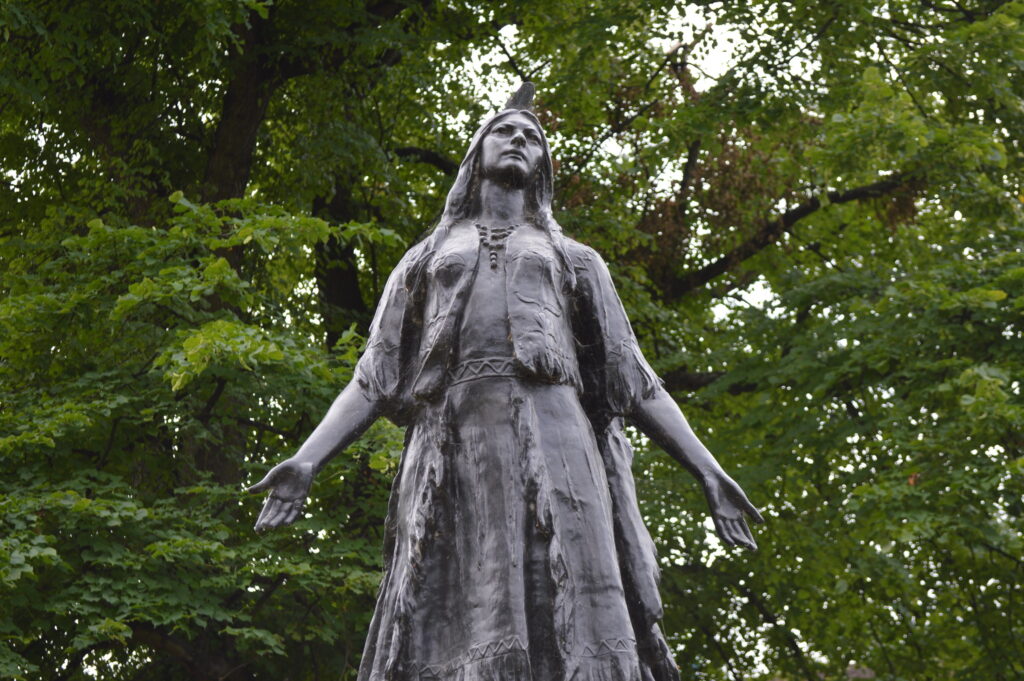
The story of Pocahontas saving John Smith from execution is one of the most famous early colonial legends. According to Smith, Pocahontas intervened by placing her head over his to stop his execution. However, he did not record this incident until years later, raising questions about its accuracy. Some historians believe the event may have been misunderstood or embellished. Others suggest it could have been part of a ceremonial adoption ritual rather than a life-or-death moment.
Pocahontas was a real historical figure who later played a role in relations between the Powhatan people and English settlers. She was taken captive by the English, converted to Christianity, and married John Rolfe. The rescue story became central to her legacy, especially in later retellings. However, it simplifies a much more complicated and often tragic history. The lack of contemporary evidence makes it difficult to confirm Smith’s account. As a result, the dramatic rescue is treated with skepticism by many historians.
7. The Liberty Bell Ringing Loudly on July 4, 1776
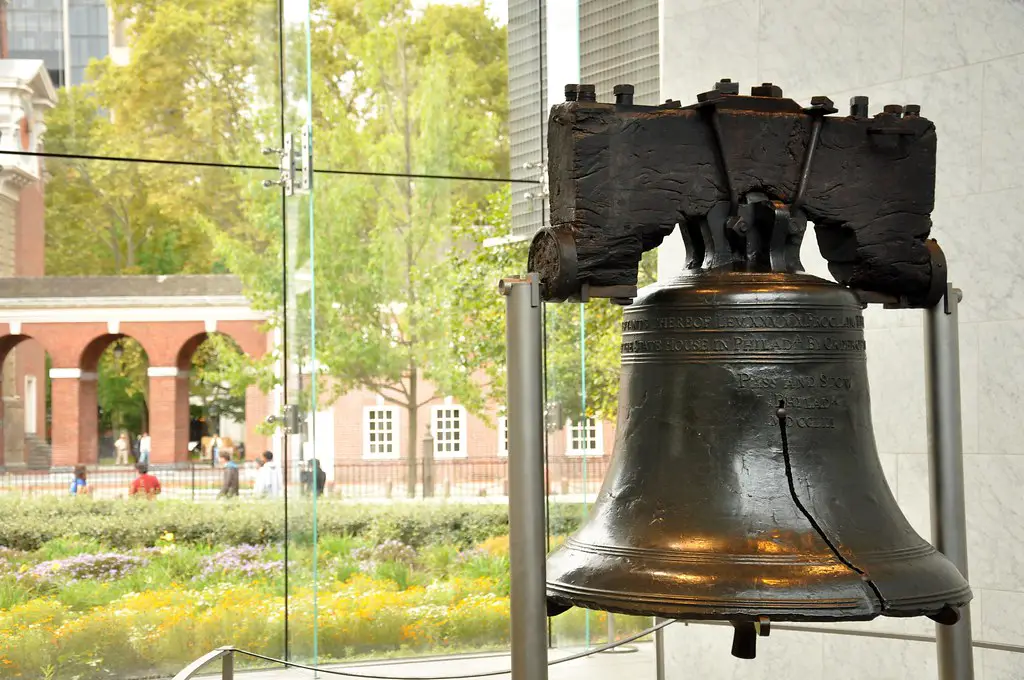
The Liberty Bell is strongly associated with American independence, especially the idea that it rang on July 4, 1776. In reality, there is no evidence the bell was rung on that specific day to mark the signing of the Declaration of Independence. The Declaration itself was not publicly read until July 8, 1776. Bells may have been rung then, but records do not specifically confirm the Liberty Bell’s involvement.
The association between the bell and independence developed later, particularly in the 19th century. It became a symbol of liberty and abolition, gaining national significance through campaigns and publications. The famous crack in the bell also occurred after its early use, not during the Revolution itself. Over time, symbolic meaning replaced documented history in public memory. The story of it ringing on July 4 is more tradition than fact. It shows how national symbols can evolve independently of their actual origins.
8. The Pony Express as a Long-Lasting Essential Service
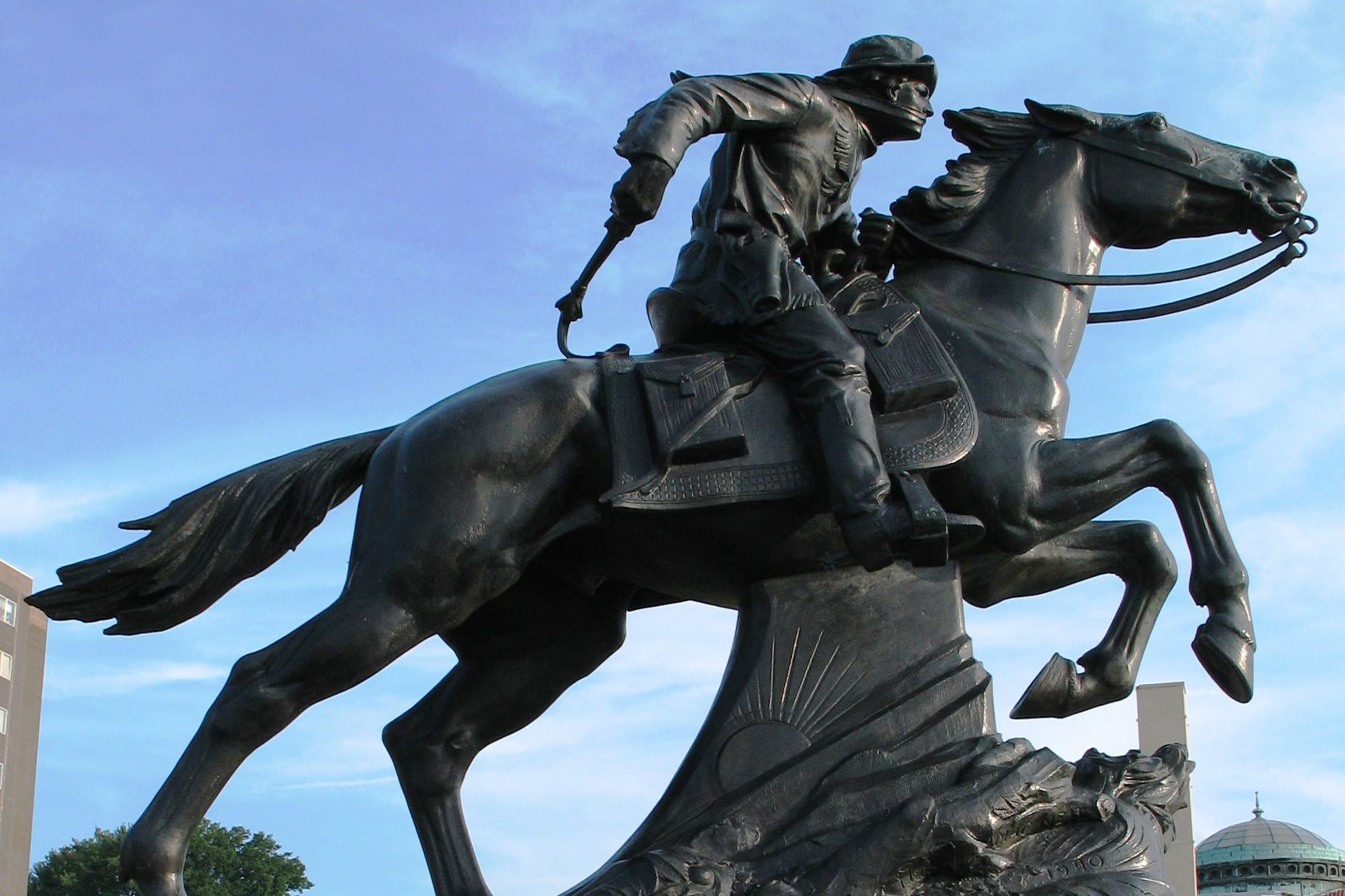
The Pony Express is often remembered as a major, long-running part of American communication. In reality, it operated for only about 18 months, from 1860 to 1861. It was created to provide faster mail delivery between Missouri and California during a time of national expansion. Riders worked in a relay system, changing horses frequently to maintain speed. While impressive, it was also expensive and difficult to sustain.
The service ended quickly once the transcontinental telegraph was completed. That technology made long-distance communication faster and more reliable. Despite its short lifespan, the Pony Express became a lasting symbol of the American West. Its dramatic image, lone riders crossing dangerous terrain, contributed to its mythic status. In reality, it was a brief transitional solution. The legend outlived the service itself by a wide margin.
9. Molly Pitcher as a Single Identifiable War Hero
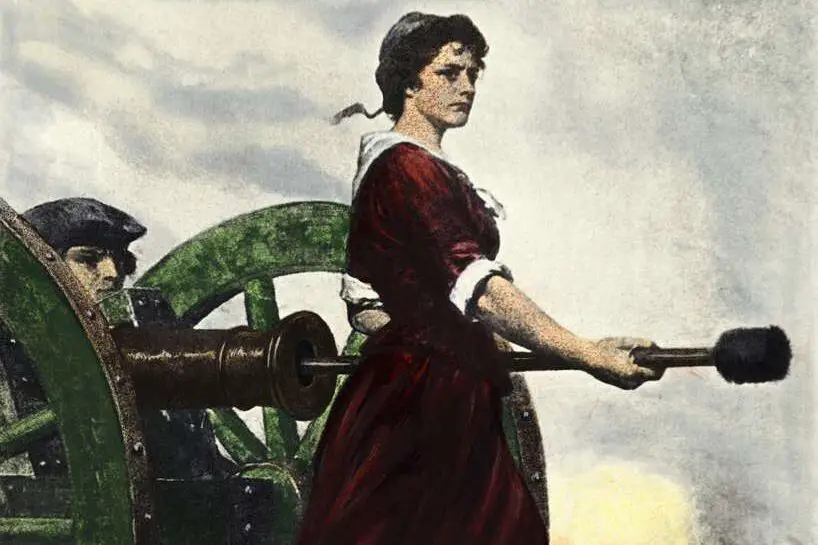
Molly Pitcher is often described as a specific woman who carried water to soldiers and even manned a cannon during battle. The name, however, appears to have been a nickname applied to multiple women who assisted troops. One of the most commonly associated individuals is Mary Ludwig Hays McCauley. She reportedly took over her husband’s position at the Battle of Monmouth. Even so, documentation is limited and sometimes conflicting.
The broader reality is that many women supported the Continental Army in various ways. They provided water, medical care, and logistical help during battles. The Molly Pitcher story likely combines several real contributions into one figure. This made the story easier to pass down and celebrate. Over time, the composite character became treated as a single person. The legend reflects real acts of bravery, but not necessarily a single, clearly documented individual.
10. The Salem Witch Trials as Purely Supernatural Panic
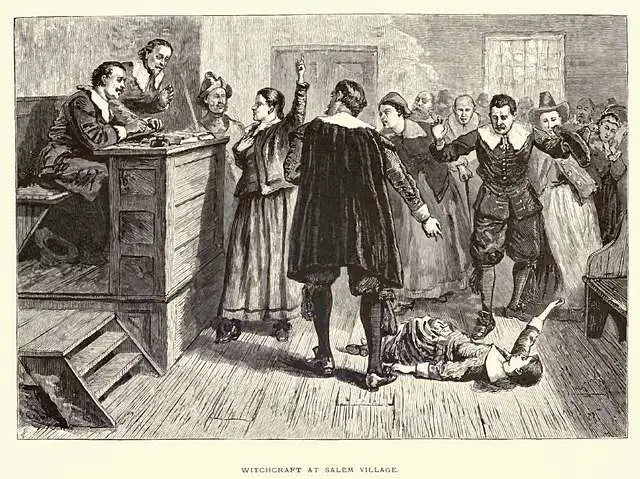
The Salem Witch Trials are often portrayed as a sudden outbreak of irrational fear driven entirely by belief in witchcraft. While fear of the supernatural did play a role, historians point to a range of contributing factors. These include local political tensions, property disputes, and social divisions within the community. The accusations often followed existing conflicts between families and neighbors. This suggests the trials were influenced by more than simple superstition.
The legal procedures used at the time also allowed questionable evidence, such as spectral testimony. This made it easier for accusations to escalate quickly. Nineteen people were executed, and several others died in custody. The event has since become a symbol of mass hysteria, but the causes were complex. Economic stress and instability likely contributed to the situation. Reducing the trials to a single explanation overlooks the broader context. The reality is more layered than the simplified narrative.
11. George Armstrong Custer’s “Last Stand” as Pure Heroism
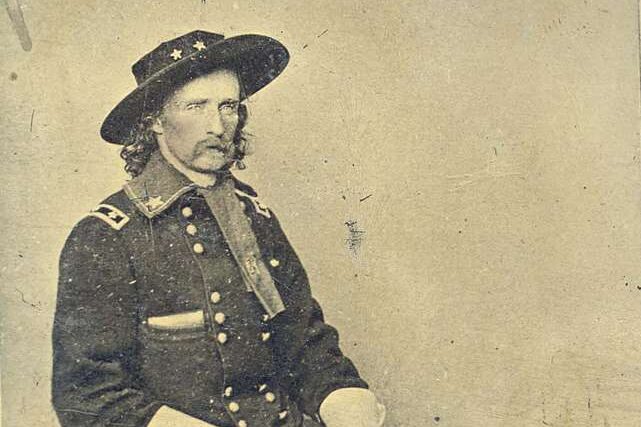
George Armstrong Custer is often remembered for his “Last Stand” at the Battle of the Little Bighorn in 1876. Popular depictions framed him as a heroic figure fighting overwhelming odds. However, historians have reassessed his actions and decisions leading up to the battle. Custer divided his forces and underestimated the size and strength of the Lakota, Northern Cheyenne, and Arapaho forces. This tactical misjudgment contributed significantly to the outcome.
Accounts from Native American participants provide additional perspectives that differ from earlier portrayals. These sources describe a coordinated and effective resistance rather than a chaotic attack. Over time, the narrative has shifted away from simple heroism. Custer’s leadership is now often viewed as flawed and overly aggressive. The myth of the “Last Stand” was shaped in part by early reports and cultural attitudes of the time. Modern interpretations present a more balanced, and less romanticized, view.
12. The Boston Tea Party as a Spontaneous Act of Protest
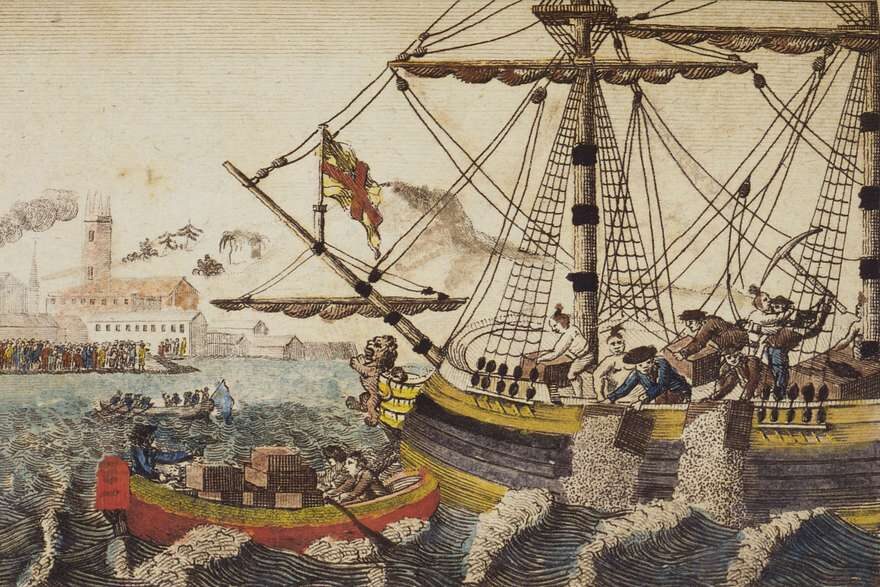
The Boston Tea Party is often described as a sudden, impulsive act of rebellion against British taxes. In reality, it was a carefully organized protest carried out by members of the Sons of Liberty. Participants planned the event in advance and used disguises, including Mohawk-style clothing, to conceal their identities. The destruction of tea was a deliberate political statement rather than a random outburst. It was part of a broader pattern of resistance to British policies.
The event had immediate consequences, including the passage of the Coercive Acts by the British government. These measures increased tensions and contributed to the outbreak of the American Revolution. While dramatic, the Tea Party was not an isolated incident. It reflected ongoing organization and coordination among colonial leaders. The simplified version as a spontaneous protest overlooks this planning. The real story highlights strategy as much as defiance.