
1. The Disappearance of Amelia Earhart (1937)

When Amelia Earhart vanished over the Pacific Ocean during her attempt to circumnavigate the globe, it immediately became one of the most famous aviation mysteries in history. She and navigator Fred Noonan were last heard from near Howland Island, but despite an extensive search effort, no confirmed wreckage was ever found. The official explanation has long been that they ran out of fuel and crashed into the ocean. Still, that conclusion has never fully satisfied everyone.
Over the decades, alternative theories have taken hold, including the idea that Earhart landed on Nikumaroro Island or was captured by Japanese forces, though neither claim has been definitively proven. Some artifacts discovered on remote islands have fueled ongoing research, but none have provided conclusive answers. The lack of physical evidence keeps the case open-ended. Even today, new expeditions continue to search for clues. It remains one of the most enduring mysteries tied to early aviation.
2. The Identity of Jack the Ripper (1888)
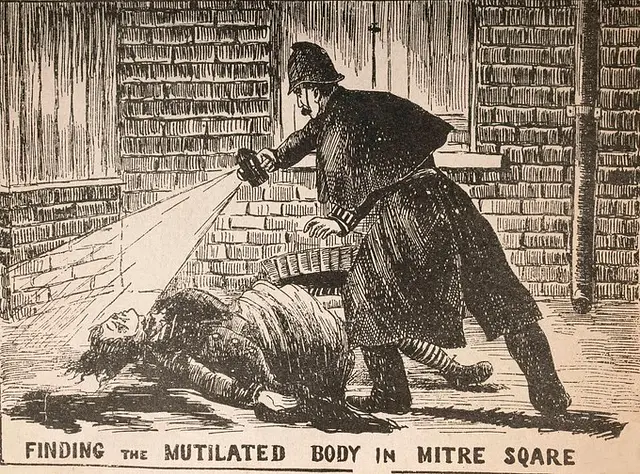
In the fall of 1888, a series of brutal murders in London’s Whitechapel district terrified residents and captivated the public. The killer, known as Jack the Ripper, targeted women and evaded capture despite intense investigation. Police at the time interviewed suspects and collected evidence, but forensic science was still in its infancy. As a result, no one was ever definitively identified or charged.
Since then, countless theories have emerged, naming everyone from local butchers to members of the royal family. Some modern researchers have attempted DNA analysis on preserved evidence, but the results are widely disputed and not universally accepted by experts. The lack of definitive proof leaves room for ongoing debate. The case continues to fascinate historians and criminologists alike. It stands as one of the most analyzed unsolved crimes in history.
3. The Lost Colony of Roanoke (1587)
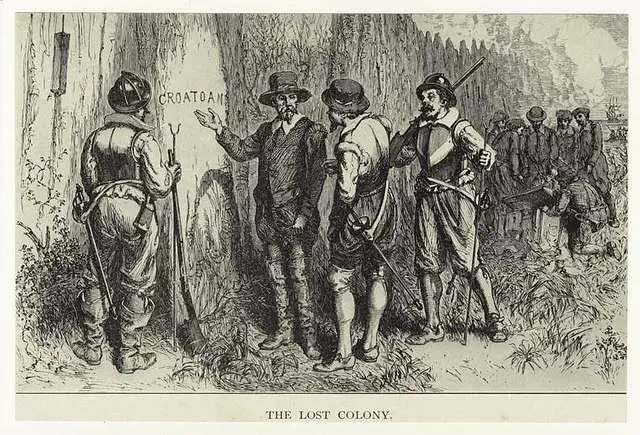
More than 100 English settlers arrived on Roanoke Island off the coast of present-day North Carolina in 1587, only to disappear without a clear trace. When a supply ship returned three years later, the colony was deserted. The only clue left behind was the word “CROATOAN” carved into a post. There were no signs of struggle or mass violence at the site.
Historians have long debated what happened, with theories ranging from assimilation with nearby Indigenous groups to relocation due to hardship. Some archaeological evidence suggests the settlers may have integrated with the Croatan people, but there is no definitive proof. The absence of written records makes it difficult to confirm any single explanation. The mystery has persisted for centuries. It remains one of the earliest unresolved events in American colonial history.
4. The Dyatlov Pass Incident (1959)

In 1959, nine experienced hikers died under strange circumstances in the Ural Mountains of what was then the Soviet Union. Investigators found their tent torn open from the inside, as if they had fled in a hurry. Some of the bodies were discovered partially clothed despite freezing temperatures. Others had severe injuries that were difficult to explain, including internal trauma without external wounds.
An official Soviet investigation concluded that an “unknown compelling force” caused their deaths, which only deepened the mystery. Later studies have suggested possibilities like an avalanche or infrasound-induced panic, and a 2020 Russian inquiry supported an avalanche scenario. Even so, not all researchers agree that this fully explains every detail. The unusual evidence continues to spark debate. The case remains a focal point for both scientific and speculative theories.
5. The Mary Celeste Crew Disappearance (1872)
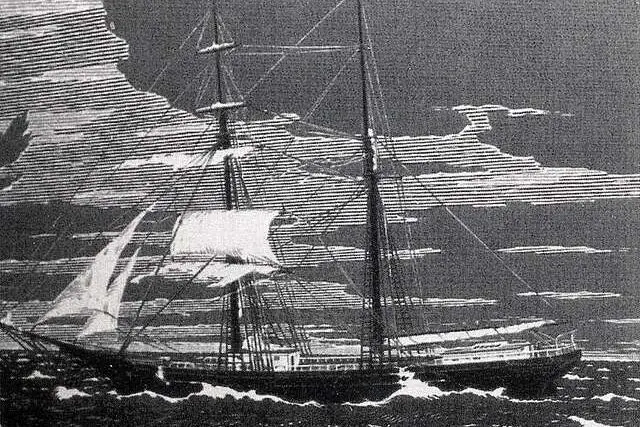
The merchant ship Mary Celeste was found adrift in the Atlantic Ocean in 1872, completely abandoned but still seaworthy. The cargo was largely intact, and there were no clear signs of a struggle or piracy. Personal belongings, including valuables, were left behind. The ship’s lifeboat was missing, suggesting the crew had left voluntarily.
Theories about what happened range from a panic over alcohol fumes to fears of a sudden explosion or natural disaster. However, none of these explanations have been definitively proven. The absence of clear evidence leaves room for speculation. Maritime historians continue to revisit the case. It remains one of the most famous ghost ship stories ever recorded.
6. The Assassination of JFK (1963)

When President John F. Kennedy was assassinated in Dallas on November 22, 1963, the event shocked the nation and the world. The official Warren Commission concluded that Lee Harvey Oswald acted alone. However, many people have questioned that conclusion from the beginning. Concerns about evidence handling and witness testimony have fueled ongoing skepticism.
Alternative theories have suggested the involvement of multiple shooters or broader conspiracies, though none have been definitively proven. Numerous investigations, including the House Select Committee on Assassinations, revisited the case but did not reach a universally accepted conclusion. Newly released documents have continued to generate discussion rather than closure. The assassination remains one of the most debated events in modern American history. Its unresolved questions still resonate decades later.
7. The Zodiac Killer’s Identity (1960s–1970s)

The Zodiac Killer terrorized Northern California in the late 1960s and early 1970s, committing a series of murders and sending cryptic letters to newspapers. Some of these letters included coded messages, only a portion of which have been solved. Despite extensive investigation, the killer was never definitively identified. The case eventually went cold.
Over the years, several suspects have been proposed, but none have been conclusively linked through evidence that meets legal standards. Advances in forensic technology have renewed interest in the case, but no definitive resolution has been announced. The unsolved ciphers continue to attract amateur and professional codebreakers. The mystery has remained embedded in popular culture. It continues to generate debate about who the killer might have been.
8. The Tunguska Event (1908)

In 1908, a massive explosion flattened thousands of square miles of forest in Siberia near the Tunguska River. Witnesses reported a bright flash followed by a shockwave that knocked people off their feet. Despite the scale of the destruction, no impact crater was ever found. Early expeditions were delayed, leaving many initial observations undocumented.
The leading scientific explanation is that an asteroid or comet exploded in the atmosphere before reaching the ground. However, the absence of a crater and limited physical evidence have allowed alternative theories to persist. Some have proposed more unusual explanations, though these lack strong supporting evidence. Ongoing studies have improved understanding but have not eliminated all questions. The event remains one of the most unusual natural occurrences ever recorded. It continues to be studied as a case of atmospheric explosion.
9. The Somerton Man (1948)

In 1948, an unidentified man was found dead on Somerton Beach in Adelaide, Australia. He carried no identification, and the labels on his clothing had been removed. A mysterious scrap of paper with the words “Tamám Shud” was later discovered, traced to a rare book of Persian poetry. Investigators were unable to determine his identity or cause of death with certainty at the time.
The case drew renewed attention decades later, especially after the discovery of a code written inside the book. In 2022, researchers using DNA analysis identified the man as Carl “Charles” Webb, though some details of his life remain unclear. Even with that identification, questions about how and why he died persist. The cryptic elements of the case continue to intrigue investigators. It remains partially unresolved despite modern advances. The mystery still sparks discussion about espionage and personal circumstances.
10. The Princes in the Tower (1483)
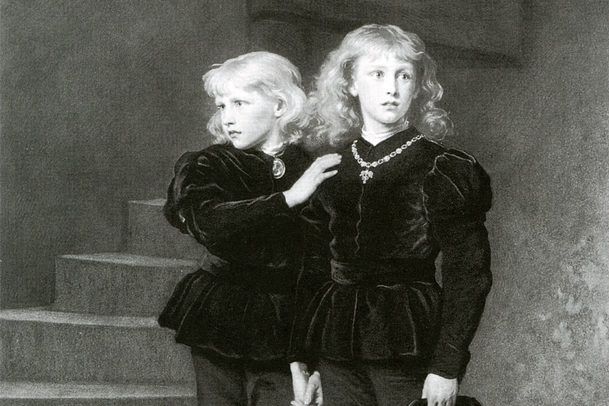
In 1483, two young princes, Edward V and his brother Richard, were placed in the Tower of London and then disappeared from public view. Their uncle, Richard III, became king shortly afterward. The boys were never seen again, and their fate has been debated for centuries. Contemporary accounts offer conflicting details.
Some historians believe the princes were murdered, possibly on orders from Richard III, while others argue alternative suspects or theories. Skeletal remains found in the Tower in the 17th century are often cited, but they have not been conclusively identified. The lack of definitive forensic evidence keeps the debate open. The case remains one of England’s most enduring historical mysteries. It continues to be revisited by historians and researchers.
11. The Wow! Signal (1977)

In 1977, a radio telescope at Ohio State University detected a strong, narrowband signal from space that lasted 72 seconds. Astronomer Jerry Ehman famously circled the data printout and wrote “Wow!” next to it. The signal appeared to come from the direction of the Sagittarius constellation. It has never been detected again.
Scientists have proposed natural explanations, such as comet emissions, but none have been universally accepted. The signal’s characteristics were unusual enough to prompt speculation about extraterrestrial origins, though there is no definitive evidence supporting that claim. The inability to replicate the signal makes it difficult to study further. It remains one of the most intriguing anomalies in the search for extraterrestrial intelligence. Debate continues over what may have caused it.
12. The Nazca Lines’ Purpose (c. 500 BCE–500 CE)
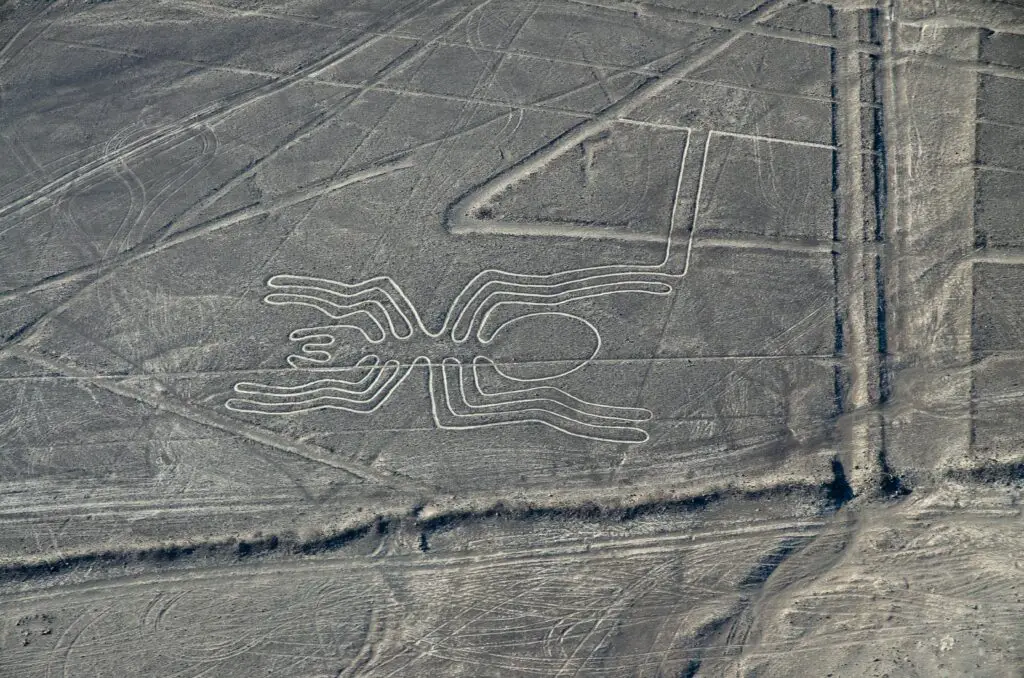
The Nazca Lines are massive geoglyphs etched into the desert of southern Peru, depicting animals, plants, and geometric shapes. They were created by the Nazca culture between roughly 500 BCE and 500 CE. The designs are best viewed from above, which raises questions about how and why they were made. Despite extensive study, their exact purpose remains uncertain.
Some researchers believe the lines had religious or ceremonial significance, possibly related to water rituals in an arid environment. Others suggest they may have served as astronomical markers or pathways for processions. No single theory has been definitively proven. Ongoing research continues to uncover new lines and patterns. The mystery of their purpose persists. They remain one of the most striking and debated archaeological features in the world.