
1. George Washington and the Cherry Tree
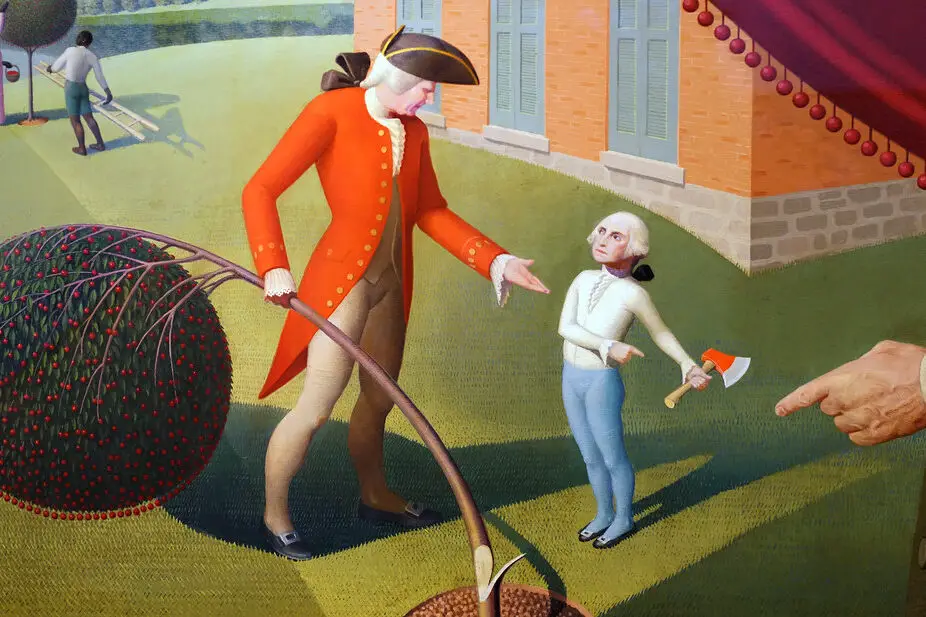
The story that George Washington confessed to chopping down a cherry tree and said, “I cannot tell a lie,” has been repeated for generations. It’s one of those tales that feels almost too perfect, like it was designed to teach a lesson rather than document a real moment. In reality, there’s no historical evidence that this ever happened. The story first appeared in an early biography written by Mason Locke Weems shortly after Washington’s death.
Weems was known for adding moral anecdotes to make Washington seem like a model of virtue, especially for young readers. Historians generally agree the cherry tree story was invented as a teaching tool rather than recorded history. Washington himself never mentioned anything like it in his writings. Still, the story stuck because it captured the kind of honesty people wanted to believe defined him. Over time, it became less about facts and more about symbolism.
2. Betsy Ross Sewing the First American Flag
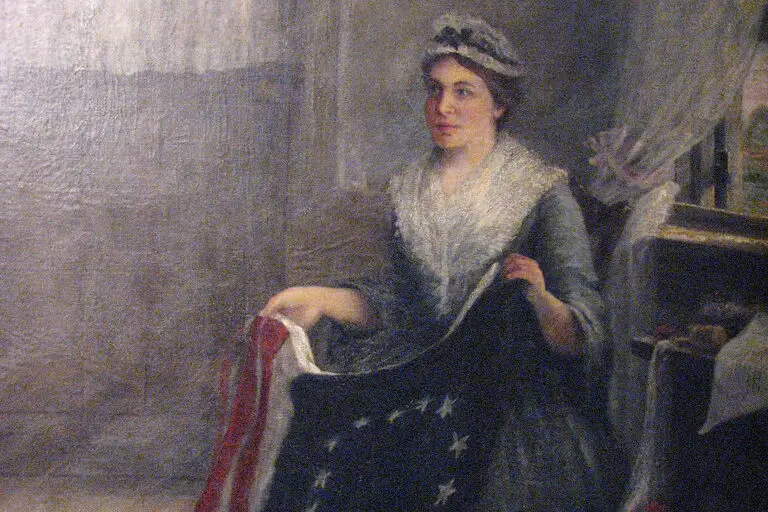
Many people grew up hearing that Betsy Ross personally sewed the first American flag after a visit from George Washington. It’s a neat, patriotic image that shows up in textbooks and artwork. The problem is that there’s no contemporary evidence from the Revolutionary War period to support the claim. The story didn’t even surface until nearly a century later.
Ross’s own grandson introduced the story in 1870, long after anyone involved could confirm or deny it. While Ross was a real upholsterer who made flags, historians cannot verify that she designed or created the first one. Other figures, like Francis Hopkinson, have stronger documented ties to the flag’s design. The Betsy Ross version likely gained popularity because it offered a simple and relatable origin story. It remains a cherished legend, even if it isn’t firmly grounded in evidence.
3. Paul Revere’s Midnight Ride
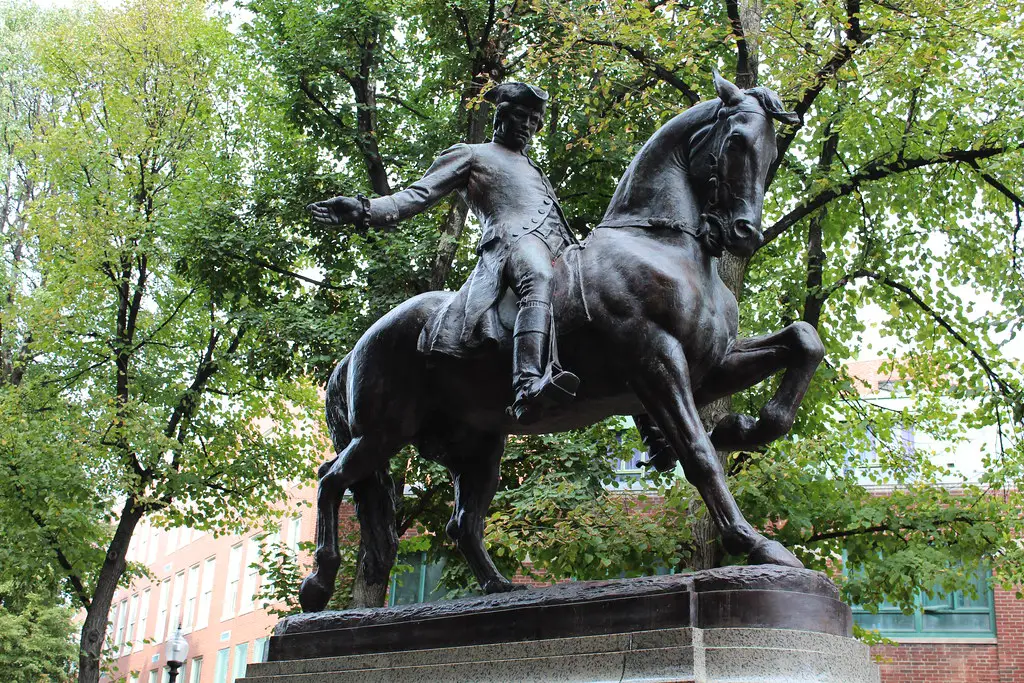
The image of Paul Revere racing through the night shouting “The British are coming!” is one of the most famous moments of the American Revolution. It’s dramatic, easy to picture, and has been repeated in classrooms for generations. But the reality was much quieter and more complicated. Revere was one of several riders, and secrecy was critical.
He likely would not have shouted anything so obvious, especially since many colonists still considered themselves British. The phrase itself appears to have been popularized later, especially through Henry Wadsworth Longfellow’s poem. In truth, Revere was part of a coordinated effort that included riders like William Dawes and Samuel Prescott. His ride was important, but it wasn’t a solo, cinematic dash. The legend simplified a larger, more coordinated event into a single heroic image.
4. Pocahontas Saving John Smith
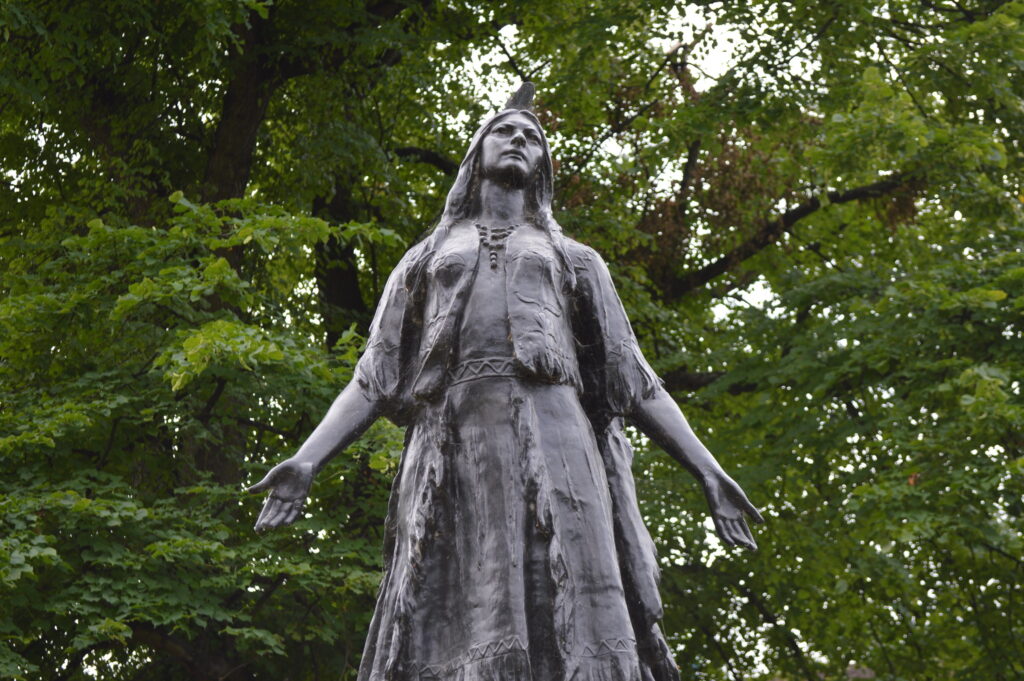
The story of Pocahontas throwing herself over John Smith to save him from execution has been told for centuries. It’s often framed as a dramatic moment of compassion that changed the course of early colonial history. However, historians question whether this event actually happened as described. The only account comes from Smith himself, and he didn’t mention it until years later.
Some scholars believe Smith may have misunderstood a ceremonial adoption ritual or exaggerated the story to enhance his reputation. There are no corroborating accounts from Powhatan sources. Pocahontas did have interactions with English settlers, but her life was far more complex than the rescue story suggests. She was later taken captive, converted to Christianity, and married John Rolfe. The popular version reduces her to a single dramatic moment that may not have occurred.
5. The Liberty Bell Ringing on July 4, 1776
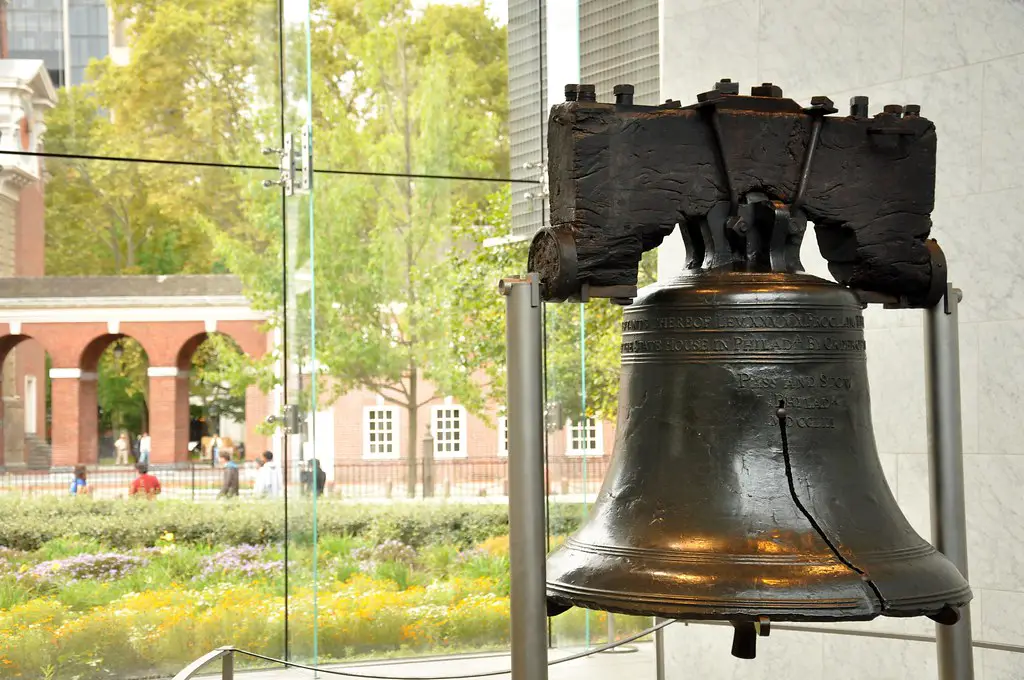
It’s easy to imagine the Liberty Bell ringing loudly in Philadelphia on July 4, 1776, as independence was declared. The image shows up in illustrations and reenactments, making it feel like a documented fact. In reality, there is no evidence the bell rang that day. The Declaration of Independence wasn’t even publicly read until July 8.
Historical records suggest that bells may have rung on July 8 to mark that public reading. The association with July 4 appears to have developed later as the date itself became more symbolic. The Liberty Bell’s name also wasn’t widely used until the 19th century. Like many patriotic stories, the timeline was simplified to create a more powerful image. The bell became a symbol of freedom, even if the specific moment was reshaped over time.
6. Pilgrims and Native Americans Sharing a Friendly First Thanksgiving
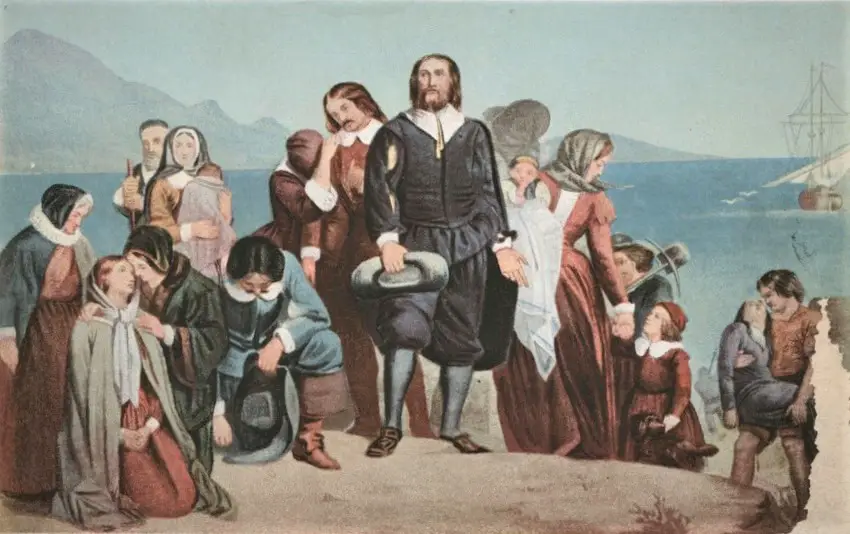
The classic image of Pilgrims and Native Americans sitting down together for a peaceful Thanksgiving meal is deeply ingrained. It suggests a moment of unity and mutual respect that set the tone for future relations. While there was a harvest feast in 1621, the reality was far more complicated. It was not called “Thanksgiving” at the time, and it wasn’t necessarily intended as a recurring tradition.
The Wampanoag people were present, but their role is often simplified or misunderstood. Relations between settlers and Native Americans would later become strained and violent. The idea of a harmonious beginning overlooks the broader context of colonization. The story was later reshaped into a national origin myth that emphasized cooperation. It remains a powerful image, even if it doesn’t fully reflect the historical complexities.
7. Davy Crockett’s Last Stand at the Alamo
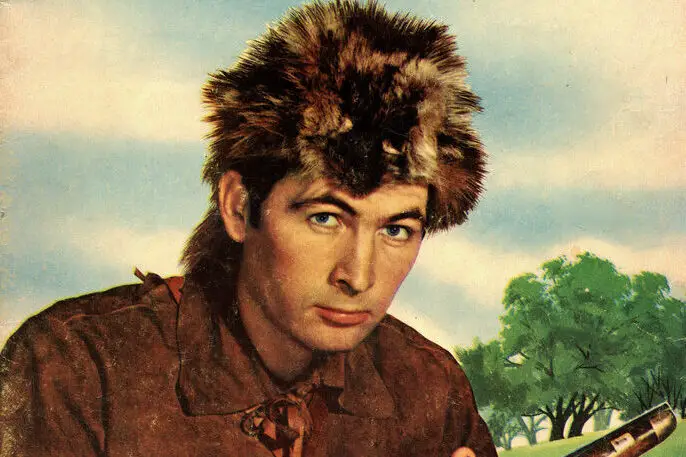
Davy Crockett is often remembered as fighting heroically to the very end at the Alamo. The image of him swinging his rifle in a final stand has been repeated in books, films, and television shows. However, historians are divided on what actually happened in Crockett’s final moments. Some accounts suggest he may have been captured and executed rather than dying in combat.
These accounts come from Mexican sources recorded after the battle, and they conflict with the more heroic version. There is no definitive evidence that confirms either version completely. Crockett’s reputation as a frontiersman and storyteller also contributed to the mythmaking around his life. The Alamo itself became a symbol, and Crockett’s story was shaped to fit that narrative. The truth may be less dramatic than the legend suggests.
8. The Salem Witches Being Burned at the Stake
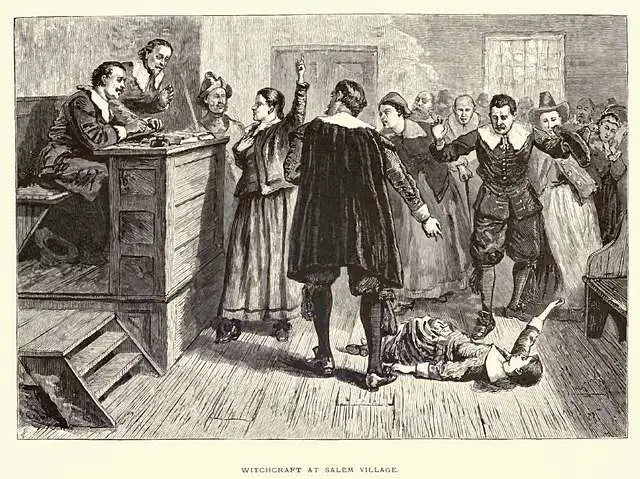
Many people picture the Salem witch trials ending with accused witches being burned at the stake. This image likely comes from European witch trials, where burning was more common. In colonial Massachusetts, the method of execution was different. Those convicted of witchcraft in Salem were hanged, not burned.
Nineteen people were executed by hanging, and one man, Giles Corey, was pressed to death with heavy stones. The misconception persists because the idea of burning feels more dramatic and aligns with other historical narratives. Over time, details from different events were blended together. The Salem trials remain one of the most troubling episodes in early American history. The real events are already grim without needing embellishment.
9. Benjamin Franklin Discovering Electricity with a Kite
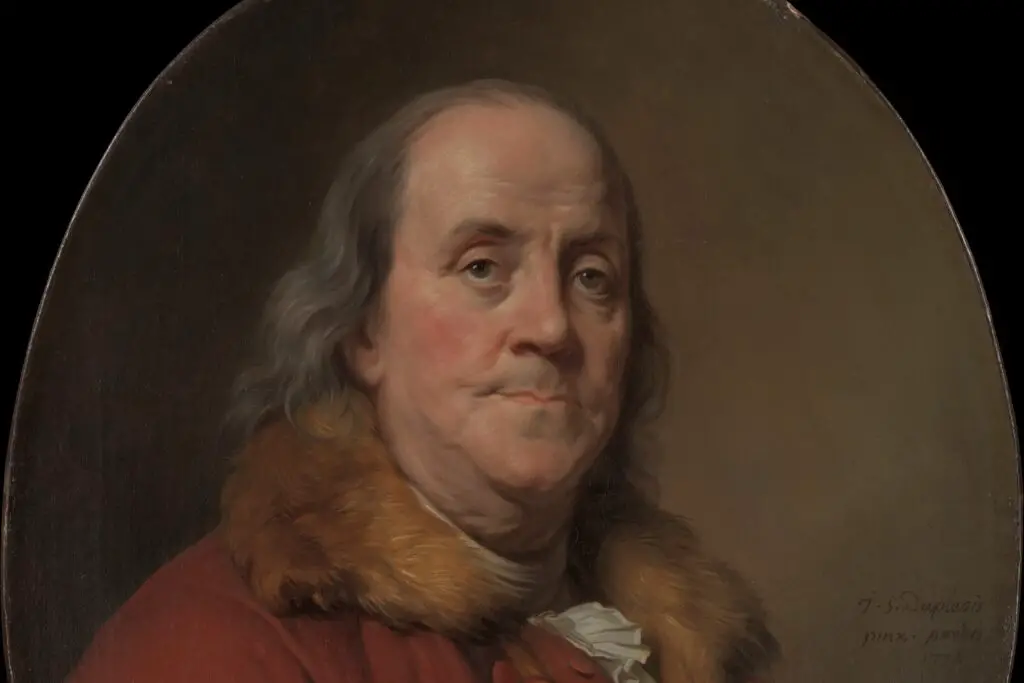
The image of Benjamin Franklin flying a kite in a thunderstorm and discovering electricity is widely taught. It suggests a sudden, almost accidental breakthrough. In reality, Franklin was already studying electricity and designed the kite experiment to test a specific hypothesis. The experiment demonstrated that lightning was a form of electrical discharge.
There is also debate about whether the experiment occurred exactly as described, or if later retellings exaggerated the details. Franklin did not “discover” electricity, as it was already known, but he made significant contributions to understanding it. The story was simplified into a single dramatic moment for easier storytelling. It’s a case where the essence is true, but the details are often overstated. His work was more methodical than the legend suggests.
10. Molly Pitcher at the Battle of Monmouth
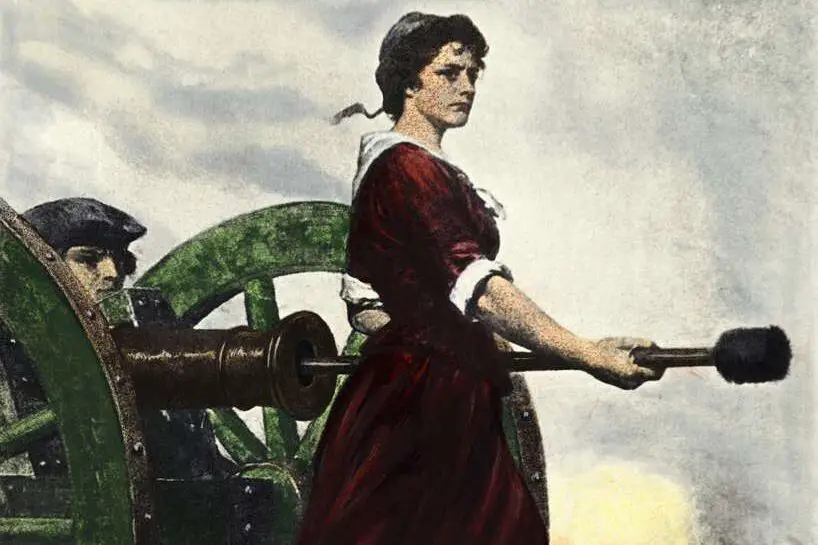
The story of Molly Pitcher describes a woman who carried water to soldiers and then took over a cannon when her husband fell. It’s a compelling example of bravery during the Revolutionary War. However, historians believe “Molly Pitcher” may not refer to a single individual. The name was likely a nickname applied to multiple women who supported troops.
One woman often associated with the story is Mary Ludwig Hays, but the details of her actions are difficult to verify. There are accounts of women assisting on battlefields, but the specific cannon story may have been embellished over time. The legend grew as Americans looked for heroic female figures from the war. It reflects real contributions, even if the narrative was simplified. The story blends fact and folklore.
11. Albert Einstein Failing Math in School
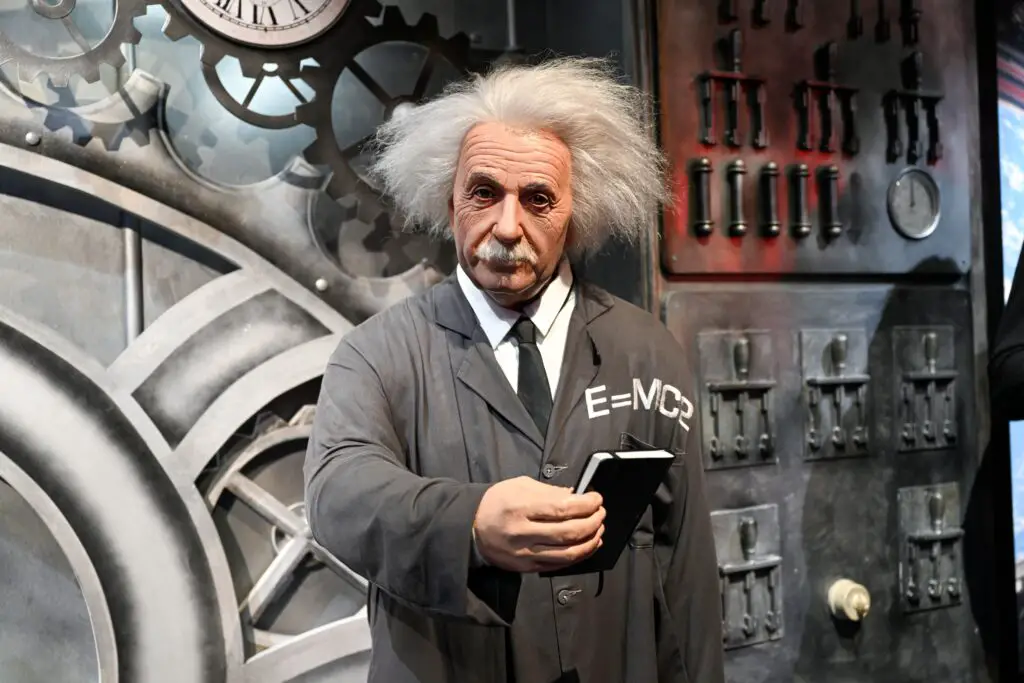
A persistent story claims that Albert Einstein struggled in school and even failed math as a student. It’s often used as an encouraging example that early struggles don’t define future success. In reality, Einstein was a strong student, particularly in mathematics and physics. Records from his schooling show that he excelled in those subjects.
The confusion may come from differences in grading systems or misunderstandings of translated report cards. Einstein did have conflicts with certain teaching styles, which may have contributed to the myth. The story was later repeated so often that it became accepted as fact. It’s a reminder of how appealing narratives can override documented evidence. In truth, his academic abilities were evident from an early age.
12. Walt Disney Being Cryogenically Frozen
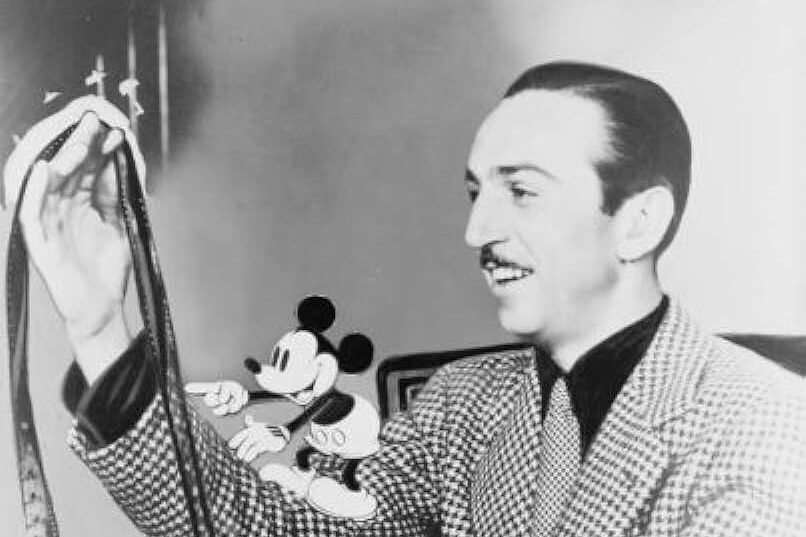
A long-running rumor claims that Walt Disney was cryogenically frozen after his death, waiting to be revived in the future. It’s a story that has circulated for decades and still pops up from time to time. However, there is no evidence to support this claim. Disney was cremated after his death in 1966.
The rumor likely gained traction because of Disney’s association with innovation and futuristic ideas. Cryonics itself was being discussed more openly around that time, which may have fueled speculation. Family members and official records confirm the standard handling of his remains. Despite that, the story has proven difficult to shake. It’s one of those modern myths that says more about imagination than history.