
1. Hay Knife
A hay knife is one of those barn finds that often leaves modern homeowners scratching their heads. The tool usually has a long wooden handle with a curved, serrated blade at the end, which can make it look more like something from a horror movie than a farm implement. In reality, it was used to cut packed hay or silage from tightly stacked bales. Farmers would use it to slice sections loose when feeding livestock during winter. Because hay can become dense and compacted in storage, an ordinary knife would not do the job.
Today, when people stumble across one in an old barn, they often assume it was a weapon or some kind of unusual gardening tool. Antique dealers frequently report customers bringing them in with no idea what they are looking at. The unusual blade shape is what throws people off the most. In the early 20th century, though, it was a perfectly ordinary part of daily farm life. Once you know what it is, it suddenly seems obvious.
2. Scythe Stone Holder
This strange metal cylinder with a hook or clip attached to it often confuses people who find it hanging from a beam. At first glance, it looks like some kind of oil container or even a piece of plumbing hardware. In reality, it is a scythe stone holder. Farmers filled it with water and carried a sharpening stone inside while mowing fields with a scythe.
When the blade dulled, they would pull out the wet stone and sharpen it on the spot. The holder typically clipped onto a belt so it could travel with the mower as they worked across the field. Many barns still have them hanging where they were left decades ago. Without knowing their purpose, the design seems completely mysterious.
3. Corn Sheller

A hand crank corn sheller is another device that often puzzles modern barn explorers. It usually consists of a cast iron box with gears and a crank on the side. If you have never seen one before, it can resemble a strange meat grinder or mechanical press. In reality, it was used to remove kernels from dried ears of corn.
Farmers would feed the cob into the opening and turn the crank, which forced the kernels off using internal metal teeth. The kernels would fall out the bottom while the empty cob popped out the side. Before industrial processing, this was a routine task on many farms. Today, the unusual design often leaves people wondering what on earth it was built for.
4. Ice Tongs

Old ice tongs are another barn object that tends to confuse people. The tool has two sharp metal prongs connected by a hinge, forming a claw-like device. Many people assume it was used for handling hay or lifting heavy equipment. In fact, it was designed to grip large blocks of ice.
Before refrigeration, farms and households stored ice harvested from frozen lakes during winter. Ice houses and barns often held these blocks packed in sawdust for insulation. The tongs allowed workers to safely lift and move the slippery blocks without dropping them. Today, the tool looks strange simply because the entire ice harvesting industry has mostly disappeared.
5. Flail
The flail is one of the oldest agricultural tools you might find leaning in the corner of a barn. It consists of two wooden sticks connected by a short chain or leather strap. To modern eyes, it can look like some sort of improvised weapon. In reality, it was used to thresh grain.
Farmers would swing the flail to beat harvested wheat or oats, loosening the edible grain from the stalks. This method was widely used before mechanical threshing machines became common in the late 19th century. Because the tool looks so simple, people often assume it must have had a completely different purpose. Yet it was once essential to processing grain by hand.
6. Fence Stretcher

A fence stretcher is another odd device that often turns up in barns. It typically looks like a heavy clamp or gripping tool attached to a long lever or chain. If you are unfamiliar with fencing work, it can be hard to imagine what it was meant to do. The tool was used to tighten wire fencing during installation or repair.
Farmers would clamp it onto the wire and use leverage or a come-along to pull the fencing taut. Tight fencing was essential for keeping livestock contained and preventing sagging lines. Because the tool only makes sense when seen in action, many people cannot guess its purpose when finding one on a dusty shelf. Without context, it looks like a strange mechanical contraption.
7. Hog Scraper
A hog scraper is a small metal tool with a curved blade that looks deceptively simple. People often mistake it for a paint scraper or woodworking tool. In reality, it played a role during hog processing. After a pig was slaughtered and scalded with hot water, the scraper was used to remove the hair from the skin.
This step prepared the carcass for butchering and further processing. The blade shape allowed farmers to scrape efficiently without cutting into the meat. Because home butchering was once common on farms, tools like this were widespread. Today, finding one in a barn can feel puzzling if you have never seen the process.
8. Barrel Bung Wrench
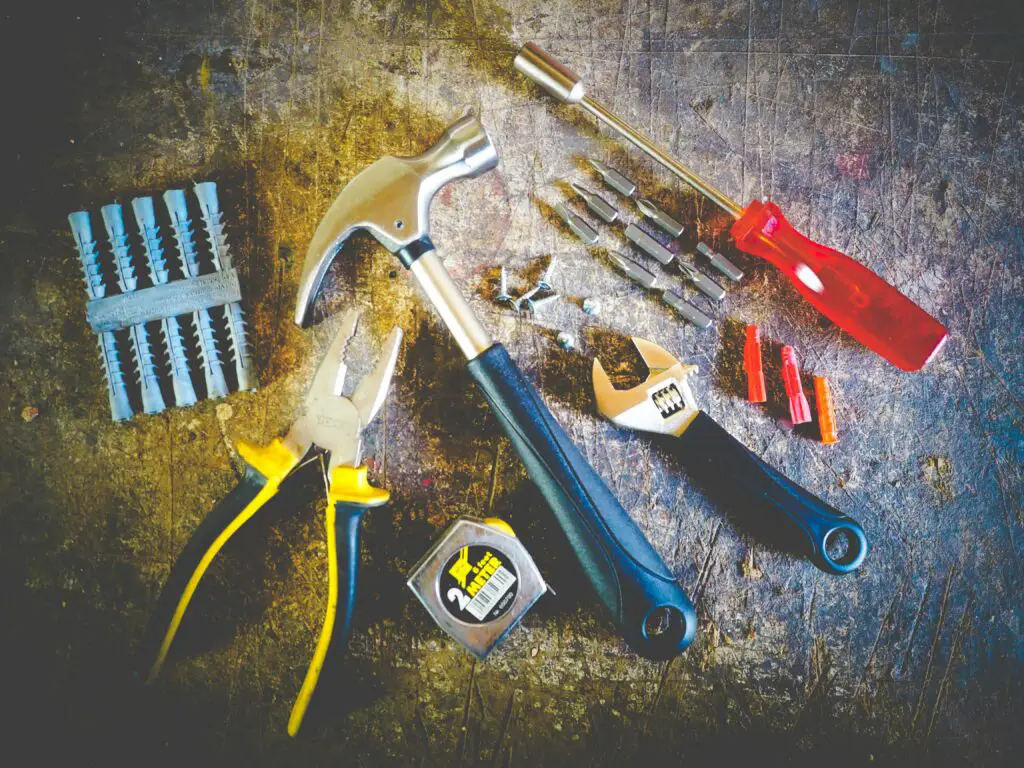
This small metal wrench with an unusual hooked shape often leaves people guessing. It does not resemble a standard wrench or pliers. The tool was designed specifically to remove or tighten the wooden or metal plugs called bungs in barrels. Barrels were once widely used to store everything from cider to vinegar to kerosene.
The wrench fit into the bung opening and allowed workers to twist the plug free. Because barrels were such an everyday storage method in the past, specialized tools like this were common. Once barrels disappeared from everyday farm use, the tool became much harder to recognize. Today it often shows up in barns with no obvious explanation.
9. Sheep Shears
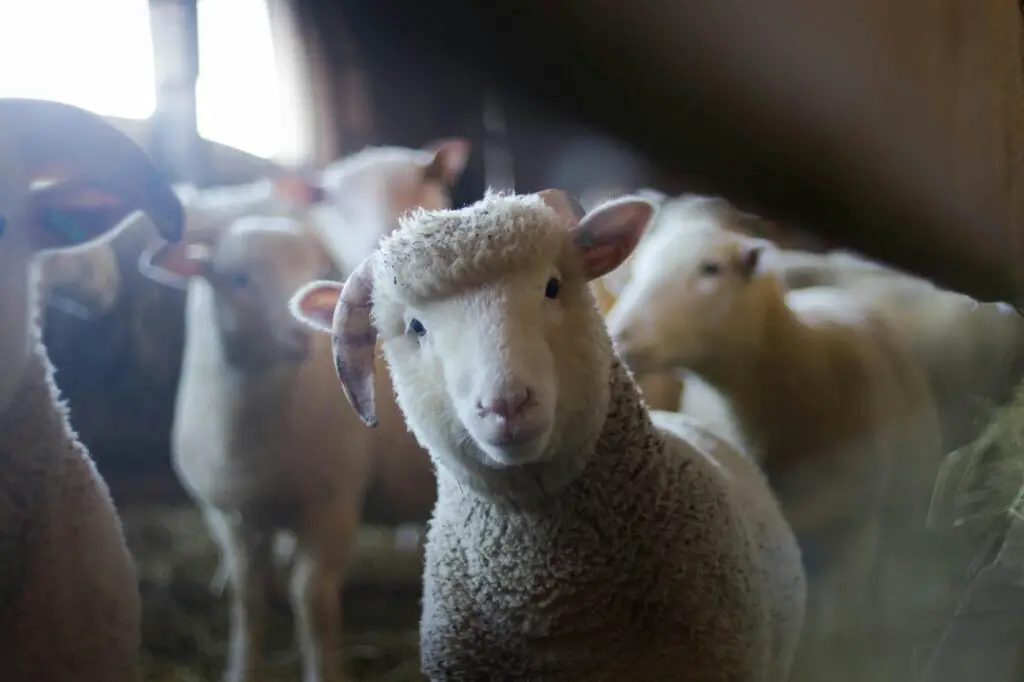
Large manual sheep shears can easily be mistaken for oversized scissors or some kind of metal snipping tool. They usually consist of two blades connected by a springy metal bow. Unlike modern electric clippers, these shears were operated entirely by hand. Farmers used them to remove wool during sheep shearing season.
The spring allowed the blades to reopen after each cut, making repetitive work easier. Because the tool looks so unusual compared to modern grooming equipment, many people misidentify it when they find one. In the past, though, it was one of the most common tools on sheep farms. Entire communities once gathered for seasonal shearing.
10. Apple Parer

An apple parer is a device that looks oddly mechanical for something meant to peel fruit. It often has a clamp base, a crank handle, and a small blade attached to a metal arm. At first glance it can resemble a miniature machine from a workshop. The tool was used to peel apples quickly for pies, cider, or drying.
You would mount the apple on a forked spindle and turn the crank. As the apple rotated, the blade removed the peel in a long curling strip. These tools became very popular in the 19th century when home food preservation was essential. Today, when one shows up in a barn, many people have no idea it was designed for apples.
11. Hay Bale Hook

Hay bale hooks are surprisingly confusing for people who have never handled hay. The tool is essentially a thick metal hook with a handle, sometimes attached to a wooden grip. When discovered in a barn, it can look like a strange fishing hook or even a piece of industrial hardware. Its real purpose was to grip and lift heavy hay bales.
Farmers would stab the hook into the bale and use it as a handle for carrying. This made it easier to move hay without constantly bending or dropping it. Before modern machinery, moving hay was physically demanding work. The hook helped make the job faster and more manageable.
12. Post Hole Auger
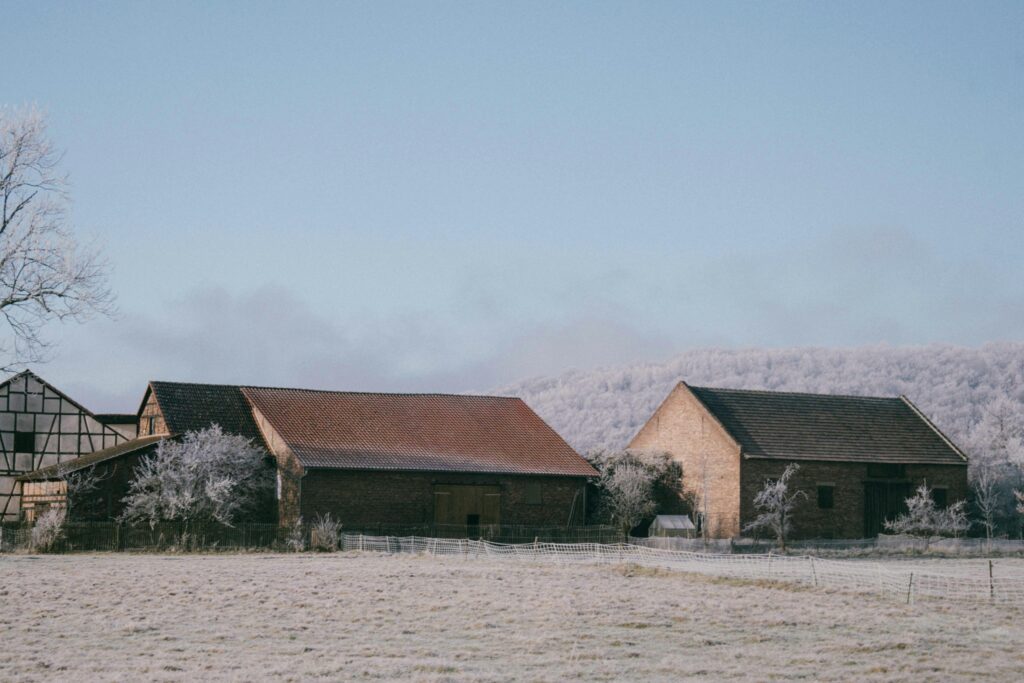
A post hole auger can look intimidating when discovered in a barn corner. It usually has two long handles connected to a spiral metal drill at the bottom. To someone unfamiliar with fencing work, it might resemble a giant corkscrew or strange drilling device. Its actual purpose was to dig holes for fence posts.
Two people could operate it by turning the handles while the spiral bit drilled into the soil. The auger would lift dirt out of the hole as it turned. This allowed farmers to dig straight, narrow holes for wooden posts. Today the design still works, though power augers have largely replaced the manual version.
13. Corn Shucking Peg

A corn shucking peg is one of the simplest barn tools, yet it often confuses people the most. It is basically a short wooden handle with a pointed metal spike sticking out. At first glance, it can look like a homemade awl or strange carving tool. Farmers strapped it to their hand while shucking corn.
The spike helped pry open the husk quickly and efficiently. During large harvests, workers would shuck hundreds of ears in a single sitting. The peg dramatically sped up the process. Without knowing the context, though, the tool seems oddly specific and hard to identify.
14. Beet Knife
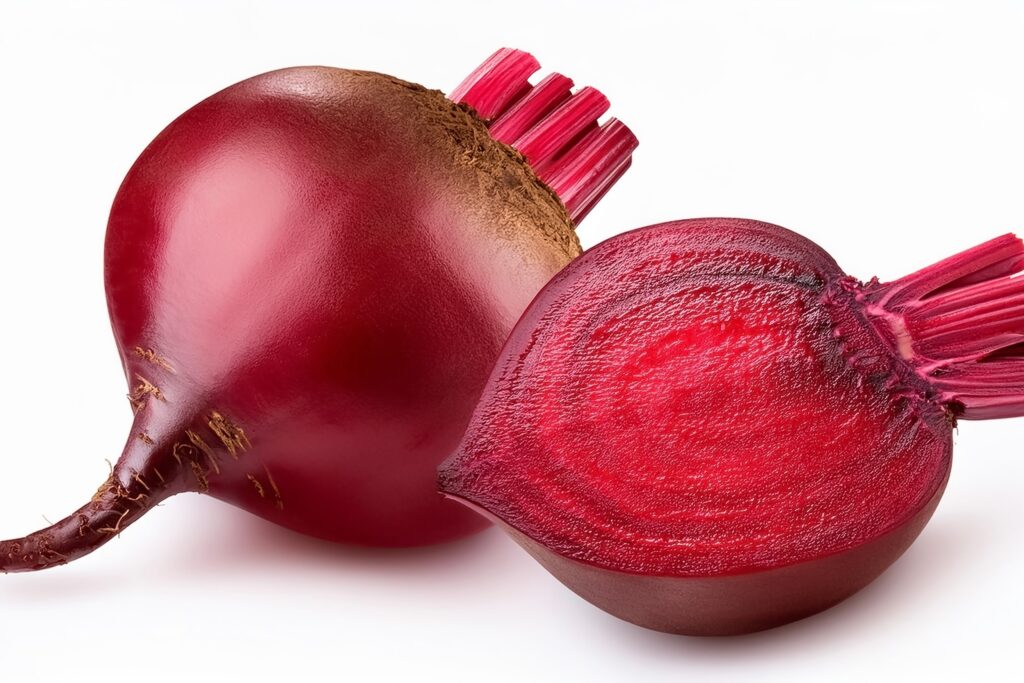
A beet knife is another barn relic that often leaves people puzzled. The tool usually has a wide, flat blade and a short handle. To someone unfamiliar with farming history, it can resemble a crude machete or oversized kitchen knife. In reality, it was used to trim the tops off sugar beets during harvest.
Farm workers would slice off the leafy tops before sending the beets for processing. The design allowed quick cuts without damaging the root. Sugar beet farming was once a major agricultural industry in many regions. Today, when the knife turns up in an old barn, it can look like a mysterious relic from another era.