
1. Coco Palms Resort, Kauai, Hawaii
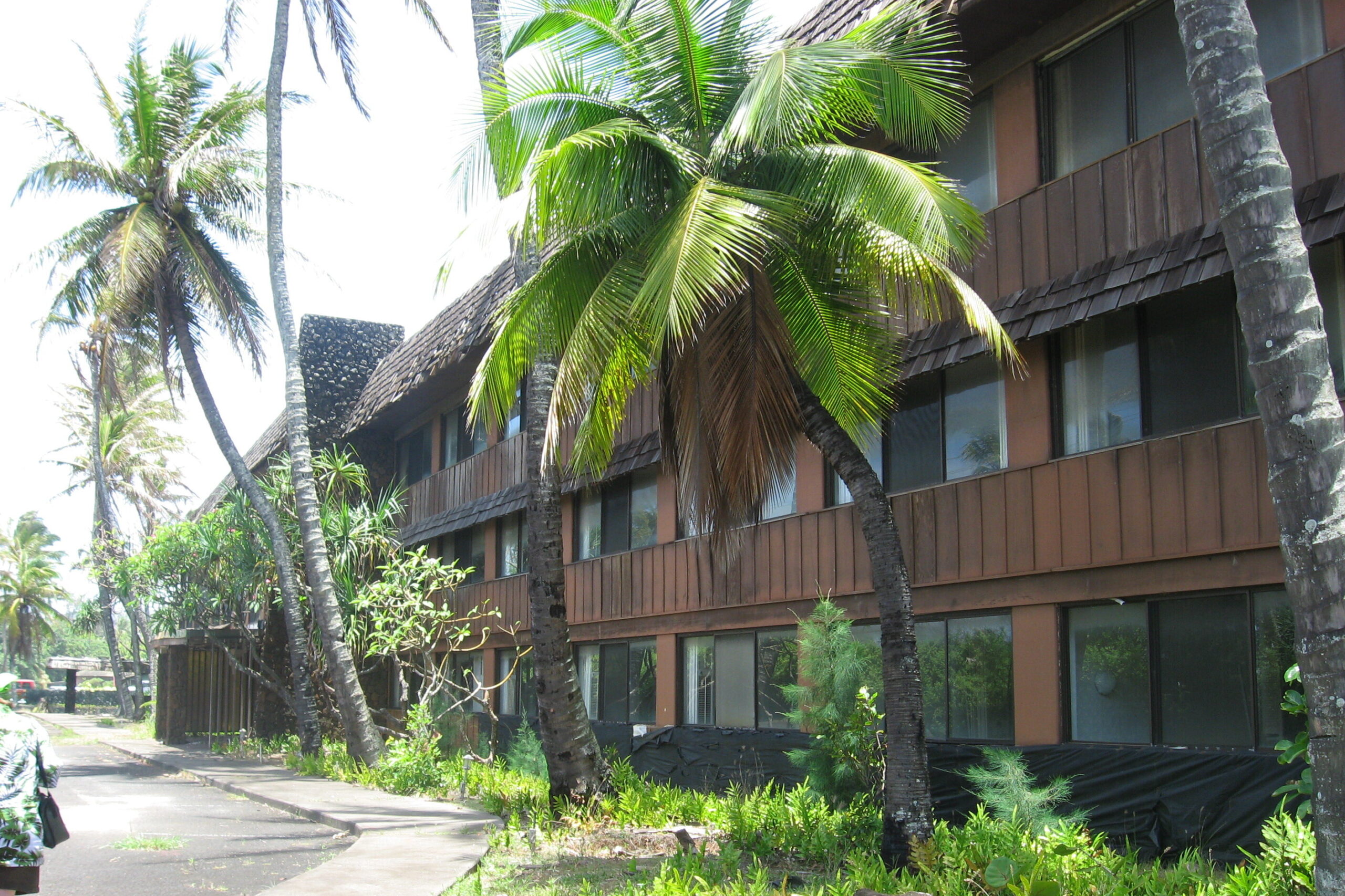
If you have ever seen the Elvis Presley movie Blue Hawaii, you have already seen Coco Palms in its glory days. The resort opened in the 1950s and quickly became one of the most famous vacation spots in the islands. Everything changed in 1992 when Hurricane Iniki tore through Kauai and left the property badly damaged. Instead of rebuilding, the hotel was closed and has sat empty ever since. Walking past the overgrown lagoons and crumbling guest rooms feels like stepping into a time capsule. The palm trees are still there, and so are the shell of the main lobby and wedding chapel. From a distance, it honestly looks as if a staff could show up and flip the lights back on. Many locals still hope to see it revived someday.
Over the years there have been several plans to restore Coco Palms, but none have fully succeeded. Legal battles and funding problems have kept the gates locked for more than three decades. Nature has slowly reclaimed the property, yet the basic bones of the resort remain intact. Old pathways, bridges, and fountains can still be spotted beneath the vines. Tourists often stop just to take photos of the hauntingly beautiful ruins. It is easy to imagine the music, luaus, and happy guests that once filled the grounds. The entire place gives the strange impression that checkout time happened yesterday. All it would really need is a serious cleanup and a fresh coat of paint.
2. Grossinger’s Catskill Resort, New York
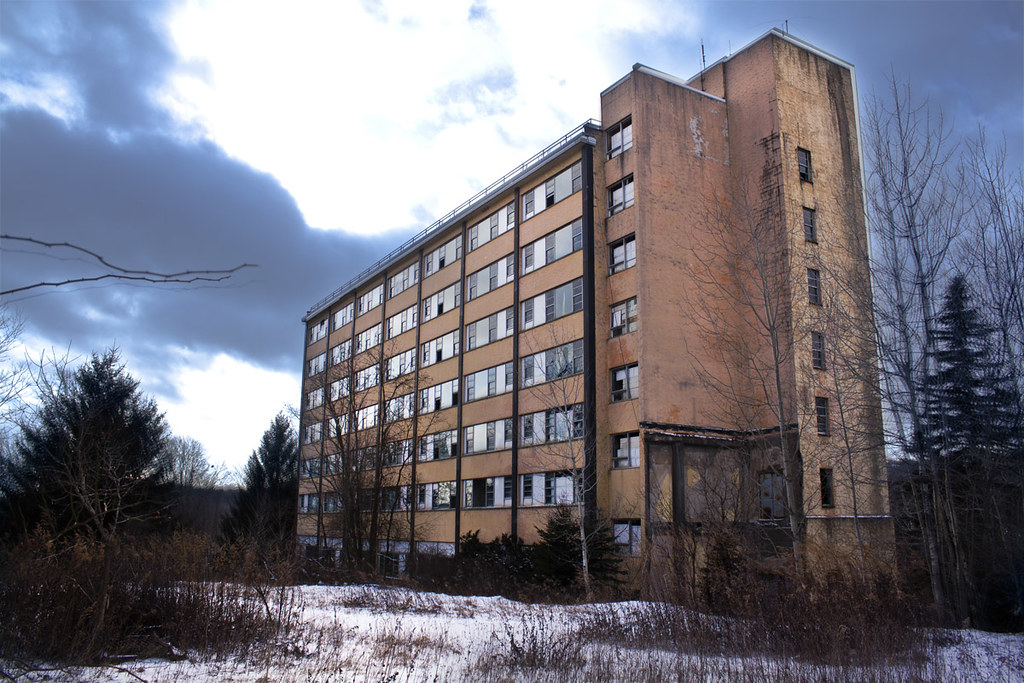
Grossinger’s was once the crown jewel of the famous Borscht Belt vacation scene. In the 1950s and ’60s, this massive resort hosted comedians, singers, and thousands of families every summer. The property included an ice rink, golf course, glamorous dining rooms, and even its own airstrip. When tastes changed and air travel became cheaper, the Catskills resort era faded away. Grossinger’s finally closed its doors in 1986 and never reopened. Today the enormous complex sits quiet and empty in the woods. Peeling wallpaper and shattered mirrors are about all that remain of the grand ballroom.
Despite decades of neglect, many of the main buildings are still standing. The indoor pool area looks as if swimmers could return with just a little work. Old signs and light fixtures remain exactly where they were left. Urban explorers often say the place feels more paused than abandoned. Snow still falls on the same golf course where celebrities once played. From the road, parts of the resort almost look ready to welcome new guests. It is hard to believe such a huge piece of vacation history could simply freeze in time. Grossinger’s feels less like a ruin and more like a very long vacation shutdown.
3. Kupari Tourist Complex, Croatia
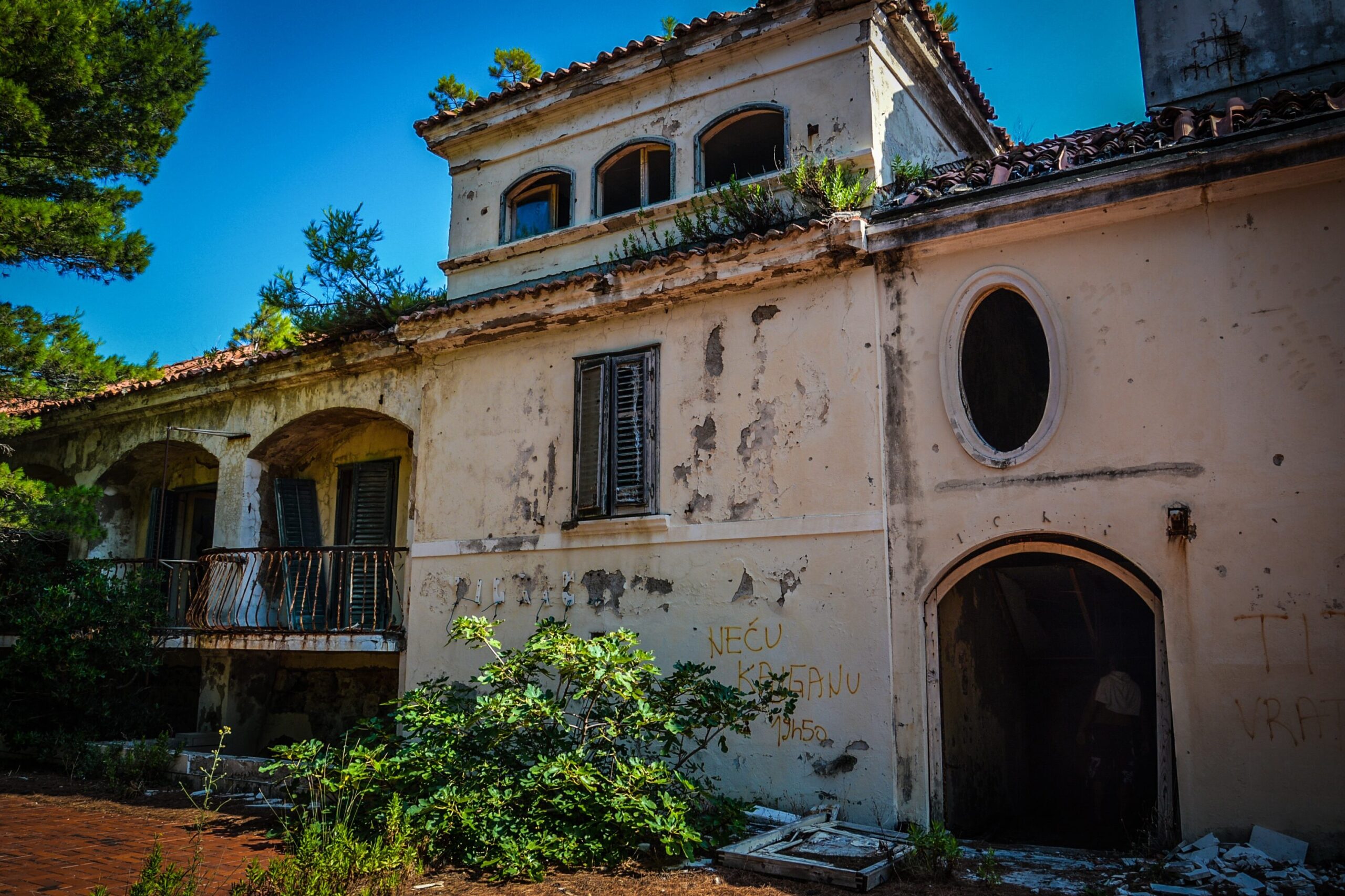
On the Adriatic coast near Dubrovnik sits a string of large seaside hotels known as the Kupari complex. These resorts were built during the Yugoslav era as luxurious military vacation retreats. For years they were packed with guests enjoying private beaches and clear blue water. The Croatian War of Independence in the early 1990s changed everything. Fighting in the region left the hotels damaged and abandoned. Instead of being repaired, they were simply left to crumble. Today the shells of several large resort buildings stand right on the shoreline.
What makes Kupari so eerie is how close it is to normal tourist life. Just a short distance away are busy beaches and modern hotels filled with travelers. Inside the abandoned properties, lobbies and staircases are still easy to recognize. Broken tile floors and empty swimming pools suggest that reopening would not be impossible. The ocean views are as beautiful as they ever were. From the outside, some buildings still look sturdy and usable. Plans to redevelop the area have come and gone for years. For now, it remains a ghost resort waiting patiently for a second chance.
4. Haludovo Palace Hotel, Krk Island, Croatia
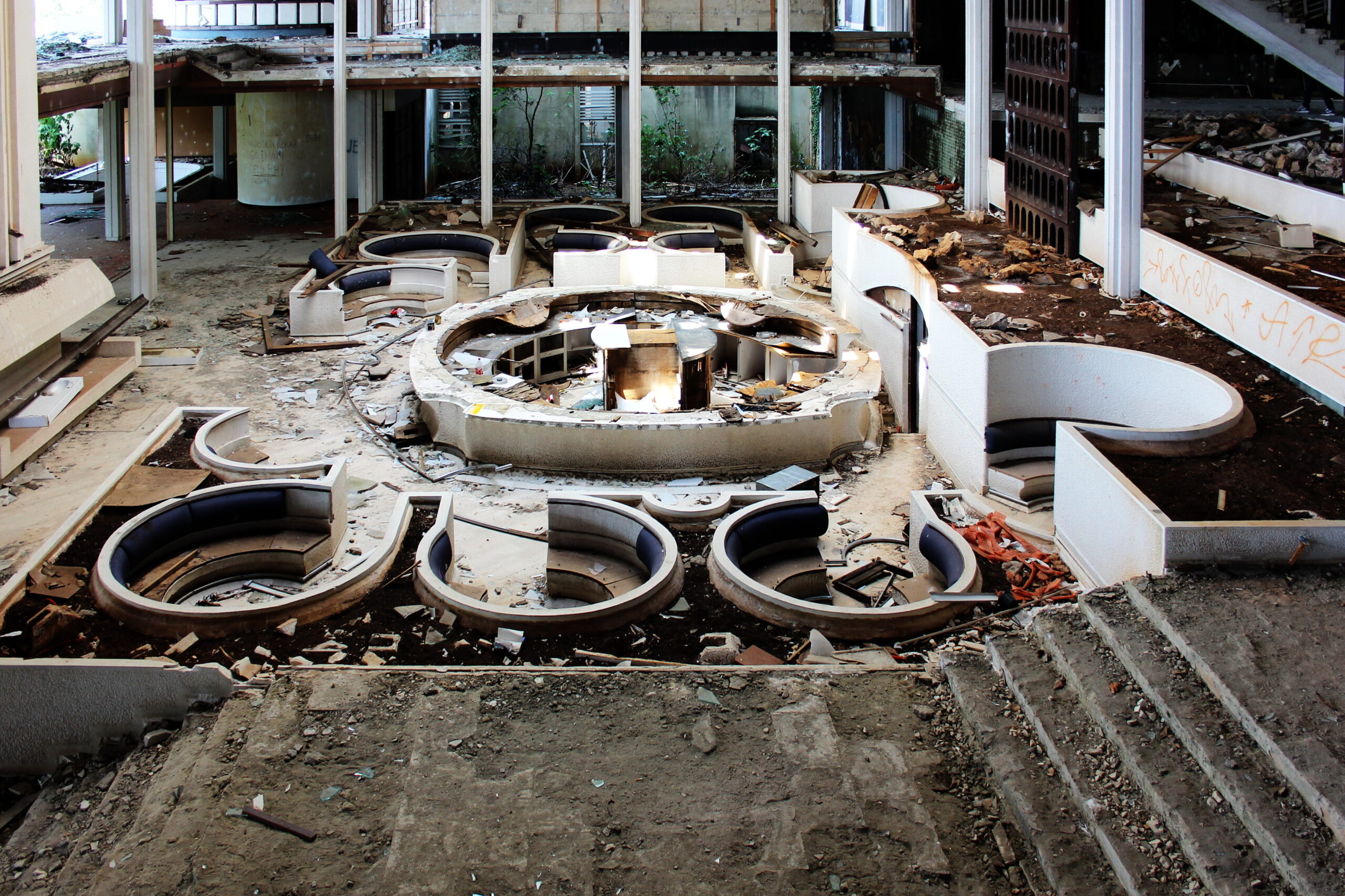
Haludovo Palace opened in the early 1970s with the goal of being one of Europe’s most glamorous resorts. The project even had financial backing from the founder of Penthouse magazine, giving it an international reputation for luxury. Guests once arrived to sparkling pools, elegant restaurants, and private beach clubs. After political and economic changes in the region, the hotel struggled and finally closed in 2001. Since then it has stood empty on the island of Krk. The architecture is still bold and modern, even after years of decay. Large concrete balconies overlook the same blue sea that once attracted celebrities.
Inside, much of the original structure remains surprisingly solid. Staircases, hallways, and guest room layouts are all still visible. Sunlight pours through big windows that once framed postcard views. Walking the property, it is easy to picture how quickly it could be transformed back into a functioning resort. Local residents often wonder why such a prime location sits unused. The beach area remains popular with swimmers despite the empty hotel behind it. Investors have talked about renovation for years, but nothing permanent has happened. Haludovo looks like a grand reopening waiting to happen.
5. Hachijo Royal Hotel, Japan
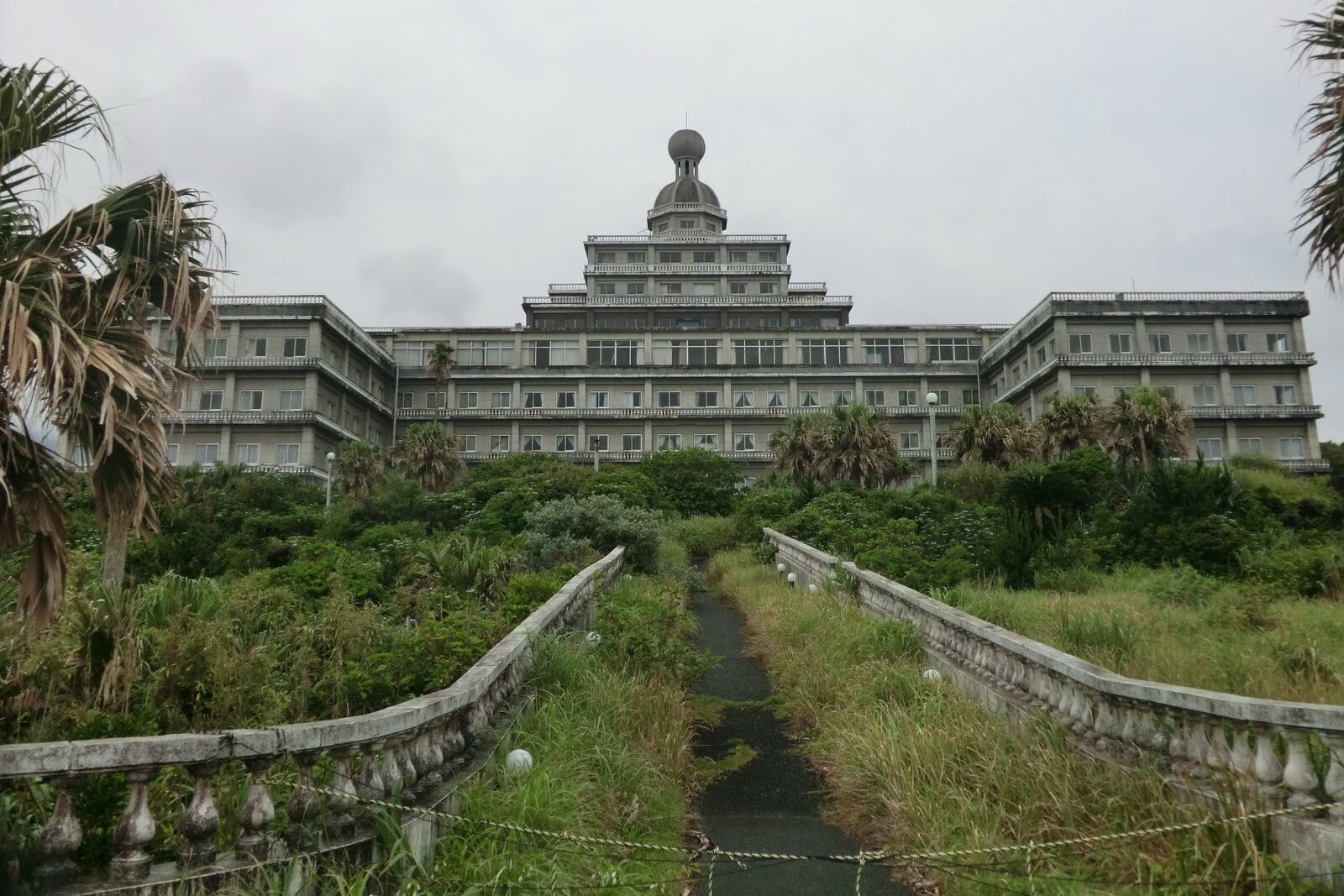
On the remote Japanese island of Hachijojima sits the elegant Hachijo Royal Hotel, a resort that feels frozen in the 1960s. It was designed to resemble a French chateau and once catered to wealthy Tokyo vacationers. During Japan’s economic boom, the hotel thrived and became known for its European style luxury. As travel trends shifted, visitors slowly stopped coming to the isolated island. The hotel closed in 2006 and has remained empty ever since. Unlike many abandoned places, this one still looks remarkably neat and intact. The grand lobby and chandeliers are still in place, just covered in dust.
Gardens surrounding the hotel continue to bloom every spring as if guests are expected any minute. Guest rooms still contain furniture, curtains, and even old televisions. Very little vandalism has occurred because of the island’s quiet location. From the outside, the building looks almost ready to welcome a tour bus. All the ingredients of a working resort are still there, only paused. Many people say it feels less creepy than simply forgotten. With some repairs and modern updates, it could easily reopen. Instead, it waits patiently on its sleepy volcanic island.
6. Ducor Palace Hotel, Monrovia, Liberia
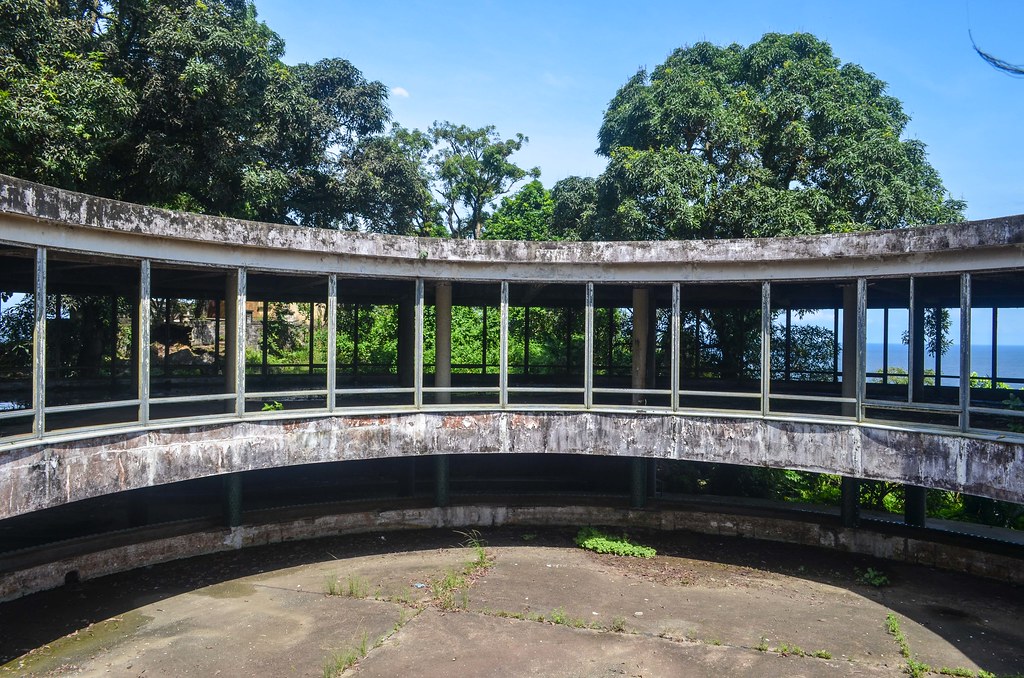
The Ducor Palace Hotel was once considered the finest hotel in West Africa. Built in the 1960s, it attracted diplomats, celebrities, and international travelers to Liberia’s capital. The modern high rise overlooked the ocean and symbolized a bright future for the country. Civil wars in the 1980s and 1990s brought tourism to a halt. The hotel closed and was eventually abandoned as fighting spread through the region. What remains today is a large but empty building towering over Monrovia. From afar, it still looks like an impressive five star resort.
Inside, nature and time have taken their toll, yet the basic structure is still strong. Marble staircases and wide hallways hint at its luxurious past. The swimming pool and terraces are still clearly visible beneath layers of dust. Standing on the balconies, the ocean view remains just as beautiful as ever. Many redevelopment plans have been proposed, proving how valuable the location still is. Locals often say it would not take much imagination to bring it back to life. The Ducor Palace feels less destroyed than simply waiting. All it really needs is investment and a new beginning.
7. Varosha Beach Resorts, Cyprus
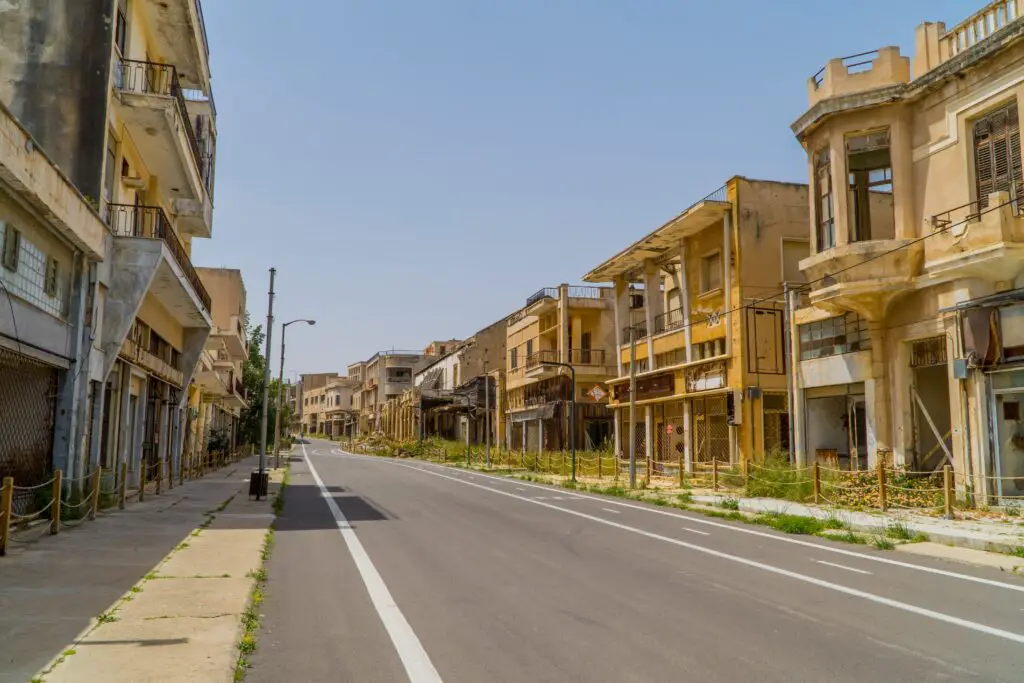
Varosha was once the most glamorous beach resort district in the Mediterranean. Located in the city of Famagusta, it attracted movie stars and wealthy travelers during the 1960s and early ’70s. High rise hotels lined miles of perfect sandy coastline. Everything changed during the conflict in Cyprus in 1974, when the entire area was suddenly abandoned. Residents fled and the resorts were locked behind military fences. For decades, the district remained completely frozen in time. From the sea, the hotels still stand like silent giants facing the water.
Because no one lived there for so long, many buildings look surprisingly well preserved. Hotel signs still hang over entrances that have not welcomed guests in half a century. Swimming pools, restaurants, and lobbies remain exactly where they were left. Recent political changes have allowed limited access again, reminding the world what once existed there. Standing on the beach, it is easy to imagine the resorts reopening almost overnight. The infrastructure is still in place, only sleeping. Varosha is perhaps the ultimate example of a vacation paradise put on pause. It feels ready for tourists who never arrived.
8. Chacaltaya Ski Resort, Bolivia
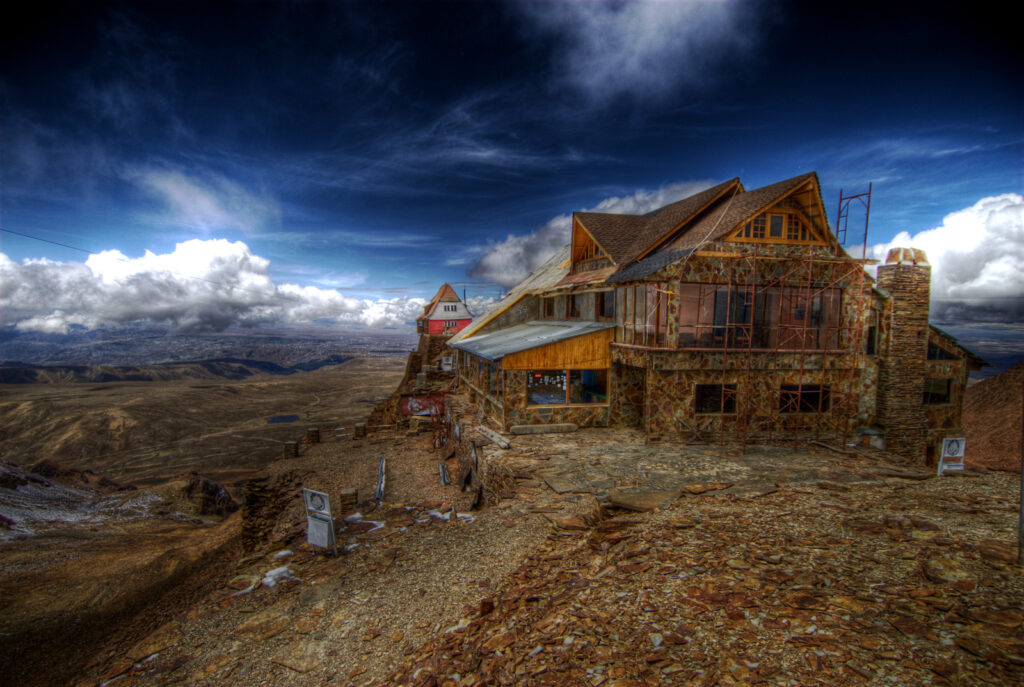
High in the Andes Mountains once stood the Chacaltaya Ski Resort, famous for having the world’s highest ski lift. For decades it was a popular destination for adventurous skiers and scientists. The resort depended entirely on a glacier that provided natural snow. As the climate warmed, the glacier slowly melted away. By 2009 there was no snow left to support skiing, and the resort was forced to close. The lodge, lifts, and small hotel still cling to the mountainside. From a distance, it looks like the season simply ended early.
Visitors who hike to the site today often expect to see skiers coming down the slopes. Instead they find empty buildings and silent chairlifts swaying in the wind. The main lodge still contains tables, chairs, and signs pointing to former ski runs. With enough cold weather, the place could theoretically operate again. The views are as spectacular as they ever were. It is not decay that closed Chacaltaya, but simple changes in nature. Everything about the resort still looks functional and ready. All it is missing is the snow that once defined it.
9. PI Bedugul Taman Rekreasi Hotel, Bali
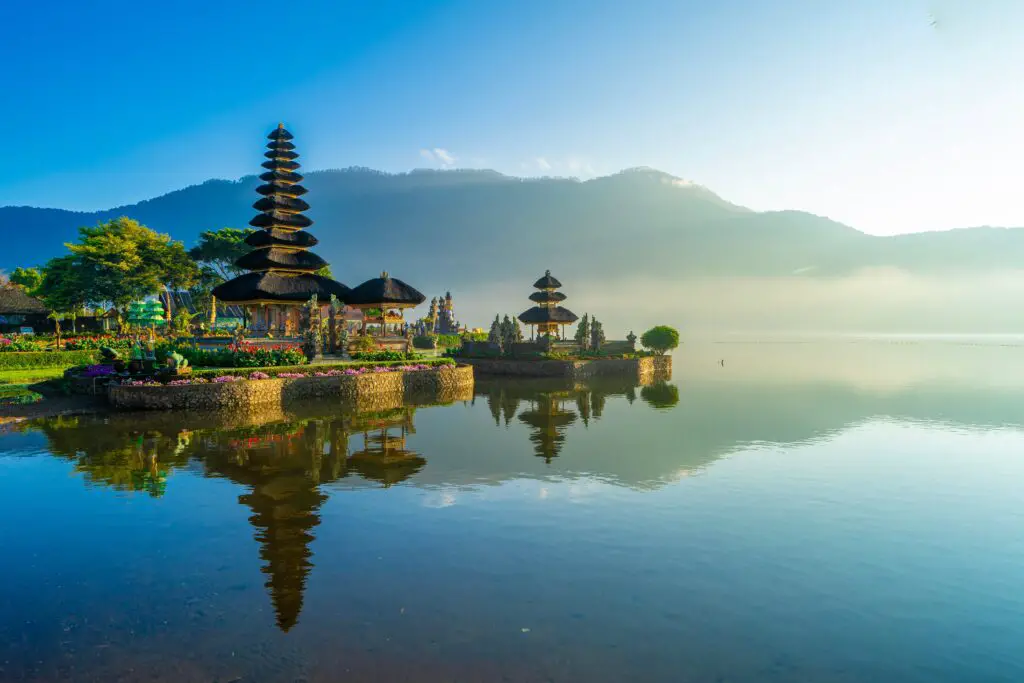
Hidden in the hills of Bali is a massive abandoned resort known locally as the Ghost Palace Hotel. Officially called PI Bedugul Taman Rekreasi, the project was meant to be a luxury mountain getaway. Construction began in the 1990s but was never fully completed. Financial problems and political instability caused the developers to walk away. The result is a huge complex of hotel buildings that were finished but never truly opened. Marble floors, grand staircases, and ornate decorations are still in place. It looks as if the ribbon cutting ceremony was simply canceled.
Unlike many ruins, this resort has barely been touched by time. Guest rooms still have doors, windows, and balconies overlooking lush jungle views. The lobby area remains clean and surprisingly elegant. From the outside, the hotel appears ready for immediate business. Local legends claim it is haunted, but the reality is far more ordinary. All the infrastructure needed for a working resort already exists. With some modernization, it could easily become a top destination. For now it waits quietly in the cool Bali highlands.
10. The Pines Resort, South Fallsburg, New York
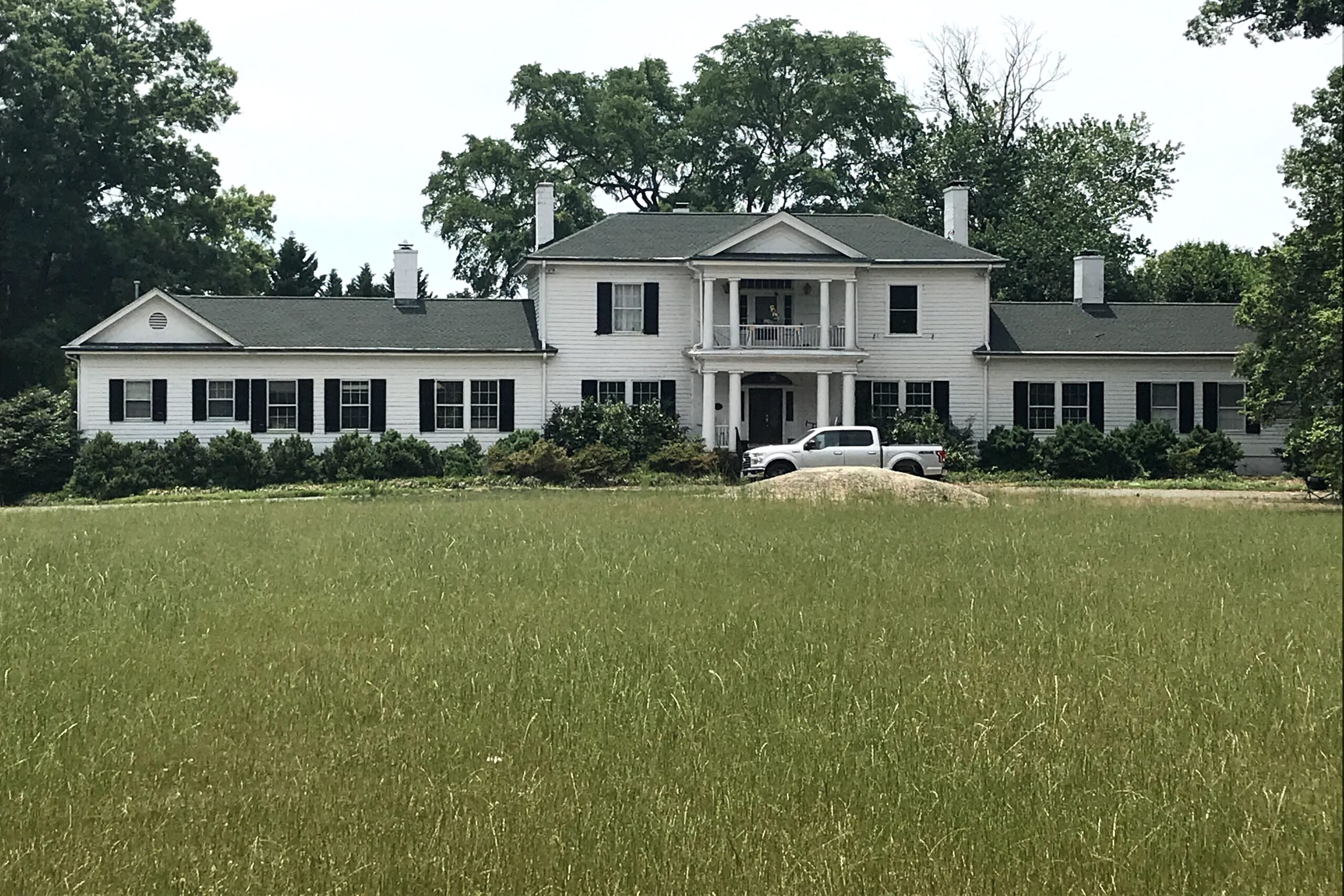
The Pines was another legendary Catskills vacation destination during the golden age of American resorts. Families came for big shows, huge meals, and endless entertainment. At its peak, the property included theaters, pools, and hundreds of guest rooms. Like many Borscht Belt hotels, it struggled as travel habits changed. The Pines closed for good in the late 1990s and was never revived. Today large portions of the resort still stand deep in the woods. The famous main building remains recognizable even after years of neglect.
Walking the grounds feels like touring a resort that simply has not opened for the season yet. Old signs, furniture, and decor can still be found inside many rooms. The layout of restaurants and lounges is easy to picture. With renovation, the place could theoretically operate again. The surrounding scenery is still peaceful and beautiful. Many people who grew up vacationing there say it looks almost the same. Nature has crept in, but the spirit of the resort lingers. It waits like a sleeping giant in the Catskills.
11. The Nevele Grande Hotel, Ellenville, New York
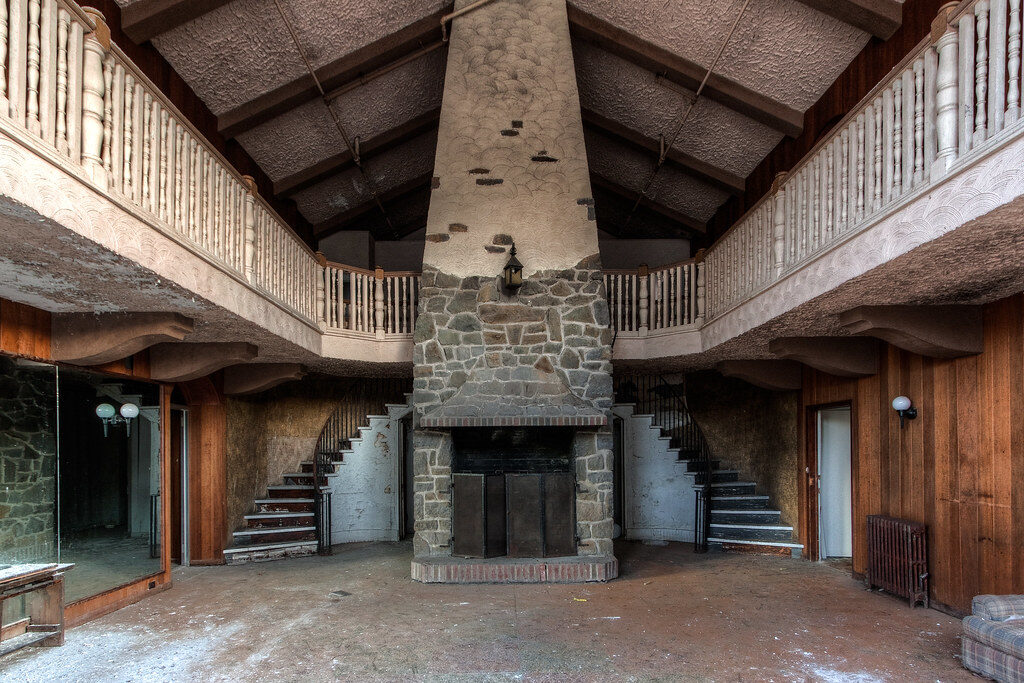
The Nevele Grande was one of the last major Catskills resorts to survive into modern times. Its futuristic round tower made it instantly recognizable from miles away. Guests once enjoyed golf courses, ski slopes, and lavish dining rooms. The hotel finally closed in 2009 after years of declining business. Since then the massive complex has sat empty on a beautiful stretch of mountain property. From the outside, the buildings still look surprisingly modern and usable. Many of the guest rooms remain structurally sound.
Inside, carpets and furniture are still in place, giving the feeling that checkout just happened. Ballrooms and conference areas could almost host events tomorrow with enough cleaning. The golf course and ski facilities are still visible on the grounds. Investors have repeatedly tried to purchase and redevelop the site. Each new proposal proves how much potential still exists there. The Nevele never truly looks ruined, only dormant. It feels like a resort patiently waiting for a new generation of visitors.
12. Hotel Belvedere, Dubrovnik, Croatia
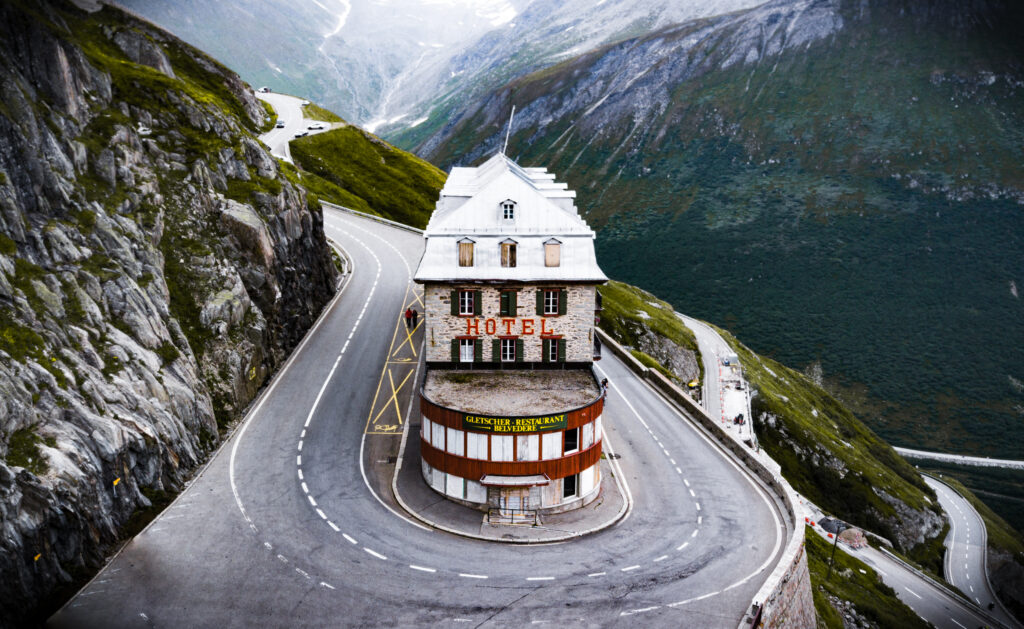
Perched on a cliff overlooking the Adriatic Sea, Hotel Belvedere was once a glamorous stop for international travelers. The modern resort opened in the 1980s and quickly became a symbol of Croatian tourism. During the war in the early 1990s, the hotel was heavily damaged and forced to close. Since then it has remained empty, despite its incredible location. The main building still stands dramatically above the coastline. From the water, it appears almost ready for guests to return.
Large terraces and stairways remain mostly intact, offering stunning views. The famous outdoor amphitheater and pool areas can still be recognized. Hollywood even used the ruins as a filming location because they look so striking. With restoration, the hotel could easily become a top luxury destination again. The structure is far from beyond saving. Tour boats pass by every day, reminding everyone of its potential. Hotel Belvedere feels more paused than truly abandoned. It simply waits for the right owner to wake it up.
13. Igman Olympic Hotels, Bosnia and Herzegovina
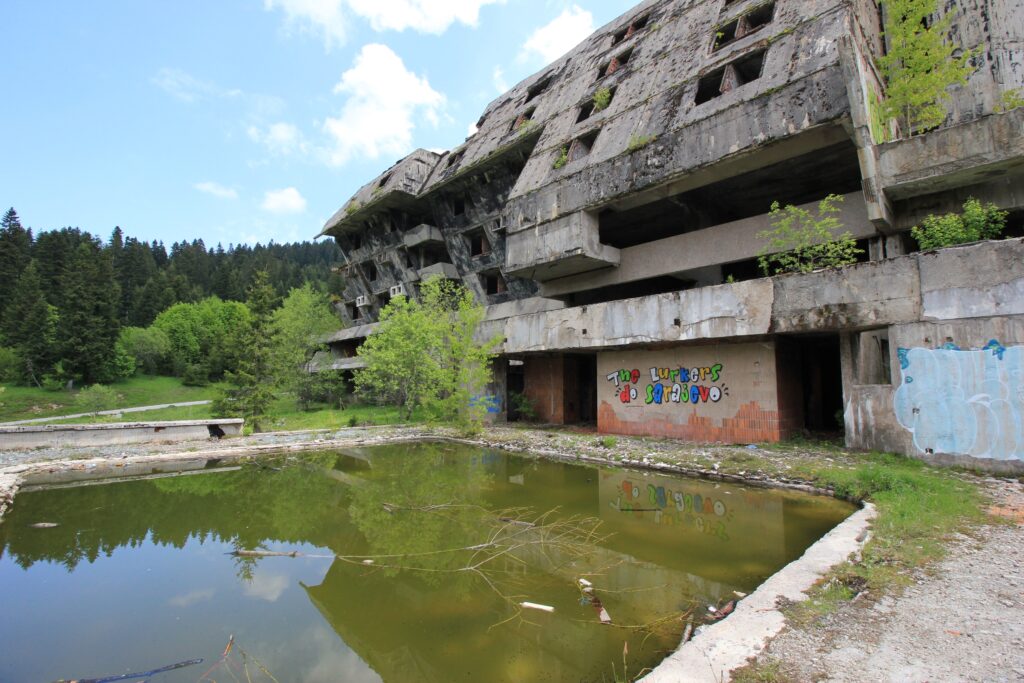
The Igman mountain area hosted events during the 1984 Winter Olympics. Several modern hotels were built to welcome athletes and tourists. For a brief time, the region was a thriving ski resort destination. War in the 1990s brought all of that to a sudden end. Many of the Olympic era hotels were damaged and left deserted. Today their concrete shells still stand among the pine trees. Ski lifts and sports facilities remain scattered around the mountains.
Despite the scars of history, the area is still naturally beautiful. Snow continues to fall on the same slopes that once welcomed the world. Some buildings look as if they could reopen with serious renovation. Hallways, lobbies, and balconies are all still clearly defined. The setting is perfect for a modern comeback. Locals often dream about tourism returning to its former glory. The Igman resorts feel less like ruins and more like unfinished business. All the ingredients of a great vacation spot are still there.
14. Gagra Seaside Resorts, Abkhazia
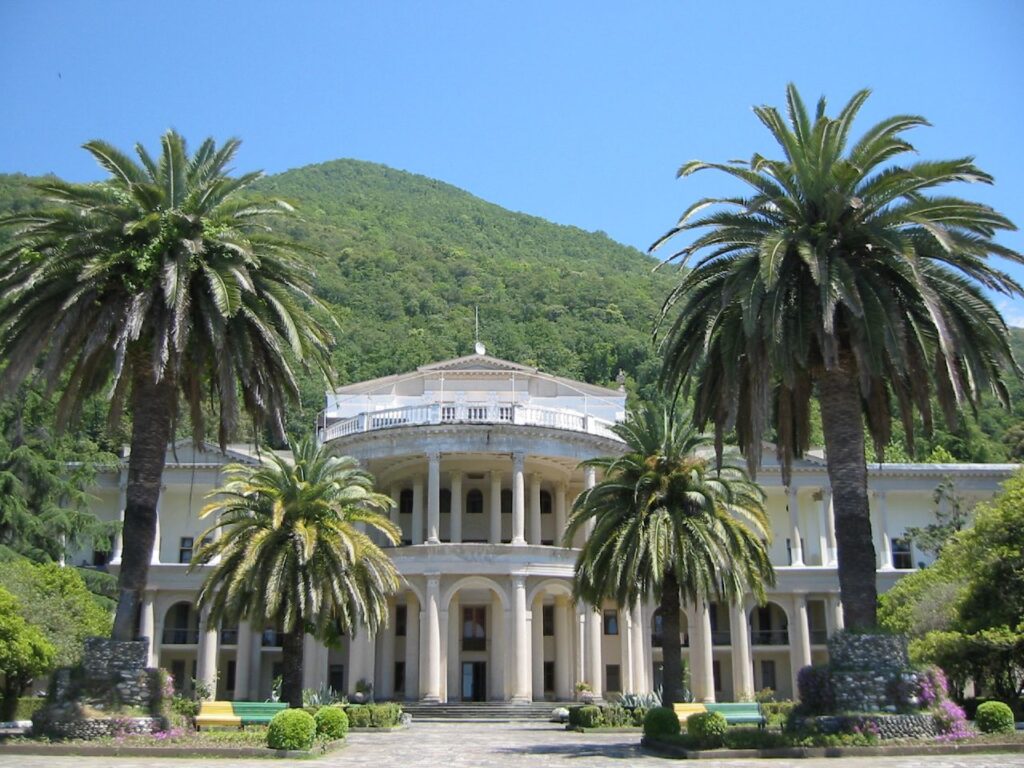
During the Soviet era, the coastal city of Gagra was one of the most popular holiday destinations in the region. Grand sanatoriums and beach resorts lined the Black Sea coast. Families from across the Soviet Union spent summers there enjoying warm weather and palm trees. Political conflict in the 1990s caused tourism to collapse almost overnight. Many of the large resort hotels were abandoned and never reopened. Today their impressive facades still face the sea like forgotten palaces.
Walking through Gagra feels like touring a resort town that simply never woke up from winter. Swimming pools, promenades, and grand staircases are still easy to spot. The subtropical scenery remains just as inviting as it was decades ago. With investment, many of these hotels could likely function again. From the beach, they still look strong and usable. Locals continue to hope for a tourism revival. The entire coastline gives the strange impression of a resort district waiting for guests who never arrived. It looks ready for a comeback at any moment.
15. Penn Hills Resort, Poconos, Pennsylvania
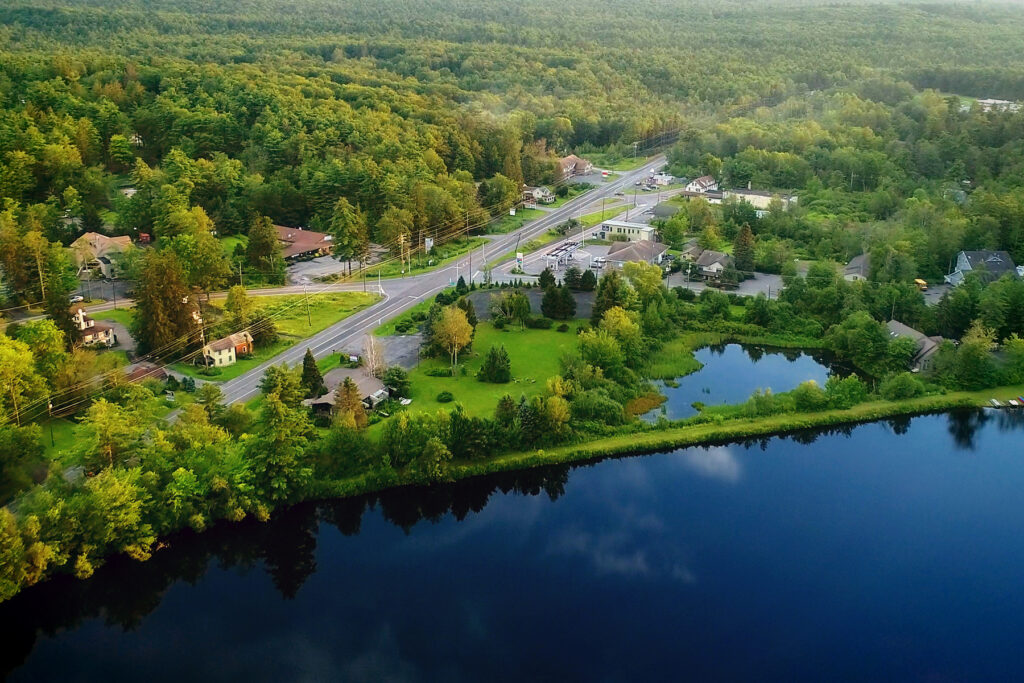
Penn Hills was once one of the most famous romantic getaway resorts in America. Couples flocked there for heart shaped tubs, champagne glasses shaped like bathtubs, and themed suites. The resort thrived for decades as part of the Poconos honeymoon boom. Changing tastes and financial troubles caused it to close in 2009. Large portions of the property were later demolished, but several structures still remain. Those surviving buildings look strangely prepared for new guests.
Old indoor pools, dining halls, and guest rooms can still be found on the grounds. Furniture and decor linger as reminders of a very specific era of vacation culture. The surrounding lakes and forests are just as peaceful as they ever were. From certain angles, the resort almost looks like it could reopen with minimal effort. Many former visitors say it appears exactly as they remember it. Although time has taken its toll, the spirit of Penn Hills has not disappeared. It stands as a nostalgic snapshot of a resort that feels ready for one more season.