
1. King Arthur
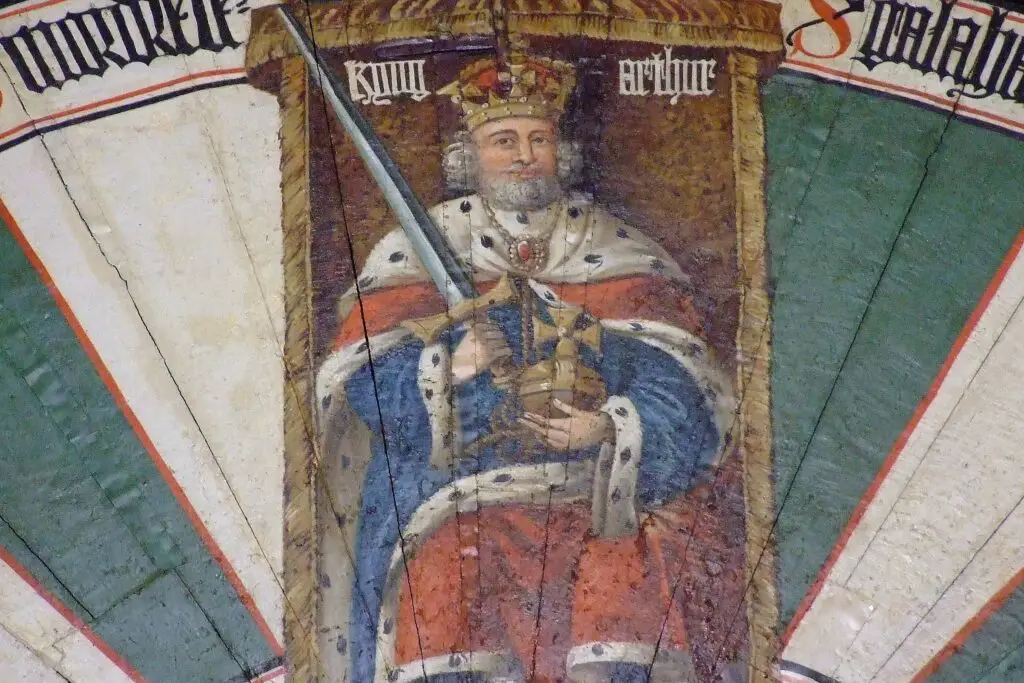
The legendary King of Britain is usually pictured in gleaming plate armor, presiding over a Round Table of virtuous knights. However, if a real Arthur existed, he would have lived during the 5th or 6th centuries as a Roman-British war leader fighting against Anglo-Saxon invaders. There is no contemporary record of a “King Arthur,” and the first mentions of him don’t appear until hundreds of years after his supposed death. Many historians believe he is a composite character, stitched together from the deeds of several different Celtic chieftains and Roman commanders.
Over the centuries, medieval writers like Geoffrey of Monmouth added the magical elements we love today, such as Merlin and the sword Excalibur. These additions turned a potential local hero into a pan-European symbol of chivalry and Christian virtue. While it is romantic to imagine a king who will return in Britain’s darkest hour, he remains more of a literary masterpiece than a historical certainty. Archaeological searches for Camelot have turned up plenty of interesting ruins, but nothing that proves a single man named Arthur ruled them all.
2. Robin Hood
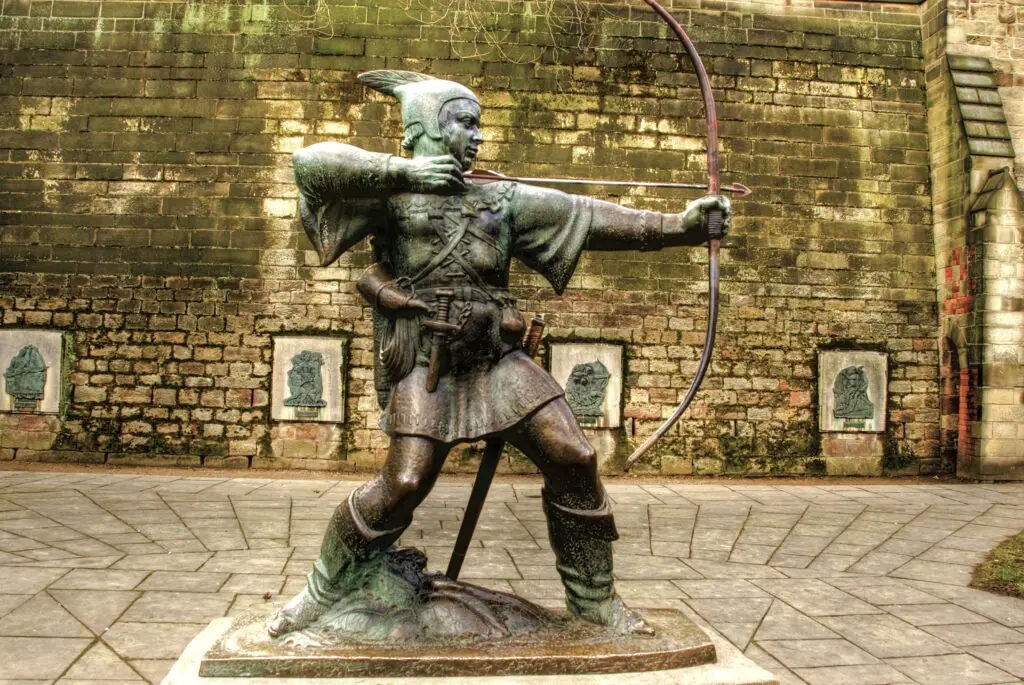
Everyone knows the story of the outlaw who robbed from the rich and gave to the poor in Sherwood Forest. He is the ultimate folk hero, representing the common man’s struggle against the corrupt Sheriff of Nottingham. Yet, looking for the “real” Robin Hood is like trying to catch smoke with your bare hands. The name “Robert Hood” or “Robehod” was actually a common alias used by many different English fugitives in the 13th century. It became a generic term for any criminal who managed to evade the law while hiding in the woods.
The earliest ballads of the 14th century describe a much more violent figure than the noble archer portrayed in modern cinema. This original Robin was a yeoman, not a displaced nobleman, and he wasn’t particularly interested in redistributing wealth to the peasantry. As his legend grew, storytellers added characters like Maid Marian and Friar Tuck to make the tales more appealing to broader audiences. Today, he stands as a powerful symbol of social justice, even if his actual existence is buried under layers of poetic license.
3. Mulan
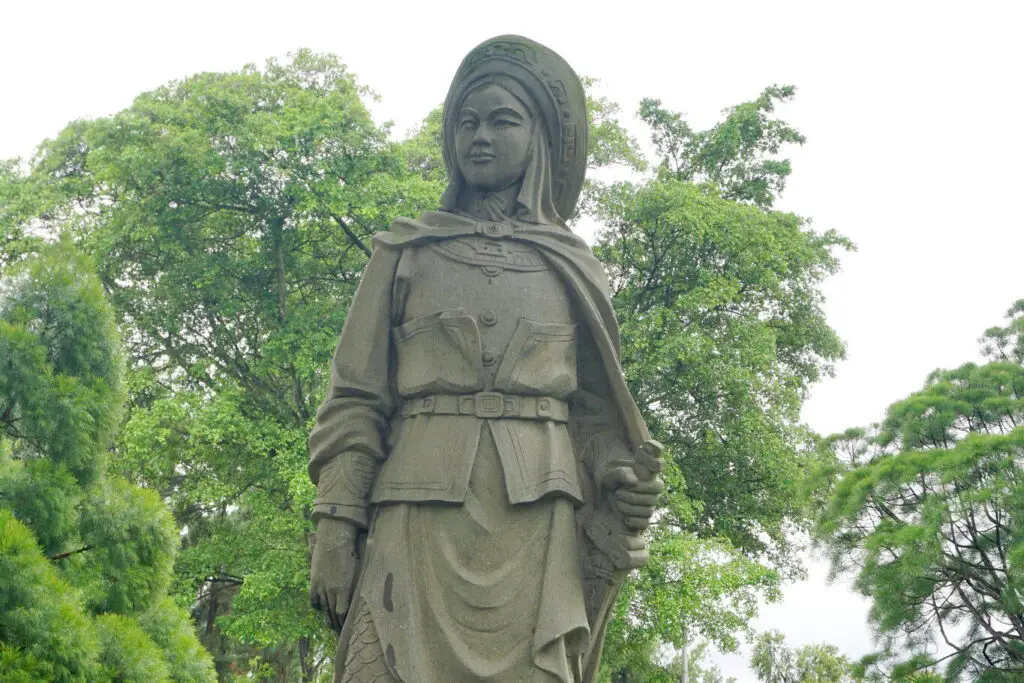
The story of the young woman who disguised herself as a man to take her father’s place in the army is a cornerstone of Chinese culture. We often think of her as a specific historical figure from the Northern Wei dynasty, but her origins are found in a folk song called the Ballad of Mulan. This poem dates back to the 5th or 6th century and was intended more as an inspirational tale of filial piety than a biography. There are no official military records or historical texts from that era that mention a female soldier named Hua Mulan.
Because her story was told and retold for over a thousand years, various details like her last name and the specific war she fought in have changed. In some versions, she serves for twelve years and returns home to her family, while in others, her ending is far more tragic. The lack of a physical grave or contemporary accounts suggests she is likely a personification of the many women who defied social norms during times of conflict. She represents a cultural ideal of bravery rather than a verifiable person you could find in a census.
4. William Tell
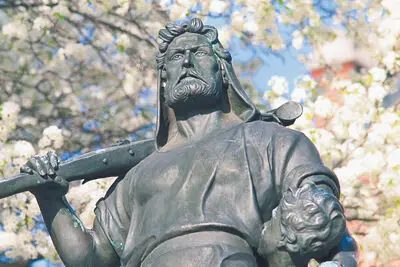
The Swiss marksman who famously shot an apple off his son’s head is a national icon of independence and defiance. According to the legend, Tell’s refusal to bow to a tyrant’s hat led to the uprising that eventually formed the Swiss Confederation. It is a thrilling story of a father’s precision under pressure and the birth of a nation’s freedom. However, there is a major problem for historians: there is absolutely no record of a William Tell in the Swiss archives from the 14th century. Furthermore, the “apple shot” story is a recurring motif in Germanic and Nordic folklore that predates the Swiss version.
Similar tales of incredible archery feats appear in Viking legends, suggesting that the story was a popular wandering myth adopted by the Swiss to bolster their national identity. During the 18th and 19th centuries, the legend was used to inspire revolutionary spirits across Europe, further cementing his place in history books. Despite the lack of evidence, you can still visit sites in Switzerland dedicated to his memory and see his statue in Altdorf. He may not have been a real man, but the idea of him was powerful enough to help build a country.
5. Ragnar Lothbrok
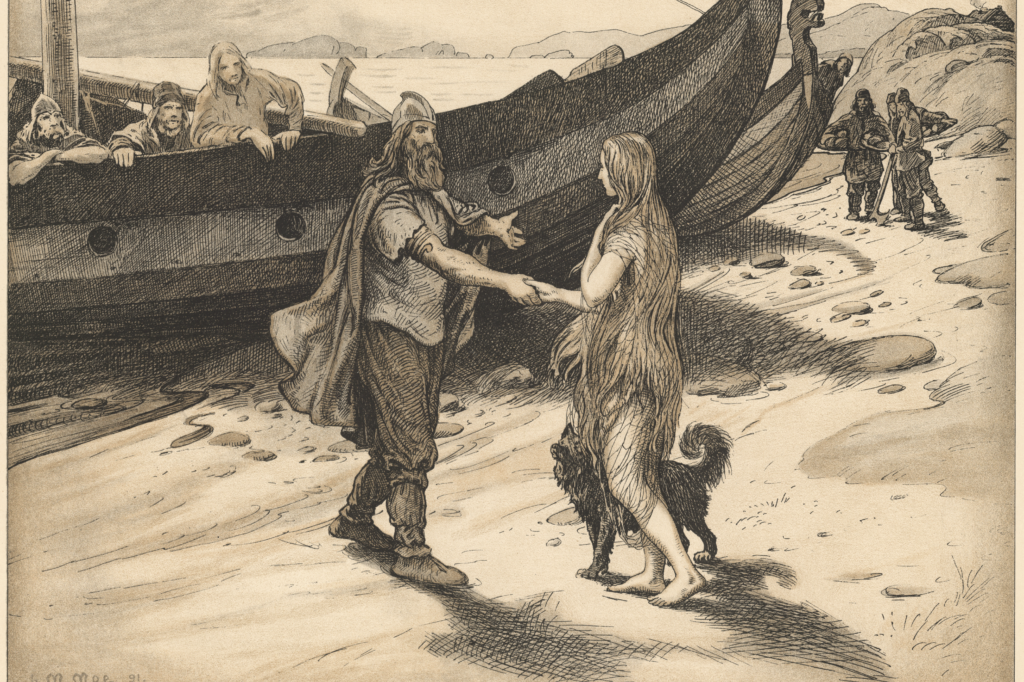
Fans of Viking history and television dramas know Ragnar as the fearless king who led the first major raids on England and France. He is depicted as a visionary explorer and the father of several famous historical figures, like Ivar the Boneless and Bjorn Ironside. While his sons are well-documented historical figures who certainly existed, Ragnar himself is a much murkier character. Most of what we know about him comes from Old Norse sagas and poems written hundreds of years after the Viking Age ended.
Historians suspect that Ragnar is a legendary amalgamation of several different Viking leaders, including a warlord named Reginherus and King Horik I. The sagas attribute so many different feats to him that it would have been nearly impossible for one man to accomplish them all in a single lifetime. His dramatic death in a pit of snakes at the hands of King Ælla of Northumbria is likely a poetic invention to justify his sons’ later invasion of England. While he might be a myth, he perfectly captures the spirit of the era’s seafaring warriors.
6. Pope Joan
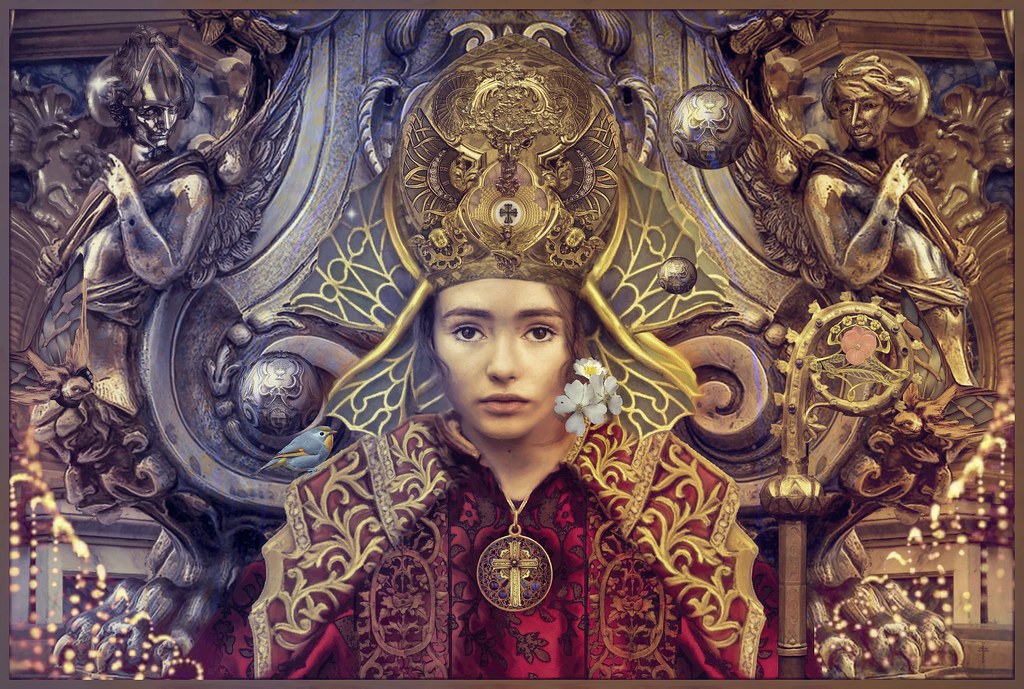
For centuries, a persistent story circulated about a woman who disguised herself as a man and rose through the church hierarchy to become Pope in the mid-9th century. According to the legend, her secret was only revealed when she unexpectedly gave birth during a papal procession through the streets of Rome. This tale was widely accepted as fact during the Middle Ages and was even included in official chronicles written by monks. It served as a cautionary tale for the church and a source of fascination for the public.
However, modern historians have found zero evidence of a female Pope in any records from the 9th century when she supposedly reigned. The timeline of the Popes of that era is very well-documented, leaving no gaps where “John Anglicus” (Joan’s supposed papal name) could have squeezed in. Most scholars believe the story was a piece of satirical folklore or political propaganda meant to embarrass the papacy. Even though she likely never sat on the throne of St. Peter, the legend of Pope Joan continues to spark debates about gender and power within the church.
7. Lycurgus of Sparta
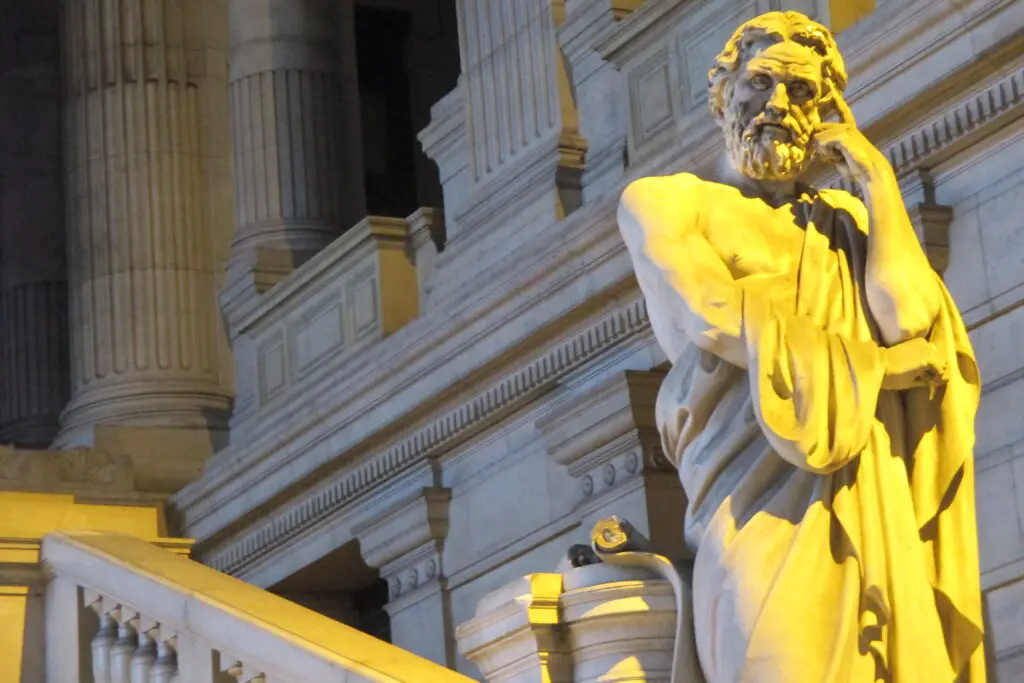
Lycurgus is credited with creating the entire social and political system of Sparta, turning it into the most feared military power in ancient Greece. He supposedly established the communal dining halls, the harsh military training for boys, and the use of iron currency to discourage greed. To the ancient Spartans, he was a lawgiver of divine status whose wisdom came directly from the Oracle at Delphi. They believed his reforms were the reason their society remained stable and unconquered for centuries.
Despite his massive influence, ancient historians like Plutarch admitted that nothing could be said about Lycurgus that wasn’t disputed. Some early accounts claim he was a man, while others suggest he was a god or a hero-cult figure whose name meant “wolf-worker.” There are no contemporary records of his life, and the laws attributed to him likely evolved slowly over several generations rather than being the work of one individual. He functions as a founding father figure, a convenient person to credit for a complex and unique way of life.
8. Helen of Troy
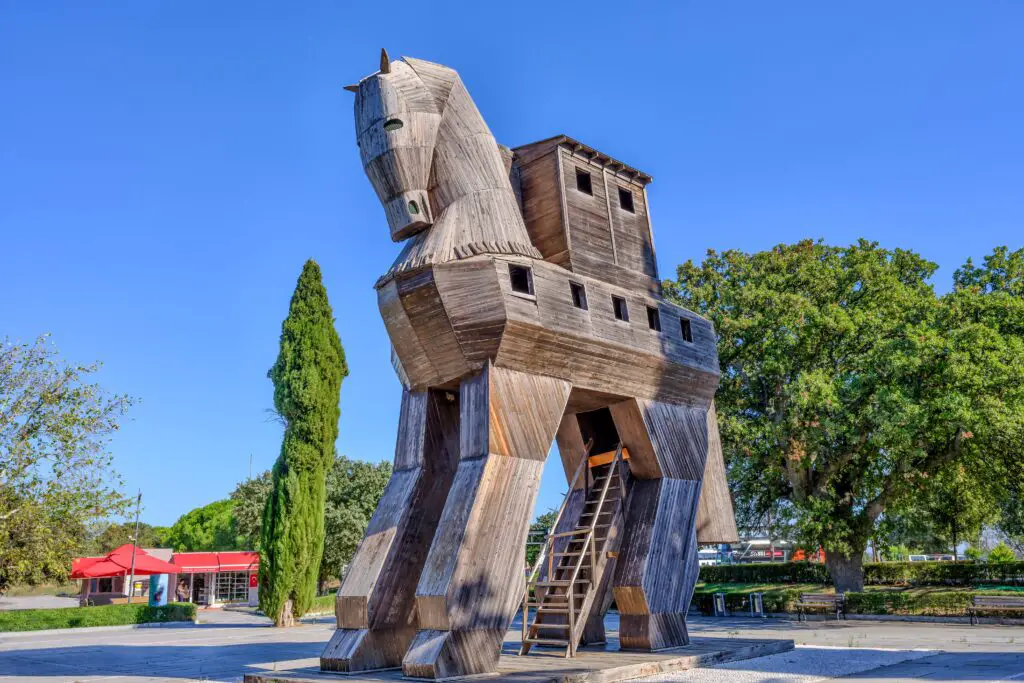
Known as the “face that launched a thousand ships,” Helen is the catalyst for the Trojan War in Greek mythology. As the most beautiful woman in the world and the daughter of Zeus, her abduction by Paris started a decade-long conflict that leveled a city. Because the Iliad and the Odyssey are such foundational texts, many people assume Helen was a real queen of Sparta. While the city of Troy has been discovered by archaeologists, proving the existence of the specific people involved in the war is a different story.
Helen likely began as a local Spartan goddess associated with fertility and nature before being transformed into a human character by epic poets. The details of her life—being born from an egg and her divine parentage—clearly lean more toward myth than biography. There is no archaeological evidence of a Queen Helen from the Bronze Age, nor any records from neighboring kingdoms about her. She remains a powerful literary symbol of the destructive power of beauty and the whims of the gods.
9. Homer
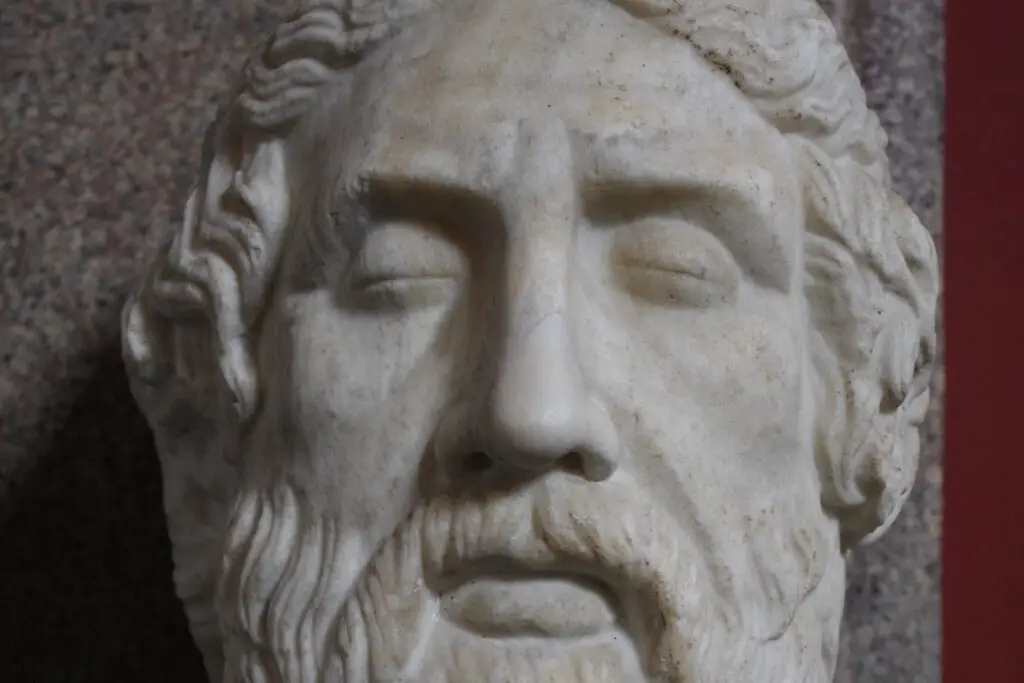
The name Homer is synonymous with the greatest epic poems of Western literature, the Iliad and the Odyssey. For a long time, he was pictured as a blind, wandering bard who traveled through Greece reciting these massive stories from memory. He is often cited as the “teacher of Greece,” and his influence on language and storytelling is impossible to overstate. Yet, we know absolutely nothing about the man himself, and even the ancients disagreed on where he was born or when he lived.
This has led to the “Homeric Question,” where many scholars argue that Homer never existed as a single person. Instead, the poems were likely the result of an oral tradition where generations of performers added to and refined the stories. Eventually, these tales were written down and attributed to a single legendary figure named Homer to give them a sense of authority. Whether he was one man or many, the “Homer” we imagine is a personification of an entire culture’s collective memory and poetic genius.
10. Sybil Ludington
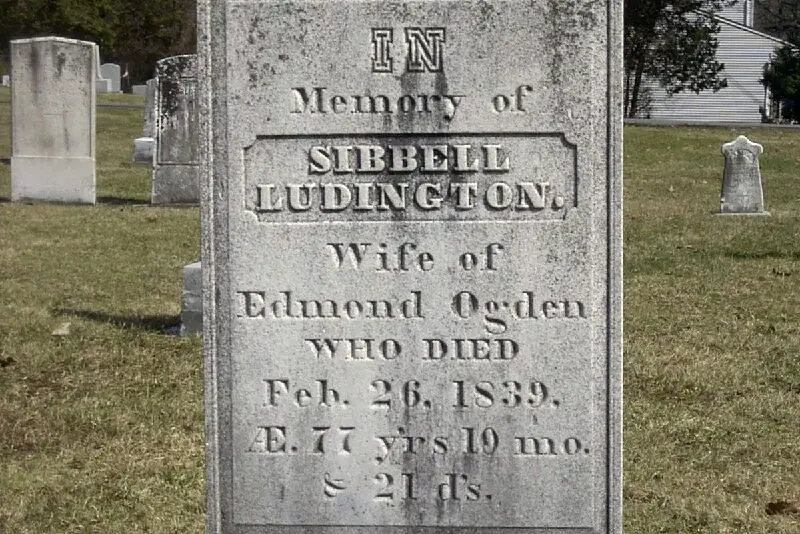
In American history, Sybil Ludington is often celebrated as the “female Paul Revere” for her heroic midnight ride during the Revolutionary War. The story goes that at age 16, she rode 40 miles in the rain—twice as far as Revere—to warn the colonial militia that the British were burning Danbury. She is a beloved figure in New York history, complete with statues and commemorative stamps honoring her bravery. Her tale is a staple of children’s history books as an example of youthful patriotism.
The catch is that there are no contemporary accounts of her ride from the time it supposedly happened in 1777. The story first appeared in a biography of her father written over 100 years later in 1907 by someone who wasn’t an eyewitness. While her father was a real colonel and his militia did indeed mobilize, the specific details of Sybil’s solo ride are likely an embellishment or a family legend. She has become a folk hero whose story serves to highlight the often-overlooked contributions of women during the Revolution.
11. Sun Tzu
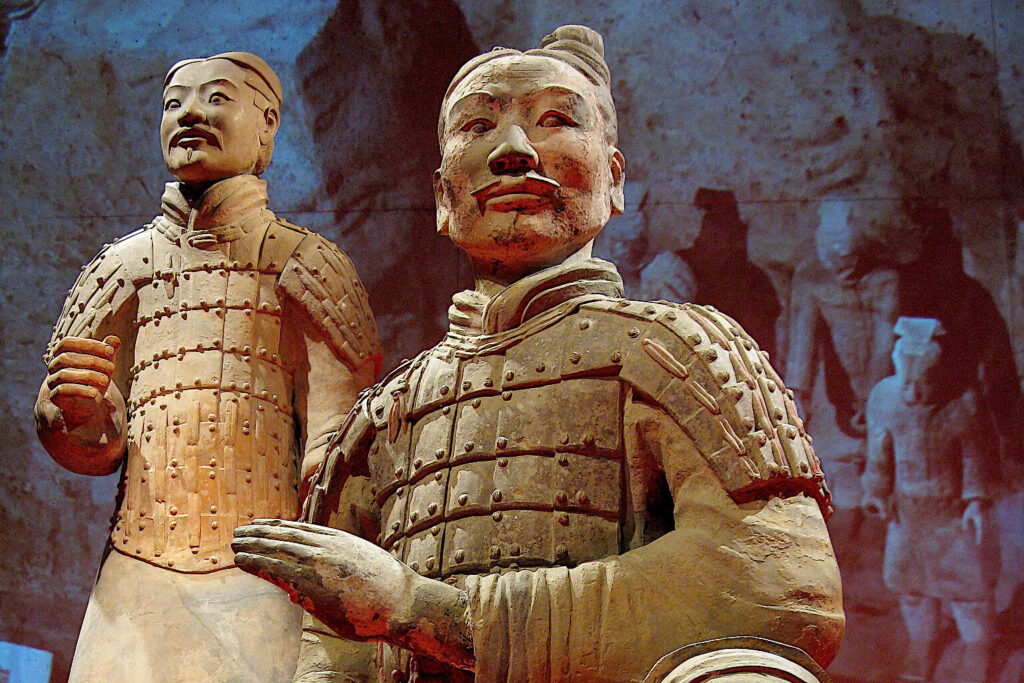
The Art of War is one of the most famous books on military strategy ever written, and its author, Sun Tzu, is revered as a tactical genius. Business leaders and generals alike still study his aphorisms to gain an edge over their competition. Traditional accounts place him as a general serving King Helü of Wu in the 6th century BCE. He is often described as a stern disciplinarian who could turn even a group of concubines into a disciplined fighting force.
However, many modern historians believe Sun Tzu is a fictional persona created to give weight to a collection of military wisdom. The text of The Art of War actually reflects the technology and social conditions of the later Warring States period, rather than the era he supposedly lived in. It is more likely that the book was compiled by various military theorists over several decades and then attributed to a legendary “Master Sun.” By creating a legendary figure, the authors ensured their tactical advice would be respected as timeless wisdom.
12. John Henry
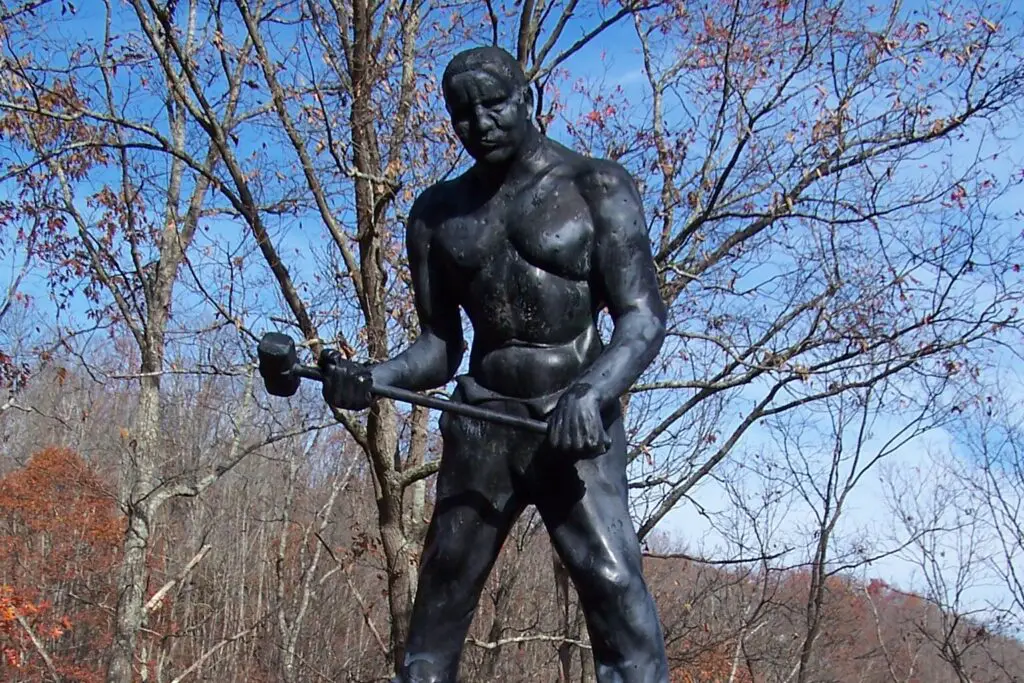
The “steel-driving man” is a legend of American folklore, a man of immense strength who raced a steam-powered drill and won, only to die of exhaustion. His story represents the struggle of human labor against the cold march of industrialization and technology. Countless songs and stories have been written about his hammer and his heart, making him a hero of the working class. For many, he is the ultimate symbol of the African American laborers who built the nation’s railroads under grueling conditions.
While some researchers believe the legend is based on a real person who worked on the Big Bend Tunnel in West Virginia, the evidence is purely circumstantial. Multiple locations claim to be the site of the famous race, and several different “John Henrys” appear in census records from the late 1800s. It is more likely that John Henry is a “composite folk hero,” a character born from the collective experiences and hardships of thousands of railroad workers. Even if he wasn’t a single man, the truth of his struggle resonates through history.