
1. Necco Wafers
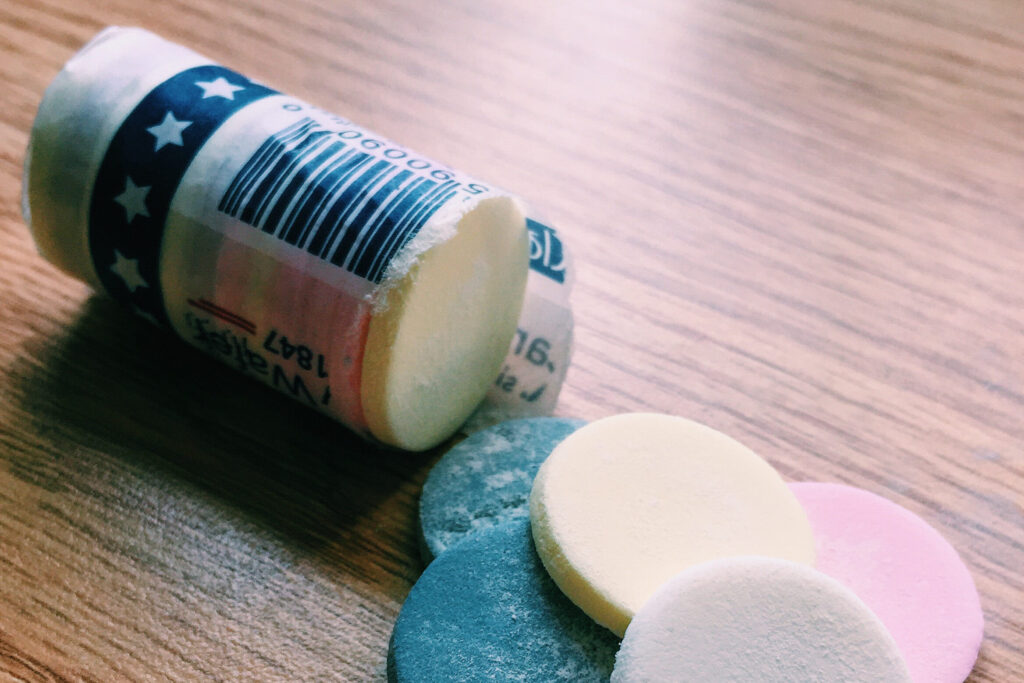
Necco Wafers were already old when our grandparents were kids, which somehow made them feel like candy with built in history. Those thin chalky discs came in mysterious flavors like clove, wintergreen, and lemon that felt more like a dare than a treat. For decades they were everywhere, especially around Halloween, parades, and old fashioned candy counters. At one point in the early twentieth century, they were among the best selling candies in the country, easily competing with chocolate for shelf space. Kids loved the novelty of stacking them into towers or sorting colors before eating them. The flavor was never the point, the ritual was.
Today Necco Wafers exist mostly as a nostalgia punchline, something people argue about rather than eagerly buy. The original company even shut down in 2018 before the brand was revived in limited form, which says a lot about shifting tastes. Modern candy aisles favor bold chocolate bars and chewy gummies, not subtle herbal discs. Still, if you grew up with them, the memory sticks hard. There’s something comforting about a candy that didn’t try to be exciting.
2. Bit-O-Honey
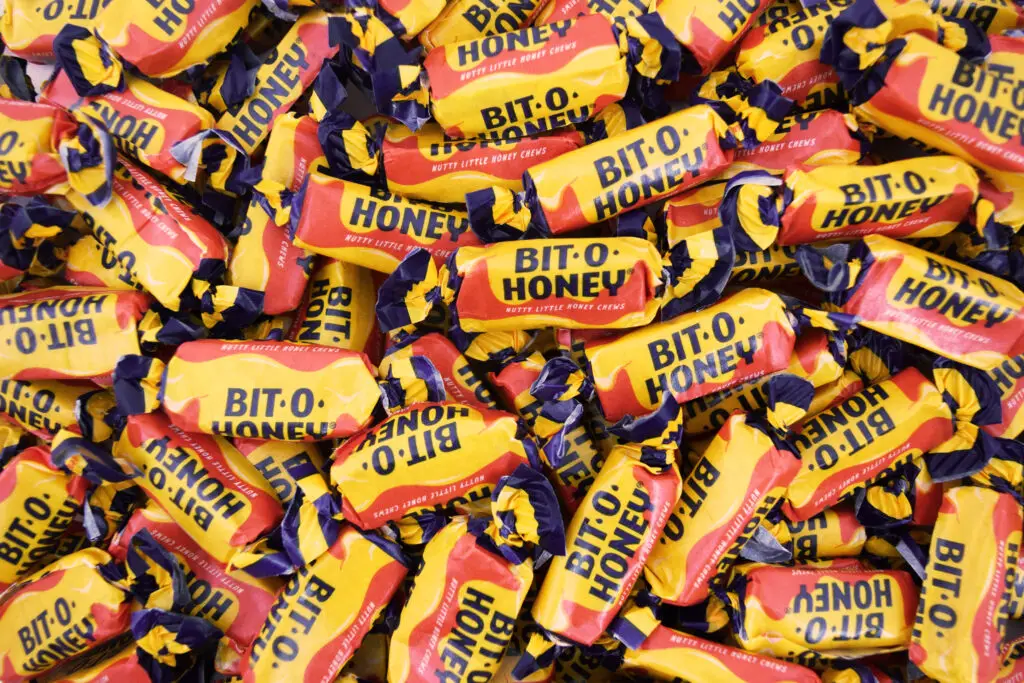
Bit O Honey walked the line between candy and dental hazard, and somehow kids kept coming back for more. The chewy honey taffy studded with almond bits could stretch forever, especially if you tried to eat it straight from the freezer. It felt substantial, like you were getting your money’s worth compared to a flimsy chocolate square. During the mid twentieth century, it was a lunchbox staple and a frequent sight in penny candy bins. Parents liked that it felt slightly wholesome because it had honey and nuts. That was enough to earn it a free pass.
These days it mostly lives in old school candy shops and nostalgia packs. Many younger candy fans have never heard of it, let alone struggled through a jaw workout trying to chew one. Texture trends have shifted toward soft gummies and melt away chocolate instead of marathon chews. Still, people who remember Bit O Honey usually smile when they spot it. It’s the kind of candy that reminds you how patient your teeth once were.
3. Mary Janes
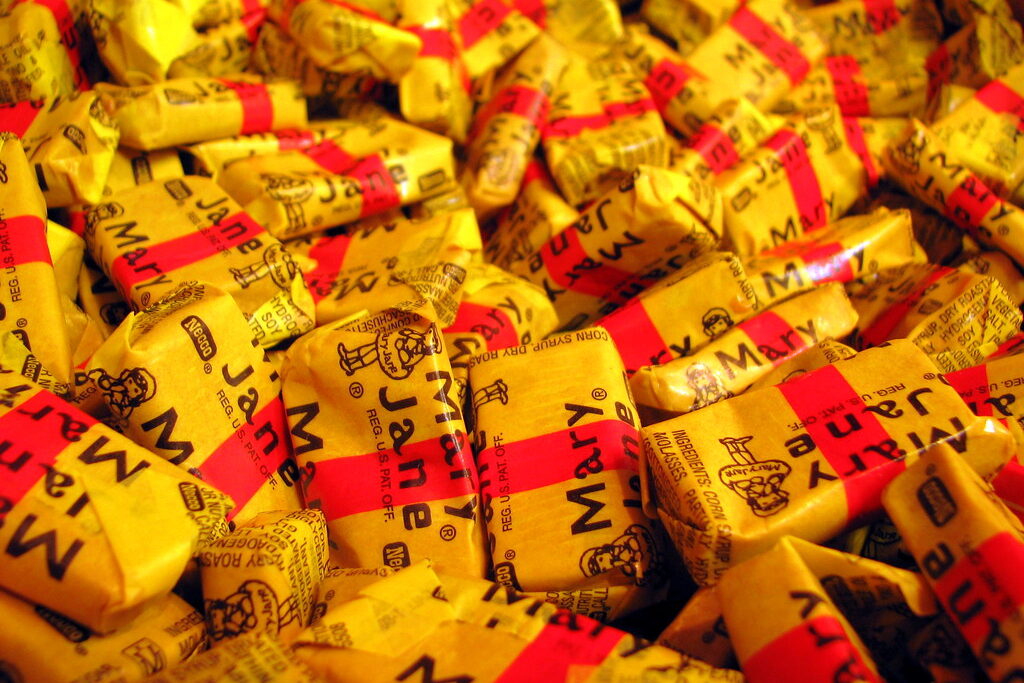
Mary Janes were another peanut butter taffy that ruled candy counters long before chocolate bars dominated everything. Wrapped in their simple yellow and red paper, they looked humble but delivered serious chew satisfaction. They were cheap, filling, and lasted forever in your mouth, which made them perfect for kids with a single nickel. In the first half of the twentieth century, they were wildly popular and widely distributed across the U.S. Peanut butter flavor alone made them feel indulgent even without chocolate involved.
Now Mary Janes have become harder to find, especially in mainstream stores. They tend to show up only in specialty candy shops or mixed vintage assortments. The slow chew that once felt like a bonus now feels like work to modern candy eaters. Yet for many people, that sticky sweetness still triggers memories of five and dime stores and grandparents’ candy jars. Some flavors just refuse to disappear completely.
4. Circus Peanuts
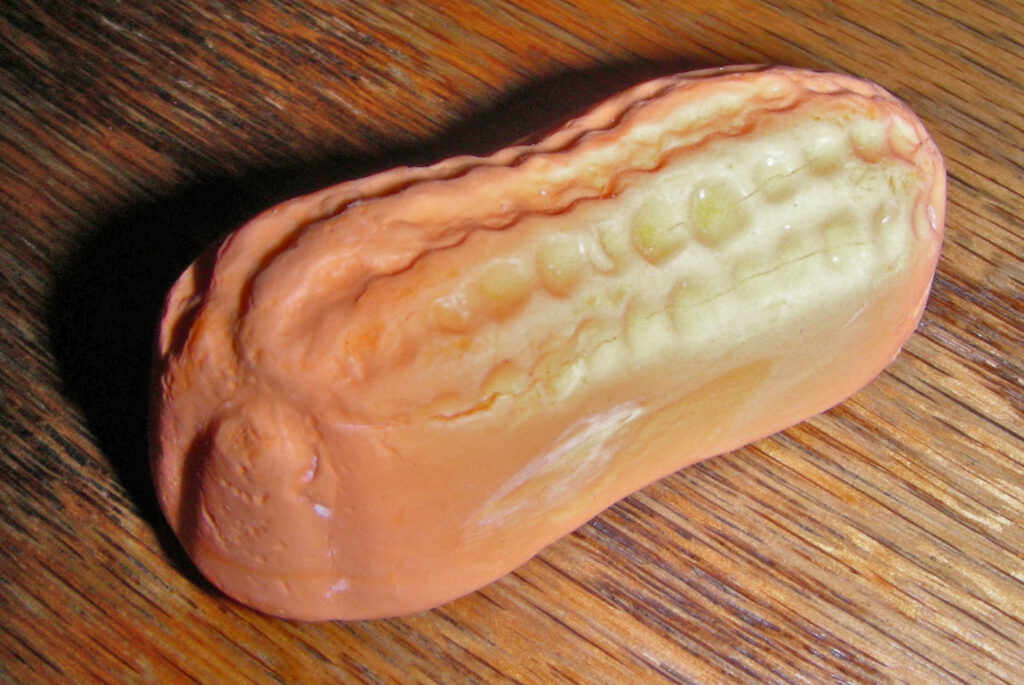
Circus Peanuts are one of those candies people love to mock, but they were once massively popular. Those oversized orange marshmallow peanuts showed up in candy bowls, movie theaters, and holiday spreads for decades. They were cheap to produce, easy to share, and oddly filling, which made them a practical choice for bulk candy buyers. At their peak, they outsold many chocolate options simply because they stretched further for the price. Kids loved the bright color and the goofy shape, even if the banana flavor confused everyone.
Today they’re mostly treated as a novelty or a joke candy. Some people swear they love them, while others can’t understand how anyone ever did. Tastes have shifted toward richer flavors and more intense textures. Circus Peanuts now feel like a relic from a time when candy didn’t need to be sophisticated. They still show up, but rarely with the fanfare they once had.
5. Turkish Taffy
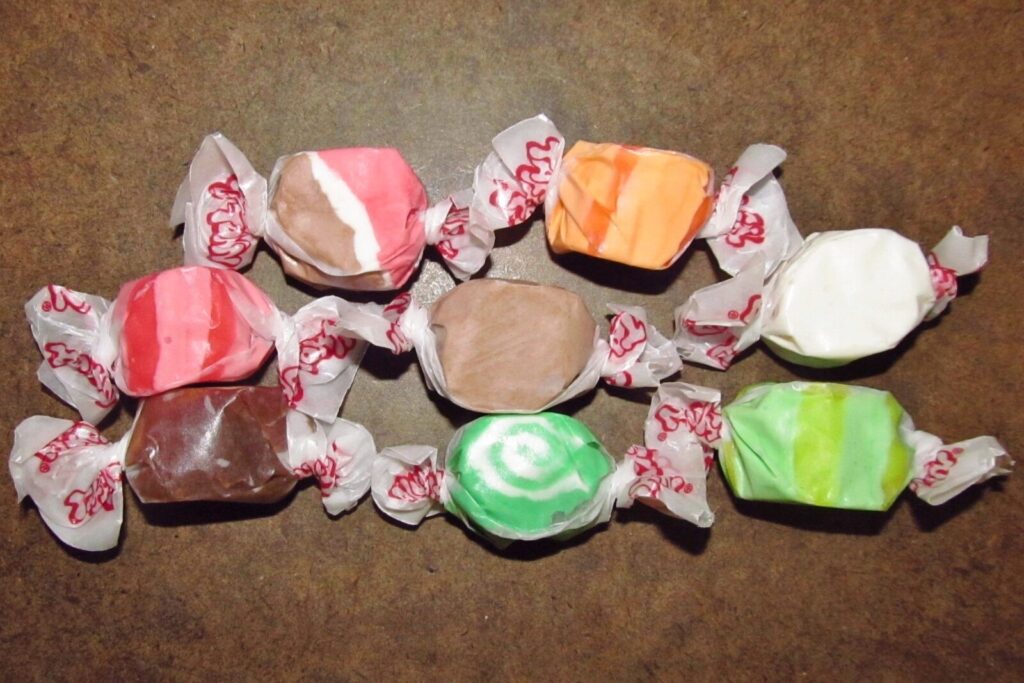
Turkish Taffy was famous not just for flavor but for how you were supposed to eat it. Kids were encouraged to smack the wrapped bar against a hard surface to shatter it into bite sized pieces. That ritual made it feel like a game instead of just candy. Vanilla, banana, strawberry, and chocolate flavors were common, though the non chocolate varieties were often the favorites. In the mid century, it was a hugely popular treat found in corner stores and movie theaters. The crunchy chewy hybrid texture felt completely unique at the time.
It disappeared for years before making a small comeback, but it never regained its former dominance. Modern packaging and safety standards also discouraged the dramatic smashing ritual that made it special. Without the spectacle, it’s just another taffy. People who remember it still talk about the sound and the shards flying everywhere. That memory tends to outshine the actual taste.
6. Sky Bar
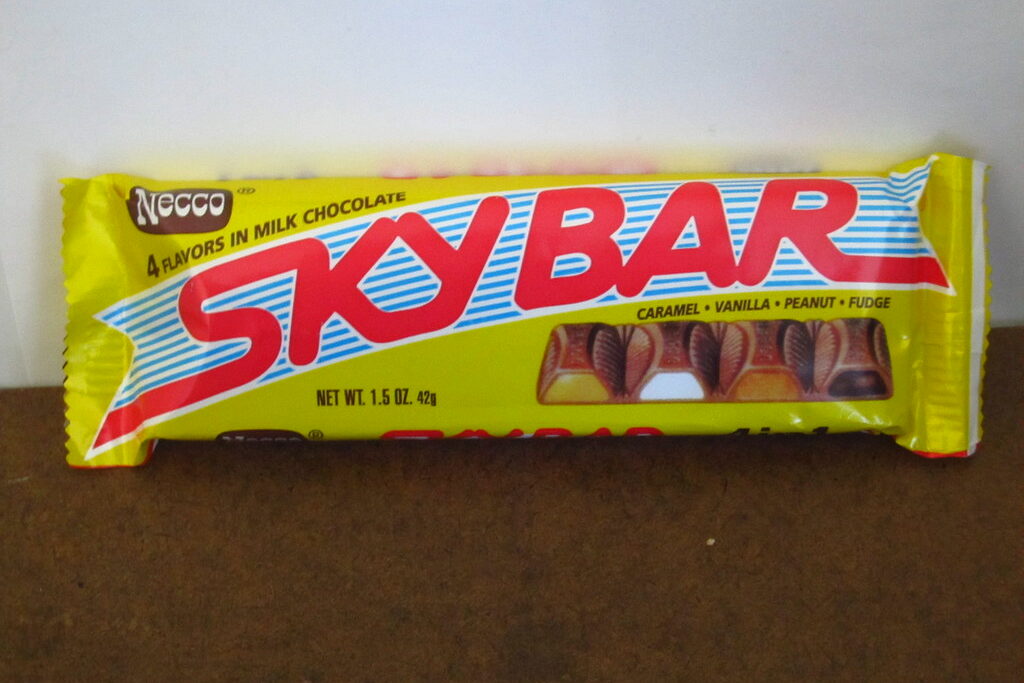
Sky Bar was the ultimate variety candy, dividing one bar into four different flavored sections. Each segment had a different filling, giving you multiple experiences in one purchase. It felt exciting and a little luxurious, especially when most candy bars were plain. For a time in the 1930s and 1940s, it was extremely popular and widely available. The novelty alone made it stand out from standard chocolate offerings. Kids loved guessing which section they’d eat first.
Over time, simpler chocolate bars with heavy marketing took over shelf space. Sky Bar faded into the background and became more of a specialty nostalgia item. It still exists in limited production, but most shoppers walk right past it without noticing. The idea of variety in one bar now feels common, but Sky Bar did it long before it was trendy. It’s one of those quiet innovators that never gets credit.
7. Sen-Sen
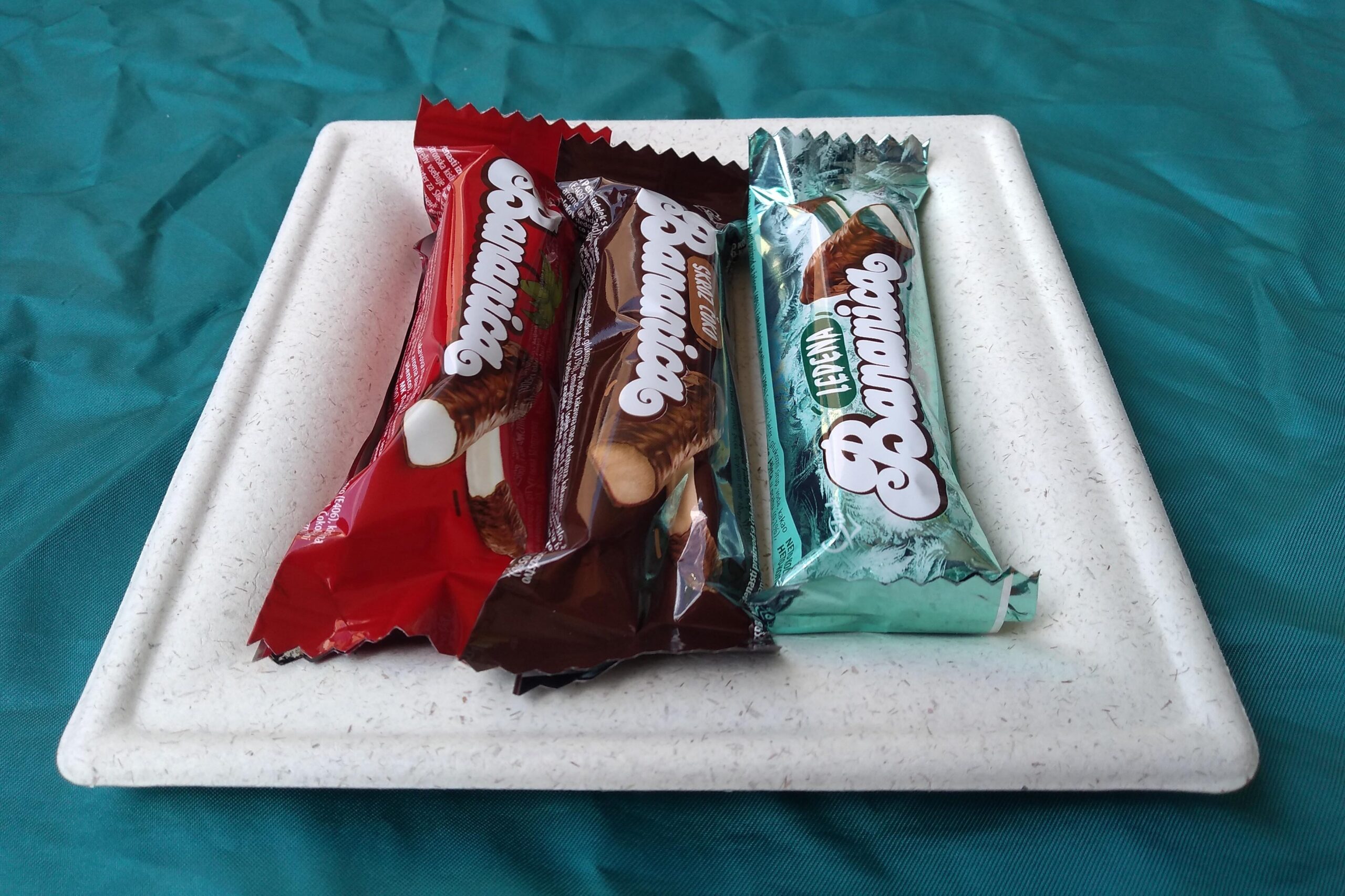
Sen Sen wasn’t exactly a candy you begged for, but it was everywhere in the early twentieth century. These tiny licorice flavored breath lozenges were popular with adults and kids alike. People carried them in pockets and purses, popping them after meals or during long days. At one point, they sold millions of tins a year and rivaled candy sales in many general stores. They weren’t sweet in a modern sense, but they filled the candy niche before chocolate became dominant.
As tastes shifted toward sweeter and more indulgent treats, Sen Sen slowly faded away. The strong herbal flavor no longer appealed to mass audiences. Younger generations often have no idea what they are unless a grandparent mentions them. They represent a time when candy overlapped more closely with breath fresheners and tonics. It’s a reminder of how different flavor expectations once were.
8. Chick-O-Stick
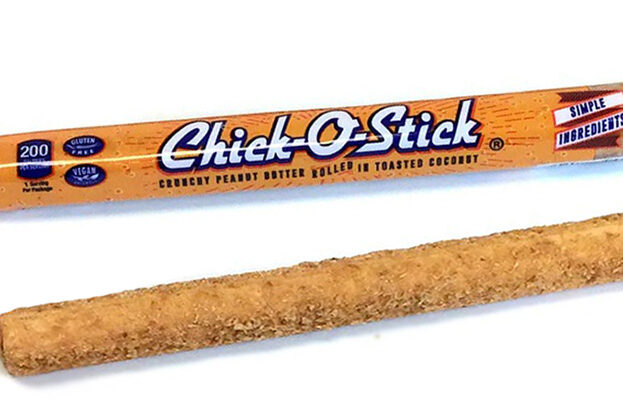
Chick O Stick combined peanut butter, toasted coconut, and sugar into a crunchy orange log that didn’t need chocolate to be satisfying. It delivered bold sweetness and texture in every bite. For decades it was a go to candy in Southern and Midwestern stores, especially around Halloween. It was inexpensive, filling, and easy to break into pieces. Many kids preferred it over chocolate because it felt more substantial and less messy. The coconut crunch made it stand out from standard bars.
Today it still exists but rarely dominates candy displays the way it once did. Coconut flavors have fallen in and out of fashion, which affects its popularity. Some people rediscover it as adults and wonder why they stopped eating it. It’s one of those candies that quietly waits for the right person to notice it again. Nostalgia keeps it alive more than advertising ever could.
9. Boston Baked Beans
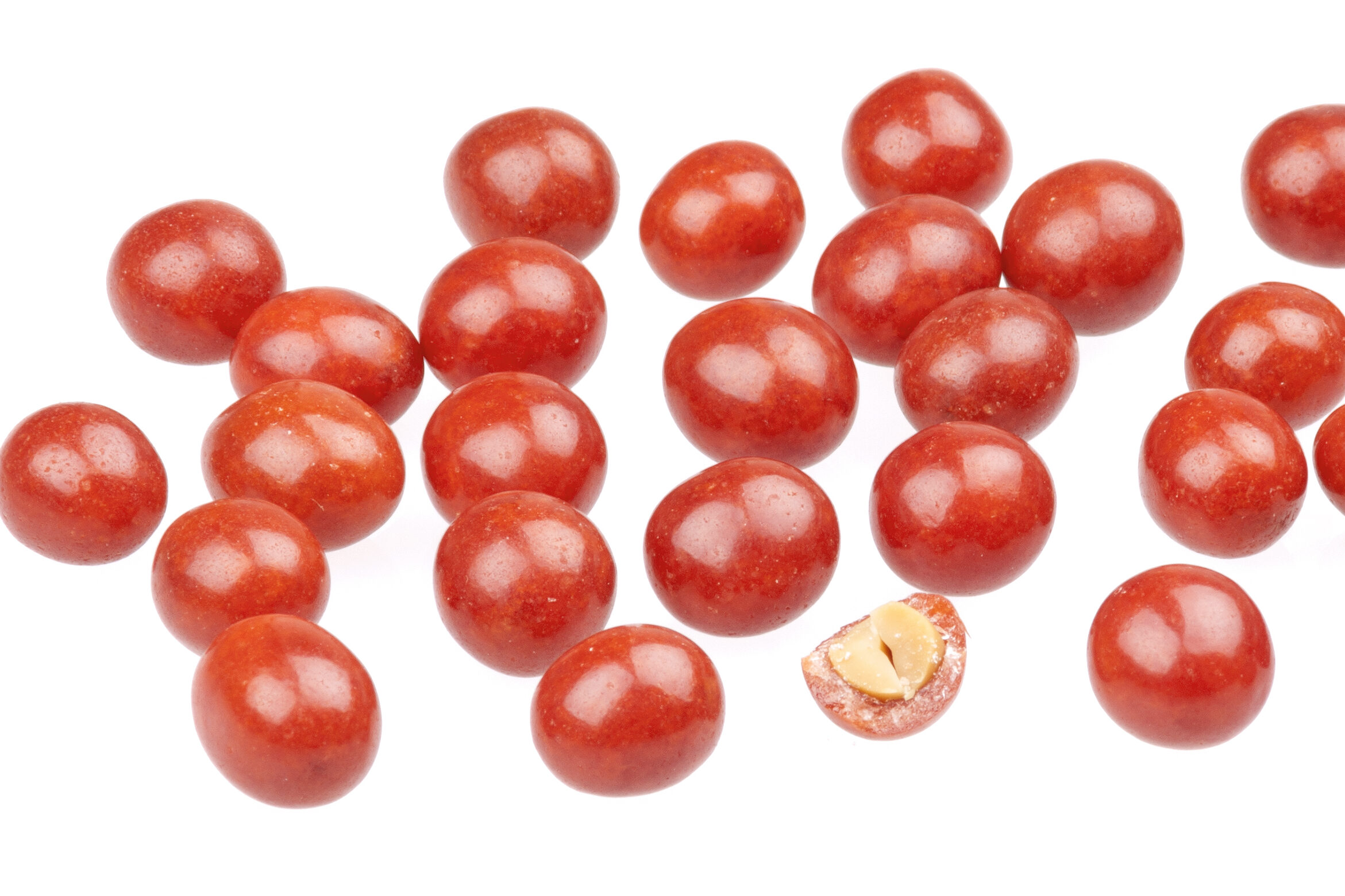
Despite the name, Boston Baked Beans are candy coated peanuts, not beans at all. They offered crunch, sweetness, and salt long before candy bars started blending textures so aggressively. They were common in movie theaters, vending machines, and corner stores for generations. The playful misdirection of the name made them memorable, especially for kids. For a long time, they were among the top selling non chocolate candies in many regions. They were easy to snack on and easy to share.
These days they’re still around, but they don’t get the same spotlight as chocolate covered peanuts. Packaging looks dated, and branding hasn’t evolved much. Younger shoppers often skip past them without realizing what they are. Yet anyone who grew up pouring them from a little cardboard box remembers the simple joy. Sometimes the plainest snacks linger longest in memory.
10. Squirrel Nut Zippers
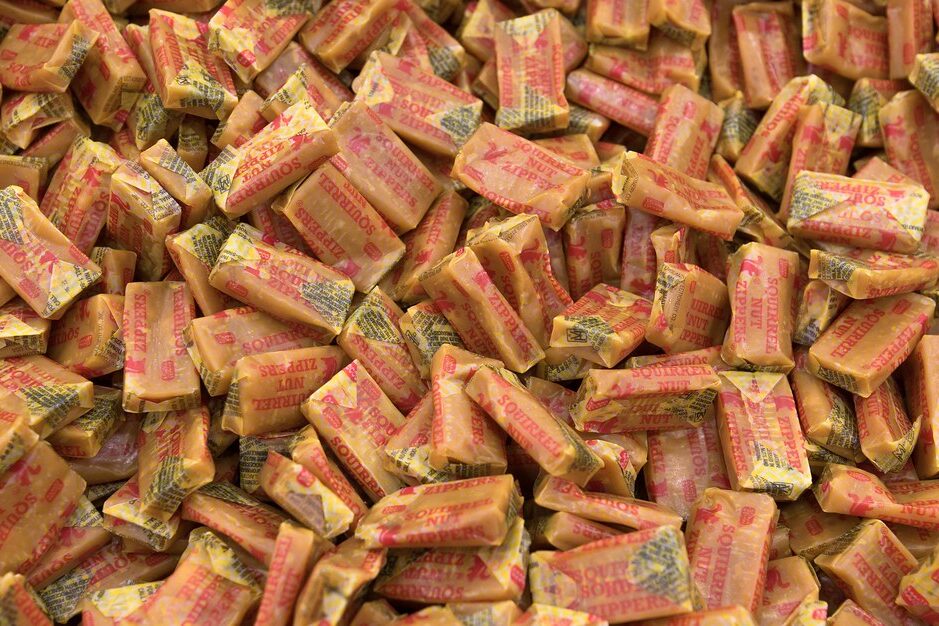
Squirrel Nut Zippers weren’t nuts and didn’t involve squirrels, which only added to their charm. They were chewy caramel candies with a slightly molasses like flavor that felt rich and old fashioned. For decades they were wildly popular and easy to find in general stores. They lasted forever in your mouth, which made them feel like a good value. People often carried a few in their pockets for long days or road trips. They filled the same comfort niche that chocolate later claimed.
Eventually, they became harder to find as mass produced chocolate bars took over. Many people today recognize the name more from the swing band than the candy itself. The flavor profile feels heavier than modern sweets, which lean lighter and fruitier. Still, those who remember them fondly can describe the taste instantly. Some candies imprint themselves permanently on your memory.
11. Clark Bar
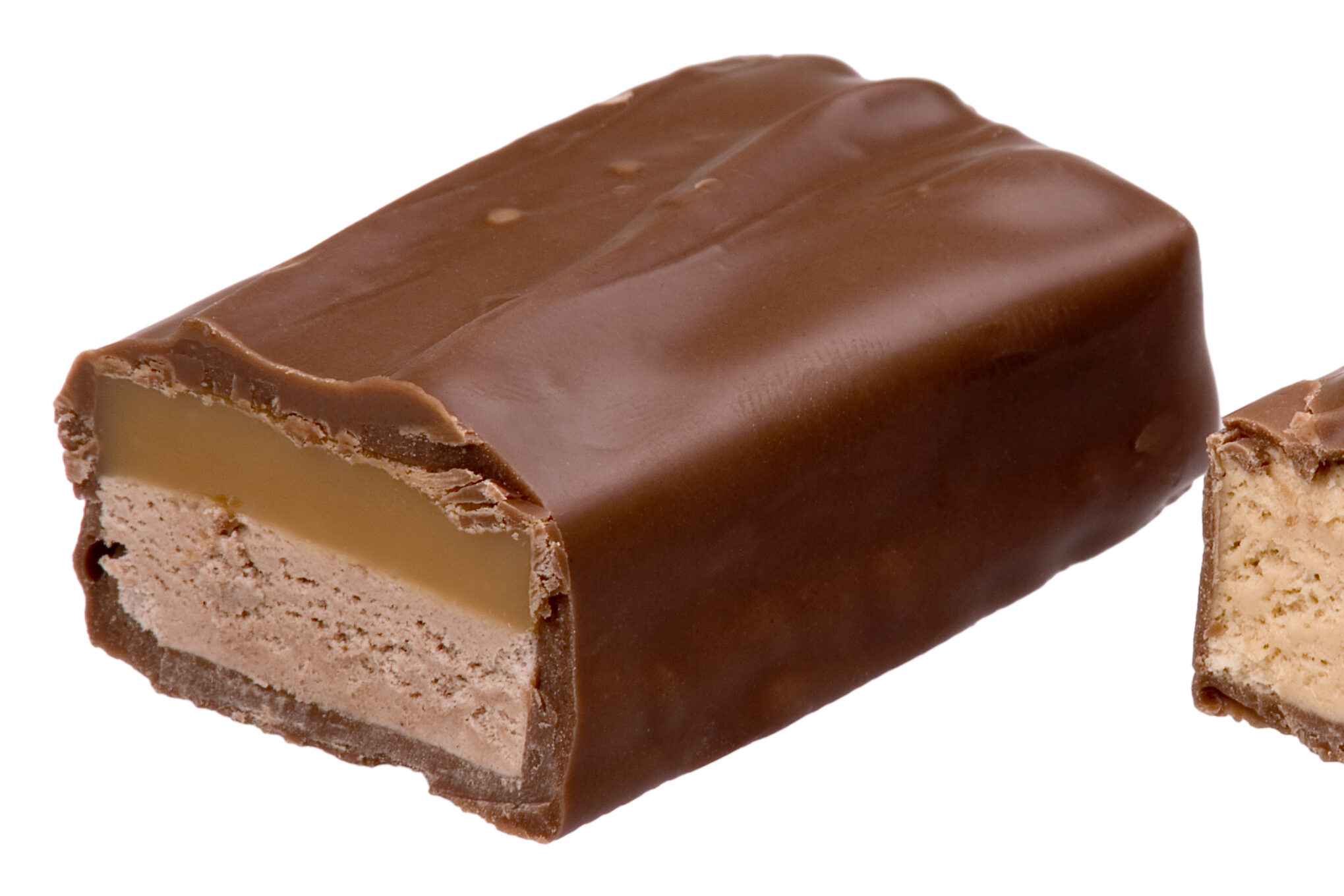
The Clark Bar combined crunchy peanut butter filling with a chocolate coating, but it often appealed more to peanut butter lovers than chocolate fans. It had a distinct snap and texture that set it apart from softer bars. For much of the twentieth century, it was a major competitor in candy aisles, especially in certain regions. Some people actively chose it over more famous chocolate bars. The balance of crunch and sweetness made it satisfying without feeling overly rich. It earned loyal fans who stayed devoted for decades.
Ownership changes and distribution issues gradually reduced its visibility. While it still exists, it no longer commands the shelf presence it once did. Younger candy buyers may not even recognize the name. Those who grew up with it often speak about it with surprising loyalty. Candy attachments can run deep.
12. Root Beer Barrels
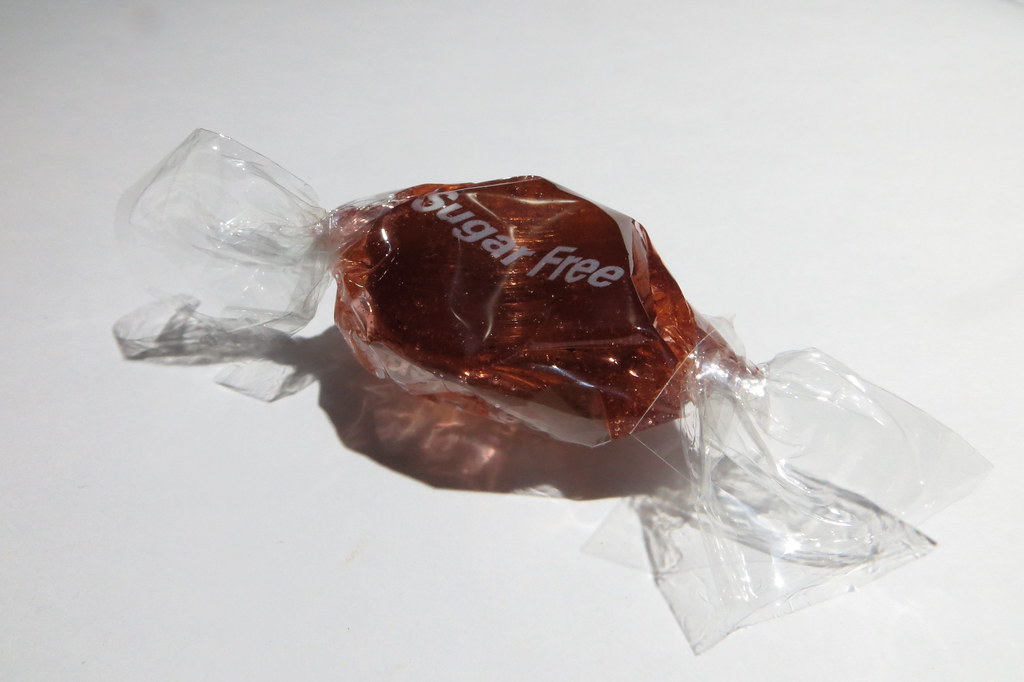
Root Beer Barrels delivered the soda shop experience in hard candy form. They were slow burning, long lasting, and packed with nostalgic flavor. For decades, they filled candy jars in homes, offices, and waiting rooms. They were inexpensive and universally recognizable, making them easy crowd pleasers. Many people preferred them over chocolate because they didn’t melt and lasted much longer. The smell alone could trigger memories.
Today they’re still available, but mostly in bulk candy shops or specialty stores. Younger consumers often gravitate toward sour or fruity flavors instead. Root beer as a candy flavor feels tied to an older generation’s taste memory. Still, one barrel can instantly transport you back to a simpler time. Some flavors age gracefully even when trends move on.
13. Atomic Fireballs
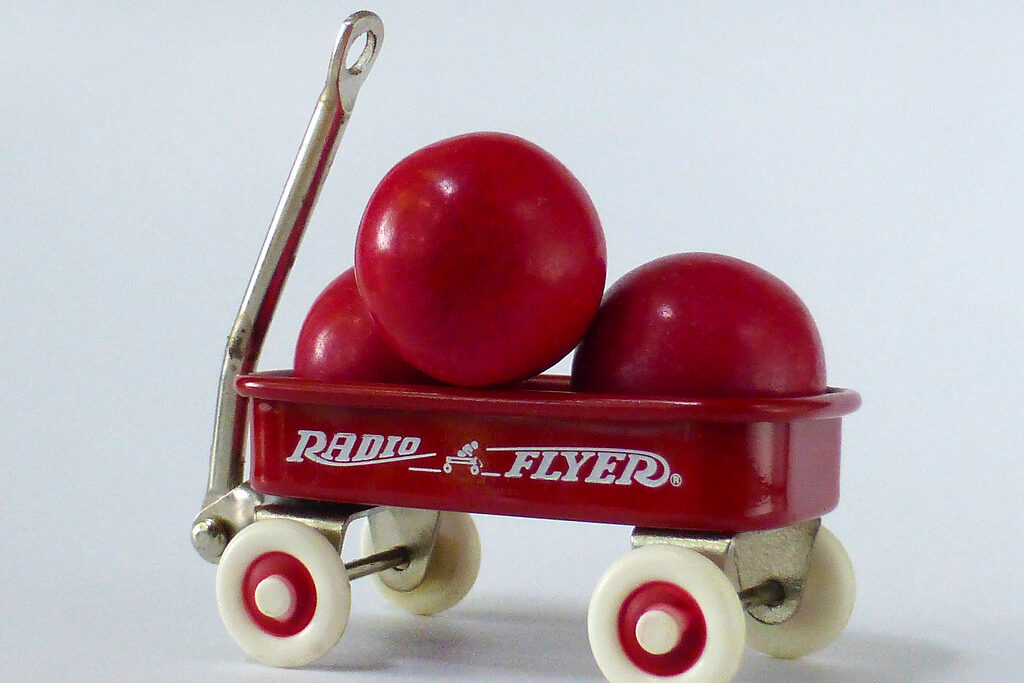
Atomic Fireballs weren’t subtle, and that was the point. These bright red cinnamon jawbreakers delivered intense heat that lasted forever. Kids loved daring each other to see who could finish one without giving up. They were widely sold in vending machines, candy counters, and novelty packs. At their peak, they were among the most recognizable non chocolate candies in America. The thrill factor often beat out chocolate for pure entertainment value.
They’re still around, but not nearly as dominant as they once were. Many modern candy buyers lean toward sour rather than spicy heat. The commitment required to finish one feels less appealing in a fast snack culture. Still, anyone who grew up with them remembers the burn vividly. Some candies leave a physical memory as much as a flavor one.
14. Candy Buttons
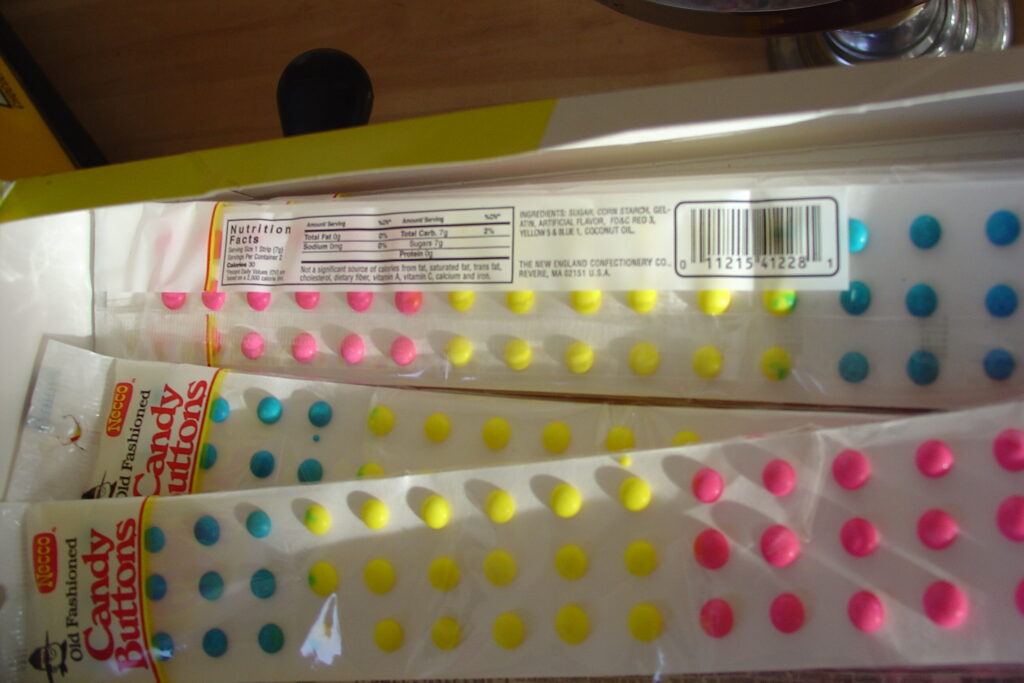
Candy Buttons were tiny dots of sugar stuck to paper, which somehow made them magical. Peeling them off without tearing the paper was half the fun and half the frustration. They were cheap, colorful, and perfect for small allowances. For many kids, they were more exciting than a basic chocolate square simply because they felt interactive. They showed up at birthday parties, school events, and corner stores for decades. The novelty kept them popular long after their simplicity should have faded.
Today they’re still around, but mostly as nostalgic novelties. Modern candy leans heavily into bold flavors and dramatic textures instead of playful minimalism. Candy Buttons feel almost quaint by comparison. Yet the ritual of peeling and tasting still holds a strange charm. Sometimes simplicity is exactly what makes a candy memorable.